

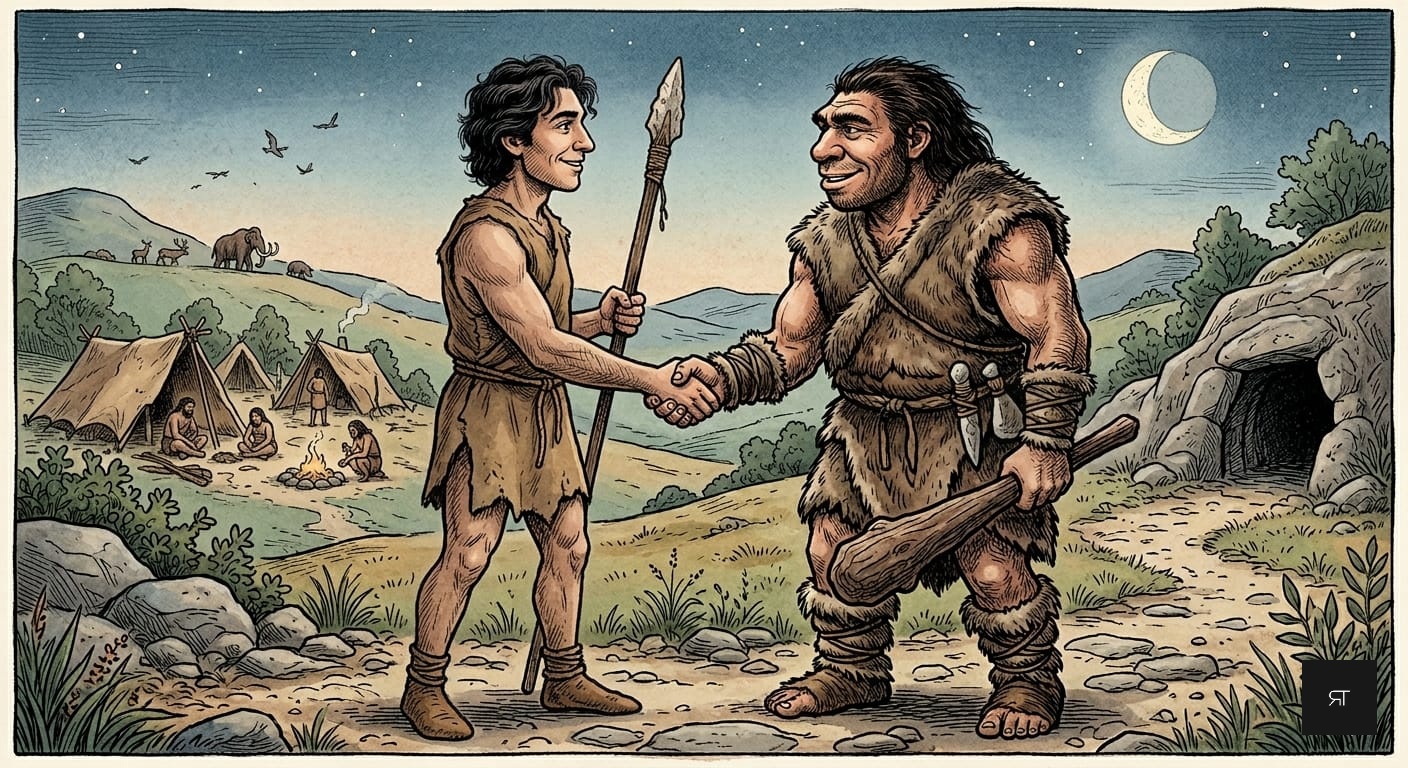
Recent archaeogenetic studies indicate that frequent sexual contact occurred between Neanderthals and Homo sapiens approximately 50,000 years ago. Findings suggest that these interactions primarily involved Neanderthal men and Homo sapiens women. While the specific nature of these encounters remains a subject of scientific speculation, researchers have identified a distinct breeding preference between the two groups.
Genetic Traces and the Out of Africa Migration
Although Neanderthals became extinct 40,000 years ago, their DNA persists in modern humans. Individuals of non-African descent typically carry between 1% and 2% Neanderthal DNA. This genetic integration took place during the migration of Homo sapiens out of Africa between 70,000 and 20,000 years ago.
Experts from the University of Pennsylvania published these findings in Science, utilizing genetic calculations to track how these genes were transferred. The study suggests that the lack of Neanderthal DNA on the modern human X-chromosome points toward a specific mating pattern. Because men pass on one X-chromosome and women pass on two, the “Neanderthal deserts” found on the modern human X-chromosome are best explained by a history of Neanderthal men breeding with Homo sapiens women.
Historical Context and Complexities
This 50,000-year-old window was not the first instance of interbreeding. Evidence in Neanderthal genomes reveals even earlier contact:
250,000 to 200,000 years ago: Likely occurring in Europe during an early, temporary migration of sapiens groups.
120,000 to 100,000 years ago: Likely occurring in the Middle East.
Interestingly, these earlier interactions showed an opposite trend, with an abundance of sapiens DNA on the Neanderthal X-chromosome. This suggests that during these older periods, sapiens men were frequently breeding with Neanderthal women.
Scientific Limitations
While the genetic data provides a clearer picture of ancestry, the social and demographic context remains elusive. Current research is limited by a small dataset; only eight Neanderthal genomes have been sequenced to date, primarily from females found in Siberia and Croatia.
Scientists note that while breeding preferences are a strong explanation for the genetic patterns, other factors such as natural selection and demographic shifts may have also played significant roles in shaping the modern human genome.