The ‘Impoverishment’ of the French Economy: The ‘Argentina of Europe’

French Economy in Decline

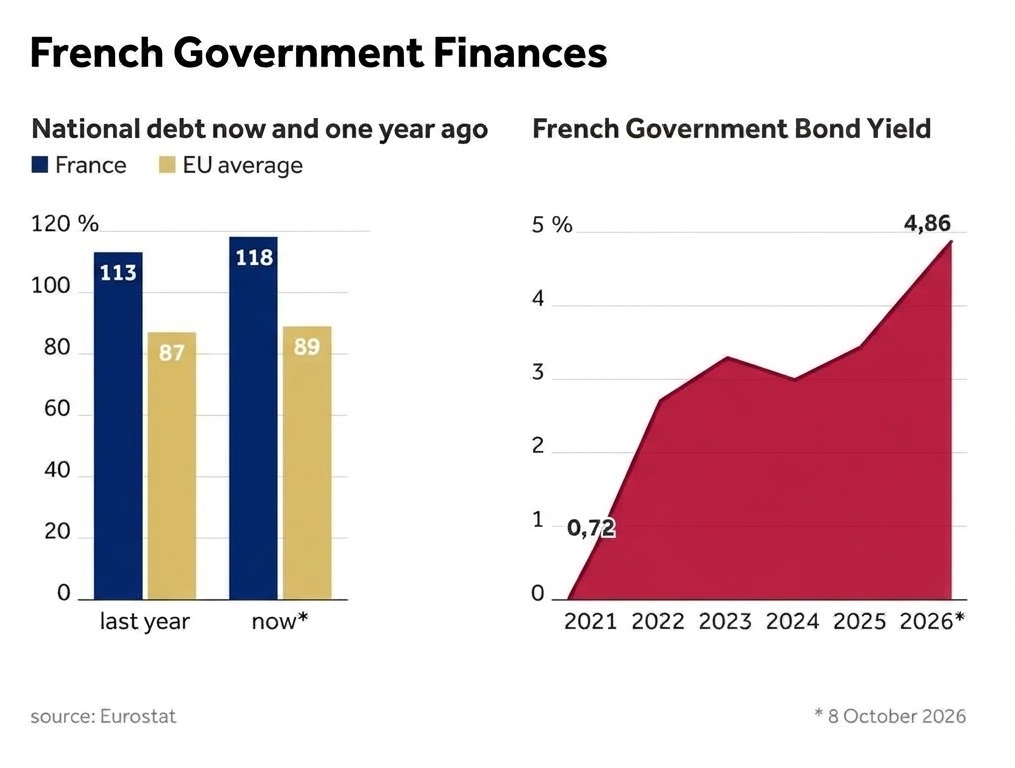
The French economy has long been the problem child of the European Union. With the recently passed budget by Prime Minister Lecornu, little seems set to change. Economists and professors are increasingly alarmed by the state of France’s finances. “Our country has become the Argentina of Europe. France is trapped in a hellish spiral leading it toward third world status,” warns Nicolas Baverez, a renowned French economist.

French Economy in Decline © Roel Thijssen 2026
French Economy in Decline

The current state of the French economy is clearly reflected in its inflation figures. While inflation in many European economies has stabilized around 2%, Paris reports an unexpectedly low figure of 0.4%. For years, France has struggled with sky high national debt, while the budget deficit continues to spiral out of control. Attempts to tackle these deficits repeatedly hit a political dead end. Furthermore, major reforms never see the light of day because the French parliament is extremely divided, a situation that recent parliamentary elections have failed to resolve.

​A Tax Trap

​The core of the problem is that potential tax hikes may not provide a way out. Although they increase revenue, the national debt will continue to grow as long as government spending remains unchecked.

​Frédéric Douet, a professor of private law, observes how France is “slowly impoverishing” due to “consistent policies that are both costly and inefficient.” Writing in an op ed for Le Figaro, he expressed his disdain: “The mantra of our technocrats and politicians is that higher taxes will solve our problems.”

​High Unemployment and Low Productivity

​These concerns are well founded. For the third consecutive year, France’s GDP per capita has fallen below the European average. Additionally, inflation sits far below the eurozone average, and the country faces significantly higher unemployment than the EU mean. Baverez warns that raising taxes will be counterproductive, pushing more people into poverty without necessarily generating immediate revenue.

​Baverez believes increased productivity is the only solution. He points out that the French enter the workforce relatively late and have short careers. On average, the French start working at age 22.5 and retire at 62.5. This stands in stark contrast to life expectancy, which is 80 for men and 85.6 for women. Furthermore, the French work an average of only 679 hours per year, while other major European economies see between 715 and 780 hours. In the Netherlands, that figure reaches 837 hours (link to Eurostat). See the chart for 2024 here.

​Billion Euro Tax Burden

​The economist is also critical of the tax measures in the new budget, which aims to raise an additional 44 billion euros, including 12 billion euros from the corporate sector. Baverez warns that these plans accelerate France’s “financial suffocation” and create “the conditions for a major financial shock.” If France continues on this path, he fears the country will “no longer be among the world’s ten largest economies” by the end of this decade.

French democracy in crisis: Macron lacks support, opposition also powerless

Macron

One year ago today, Emmanuel Macron was re-elected as president of France. Yet no one seems to be in the mood for a party. Macron is doing badly in the polls: only 26 percent of the French still trust him.

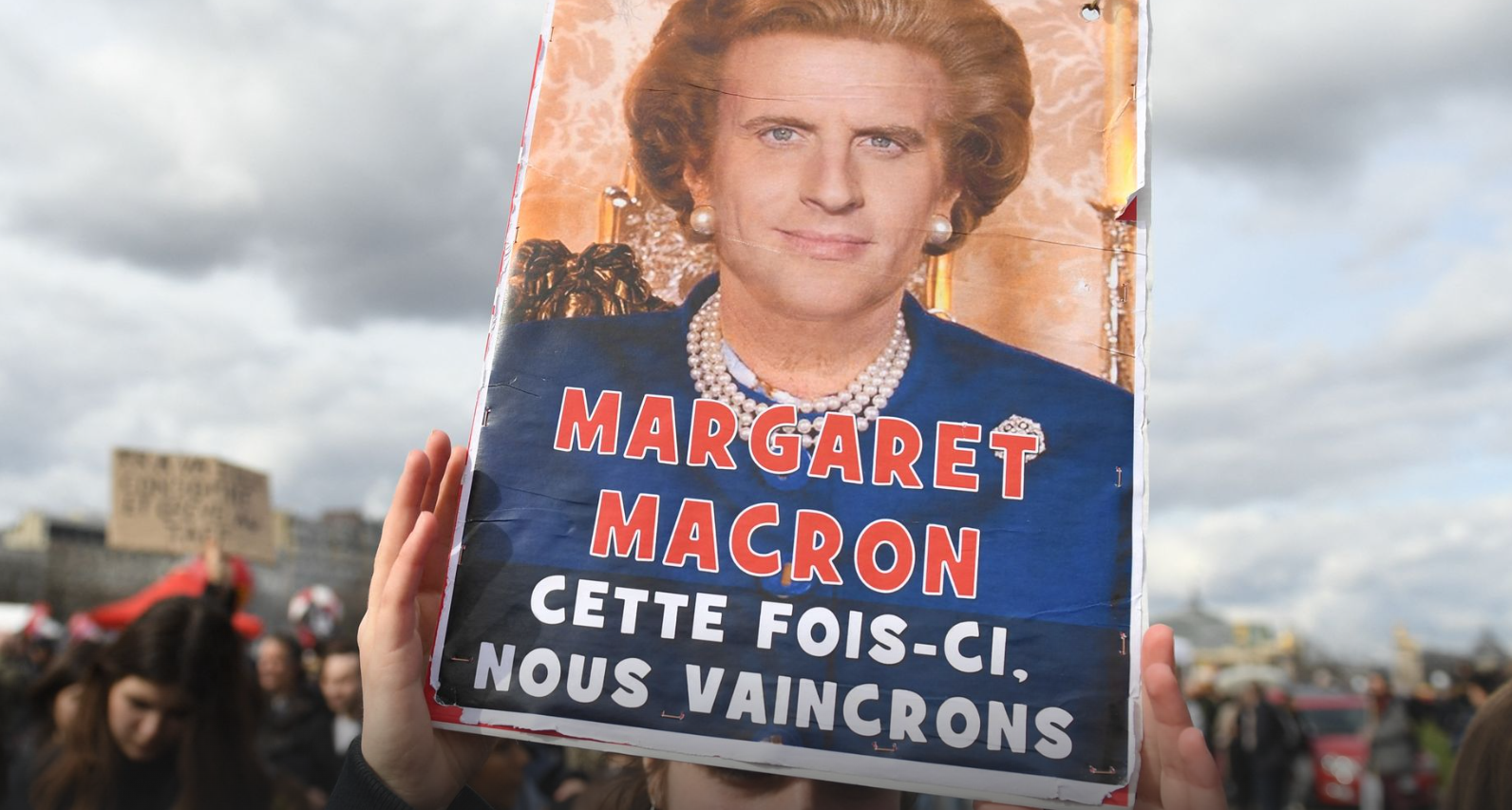
Protest signs against Macron, at a protest earlier this month – AFP

Demonstrations have been taking place across France against Macron’s pension reforms since January. This leads to concerns about the state of the country. “We are in the worst democratic crisis France has seen in decades,” said historian and sociologist Pierre Rosanvallon. Political scientist Adrien Broche sums up: “There is a social crisis, there is a political crisis and more than three-quarters of the French say that French democracy is in bad shape. In short: all signals are on red.”


From day one relatively little support


What’s going on in France? For that we have to go back in time. On April 24, 2022, Emmanuel Macron won the presidential election for the second time. He had already served five years as head of state and was therefore allowed by the voters to stay in office for another five years.\


But it was not a victory with flying colors. Many French people did not vote. As a result, Macron ultimately received the support of only 38.5 percent of all French voters: a minority.
Legally it didn’t matter. The winner is the one with the most votes. But there were warnings about a president with relatively little public support.


Two months later, parliamentary elections were held in France. Macron’s party became the largest, but failed to win an absolute majority. From now on he was forced to negotiate with the opposition before passing bills.


The declining turnout also played a role in the background. The enthusiasm to vote has been decreasing for years among the French. For example, only 46 percent of the French entered the voting booth in the parliamentary elections. By way of comparison: in the Netherlands, the turnout in the last parliamentary elections was 78.7 percent.


President vs. population


In that climate, Emmanuel Macron began his second term in office. Raising the retirement age from 62 to 64 was the first major reform in that new political context: with little public support as president, and without a majority in parliament.


President Macron tried to overcome those obstacles. He initially wanted to raise the retirement age to 65 years, but because of social resistance he made a concession and made it 64 years. The resistance remained the same.,


Macron negotiated in parliament with the conservative opposition to gain support for his plans. That also failed; there was no majority. The result: the president pushed through a plan that the French did not like. He simply sidelined parliament because most MPs would vote against.


Meanwhile, three months of strikes and demonstrations by millions of French people have taken place, making the pension protests among the largest in French history. “The vote of the street should not outweigh the vote of the electorate,” the president said. He meant: the increase in the retirement age was in his election manifesto, so the voter knew what he was opting for. In fact, there is no in-between. But that ‘voter’s vote’ is the 38.5 percent of the French who voted for him. That is what many protesters mean when they say that Macron is not “the people’s president.”


The pension protests exposed the legitimacy problem warned about a year ago. Macron has too little support from the French and too few friends in parliament. Critics say Macron has driven voters away and antagonized the opposition.


Weak opposition


Macron’s opponents cannot make a fist either. The opposition in parliament is hugely divided. They fail to offer an alternative together or in coalitions. And the trade unions have mobilized millions of French people in recent months, but the result has been nil: the protest has had no effect. The pension crisis has only produced losers. “The crisis we are going through has not been good for anyone,” philosopher Florent Guénard said last month. “Democracy is divided and weakened. Emmanuel Macron is our legitimate president. But ‘legitimate’ does not mean you can do what you want. A president has responsibilities: he must listen.”


Emmanuel Macron still has four years left as president. He is now plotting a route for the next hundred days. In that short period of time, new policy plans must be launched, and he also wants to regain the confidence of the French.