
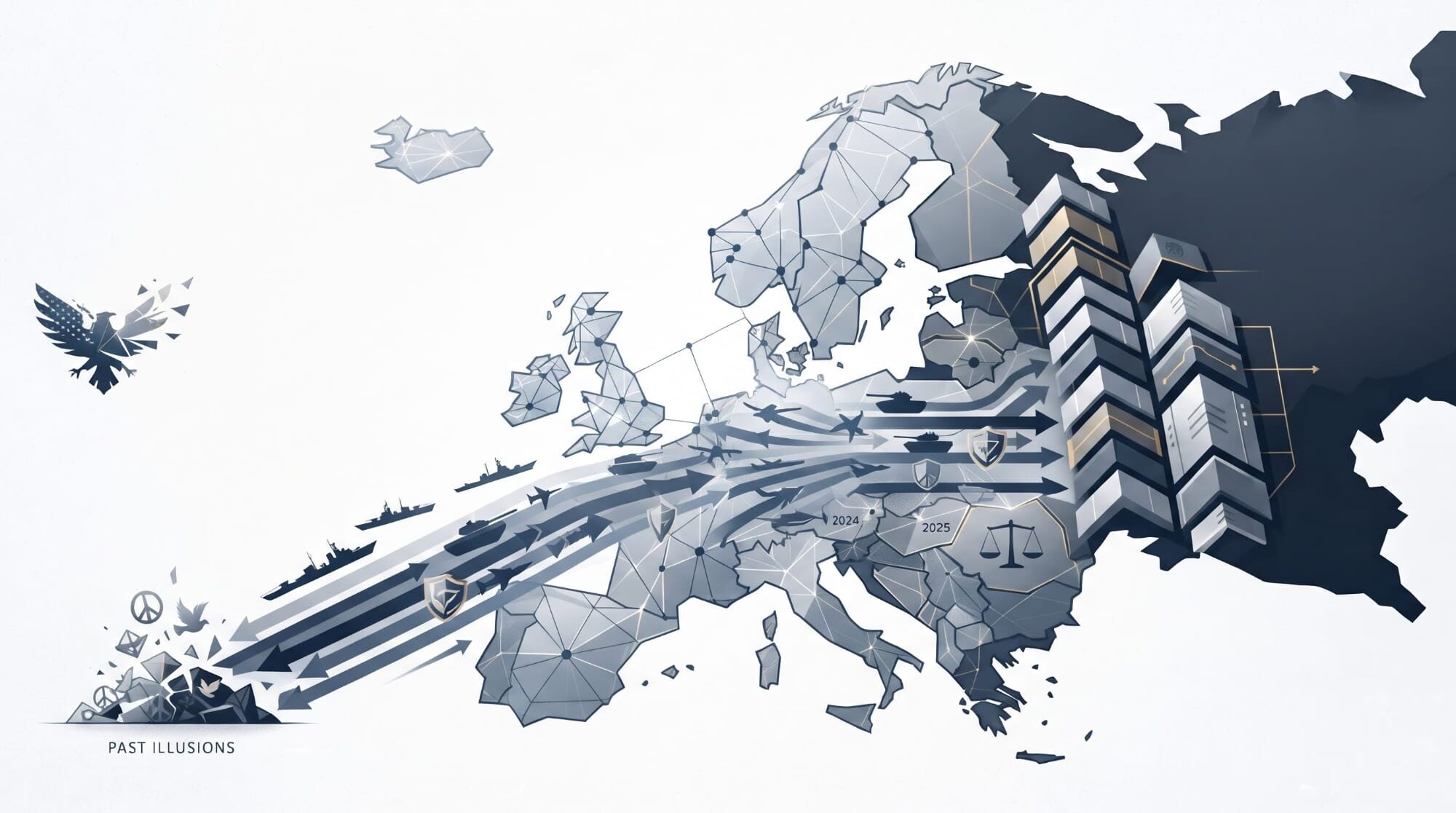
Standing Alone: Europe’s Race to Secure Its Own Borders

The New Balance of Fear: How Geopolitical Shocks Reshaped European Defense

For decades, the presence of foreign troops in certain border nations carried heavy historical anxieties. Today, however, frontline European states facing eastern pressures actively welcome the permanent deployment of allied armored brigades to bolster regional security.
The New Balance of Fear: How Geopolitical Shocks Reshaped European Defense

​The aggressive stance of eastern leadership and the transactional nature of transatlantic relations have fundamentally scrambled Europe’s strategic calculations and its internal balance of security perceptions. Major continental powers are now ramping up defense outlays significantly, with long-term spending plans projected to surpass the combined military expenditures of traditional regional powers. Rather than viewing this rearmament with alarm, neighboring nations increasingly rely on it as a vital deterrent.

Put bluntly, after years of lagging behind in defense investments, mainstream European leaders share a deep-seated dread of being politically or logistically abandoned before the region can independently deter external threats. These anxieties surged following major military escalations in the east and intensified further after political shifts in North America underscored a growing skepticism toward traditional multilateral alliances and regional security guarantees.

European capitals broadly recognize the urgent need to support affected partners and prepare for a scenario where traditional overseas allies take a back seat. This shared imperative has helped mend diplomatic ties among nations that take defense seriously, including nuclear-armed states, major economic contributors, and frontline supporters across northern and eastern Europe. Common external pressures have quickly overshadowed historical policy squabbles.

Internal perceptions have evolved dramatically as well, particularly in nations where the public long harbored deep reservations about military might. Post-conflict political consensus once fostered a comfortable narrative of prioritizing commerce and pacifism above all else. Today, however, external shocks and changing geopolitical realities have forced a rapid wake-up call, accelerating defense investments and pushing governments to treat security as an absolute priority.

European unity remains fragile, nevertheless. Upcoming electoral cycles across key member states threaten to bring nationalist and populist factions closer to power. Several of these movements carry histories of skepticism toward traditional alliances or maintain sympathetic views of eastern adversaries. Furthermore, domestic political divisions over foreign aid, migration, and regional integration continue to strain consensus. Nationalist factions frequently champion a looser alliance of sovereign nations over deeper supranational integration, potentially complicating coordinated defense efforts.

A rising nationalist wave could also create friction within defense procurement and military cooperation. Analysts note that for major manufacturing nations to expand their defense industrial base without alarming neighbors, their military and fiscal might must remain firmly anchored within multilateral frameworks. A fragmentation of Europe into distinct regional blocs, such as a security-focused northern tier versus southern governments more inclined toward economic appeasement or inward-looking border priorities, would place national and collective interests at direct odds.

The role of traditional transatlantic partners remains ambivalent and complex. While continuous pressure is applied on European allies to shoulder a greater financial burden for their own defense, mixed signals regarding regional adversaries and local nationalist factions create widespread policy confusion. If Europe is expected to stand on its own feet defensively, a clear and unified strategic vision is more vital than ever.

​Europe must internalize the right lessons from recent geopolitical shocks. Heightened security awareness has finally galvanized European nations to take their defense seriously, but completing this transition requires resisting populist divisions that threaten to derail collective progress.
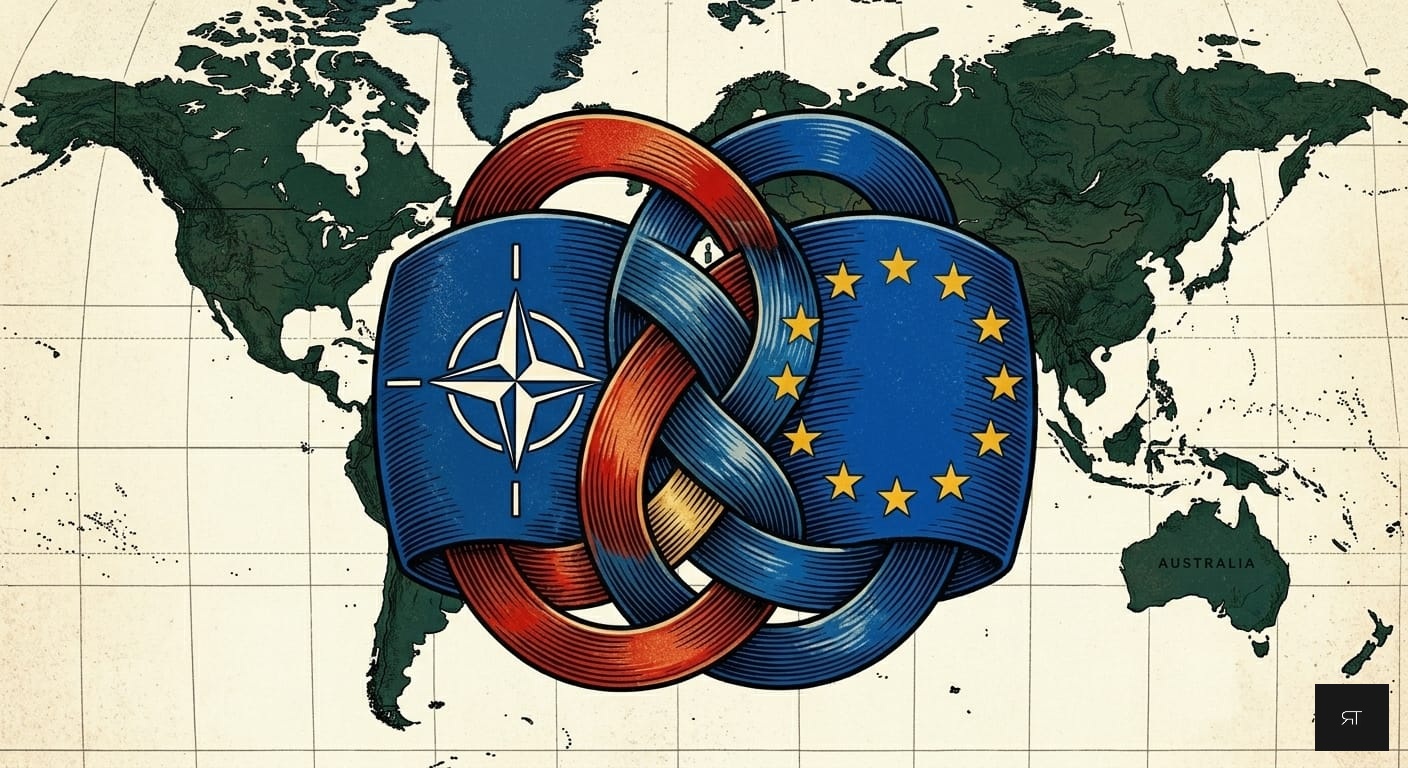
The Case for European Sovereignty: Why the EU Must Outgrow NATO

Why the EU Must Outgrow NATO

The geopolitical landscape of the 21st century is shifting rapidly, demanding a reassessment of established security structures. For decades, the European Union has relied on the North Atlantic Treaty Organization (NATO) as the bedrock of its security. This alliance provided stability during the Cold War, but in today’s multipolar world, this deep and limiting dependency on the United States is becoming increasingly untenable.

If the EU is to become a truly independent global actor, it must make the difficult but necessary decision to step out of NATO and build its own sovereign defense architecture. One of the clearest, most damaging proofs of this divergent reality can be found in the West’s fractured approach to Iran.

The Divergence of Strategic Interests and the Iran Lesson

The core of the problem lies in the fundamental strategic priorities of Washington and Brussels, which are no longer fully aligned. While the United States is increasingly focused on the Indo-Pacific region and its systemic rivalry with China, Europe’s primary security concerns remain centered on its immediate neighborhood: Eastern Europe, the Mediterranean, North Africa, and the Middle East.

This divergence is nowhere more apparent than in the catastrophic failure of unified transatlantic policy towards Iran. For decades, European powers, notably the E3 (Germany, France, and the UK), led meticulous diplomatic efforts to prevent an Iranian nuclear weapon, culminating in the Joint Comprehensive Plan of Action (JCPOA) in 2015. This agreement was hailed as a benchmark for European soft power and a critical security measure for the region.

However, the 2018 unilateral withdrawal from the deal by the Trump administration, followed by the re-imposition of crippling economic sanctions, fundamentally undermined European strategic interests. The EU was effectively held hostage by American policy. European businesses, which had started to invest in Iran, were forced to retreat, and European banks were threatened with exclusion from the US financial system.

The EU’s subsequent attempts to create alternative payment mechanisms, like INSTEX, proved ineffective, highlighting how American unilateralism can invalidate European sovereignty. The US’s “maximum pressure” campaign on Iran, far from stabilizing the region, heightened tensions, creating a direct security threat for Europe.

The lesson from Iran is clear: As long as the EU is bound within a security framework dominated by the United States, it will remain vulnerable to Washington’s policy swings. European security and economic interests are too often subordinated to American strategic goals, limiting Europe’s diplomatic flexibility and its ability to engage with critical regional actors on its own terms.

The Catalyst for Military and Technological Autonomy

True geopolitical power requires military and technological independence. Currently, European defense relies heavily on American hardware, intelligence, and command structures. This reliance creates a comfort zone that prevents the European defense industry from reaching its full potential.

Leaving NATO would serve as a forced catalyst for integration. It would compel the EU to consolidate its fragmented military capabilities, invest heavily in its own defense technology, and create a unified European command. Instead of buying off-the-shelf American systems, European capital would flow into European innovation, strengthening our technological independence and creating a robust, self-sufficient defense industrial base.

Confronting the Consequences

We must be realistic about the consequences of such a monumental shift. Transitioning away from NATO is not a step to be taken lightly. The immediate effects would be severe and demanding:

  • Financial Burden: The cost of replacing the American security umbrella will be immense. EU member states will need to drastically and permanently increase defense spending, diverting funds from other national budgets.
  • Short-Term Vulnerability: During the transition phase, the EU would experience a temporary gap in deterrence capabilities, particularly regarding nuclear deterrence and high-end military logistics.
  • Diplomatic Friction: A European exit from NATO would fundamentally alter transatlantic relations, likely leading to economic and political friction with the United States and non-EU NATO members like the United Kingdom.
  • Internal Political Division: Forging a unified European army and foreign policy will require overcoming deep-seated national interests and political resistance within the EU itself.

The Path Forward

Despite these daunting hurdles, the challenges are not insurmountable. Every complex systemic problem can be analyzed and solved with sufficient political will and strategic foresight.

For the European Union to secure its future, protect its economic interests, and stand as an equal among global superpowers, it must graduate from its historical reliance on Washington.

The path to a sovereign, secure, and technologically independent Europe will be expensive and politically fraught. However, the alternative is to remain a permanent junior partner in a changing world order.

True European autonomy is only possible outside the confines of NATO.