The Case for European Sovereignty: Why the EU Must Outgrow NATO
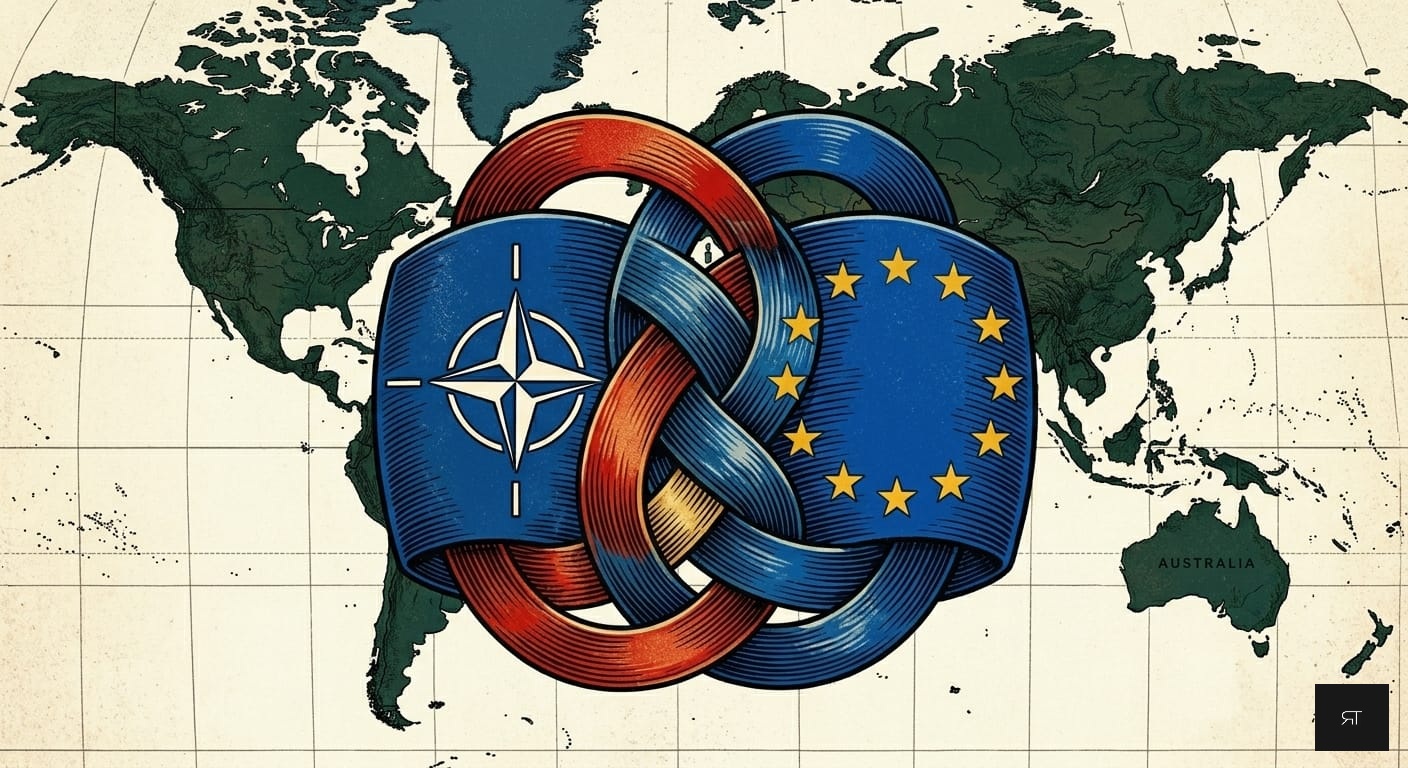
The geopolitical landscape of the 21st century is shifting rapidly, demanding a reassessment of established security structures. For decades, the European Union has relied on the North Atlantic Treaty Organization (NATO) as the bedrock of its security. This alliance provided stability during the Cold War, but in today’s multipolar world, this deep and limiting dependency on the United States is becoming increasingly untenable.
If the EU is to become a truly independent global actor, it must make the difficult but necessary decision to step out of NATO and build its own sovereign defense architecture. One of the clearest, most damaging proofs of this divergent reality can be found in the West’s fractured approach to Iran.
The Divergence of Strategic Interests and the Iran Lesson
The core of the problem lies in the fundamental strategic priorities of Washington and Brussels, which are no longer fully aligned. While the United States is increasingly focused on the Indo-Pacific region and its systemic rivalry with China, Europe’s primary security concerns remain centered on its immediate neighborhood: Eastern Europe, the Mediterranean, North Africa, and the Middle East.
This divergence is nowhere more apparent than in the catastrophic failure of unified transatlantic policy towards Iran. For decades, European powers, notably the E3 (Germany, France, and the UK), led meticulous diplomatic efforts to prevent an Iranian nuclear weapon, culminating in the Joint Comprehensive Plan of Action (JCPOA) in 2015. This agreement was hailed as a benchmark for European soft power and a critical security measure for the region.
However, the 2018 unilateral withdrawal from the deal by the Trump administration, followed by the re-imposition of crippling economic sanctions, fundamentally undermined European strategic interests. The EU was effectively held hostage by American policy. European businesses, which had started to invest in Iran, were forced to retreat, and European banks were threatened with exclusion from the US financial system.
The EU’s subsequent attempts to create alternative payment mechanisms, like INSTEX, proved ineffective, highlighting how American unilateralism can invalidate European sovereignty. The US’s “maximum pressure” campaign on Iran, far from stabilizing the region, heightened tensions, creating a direct security threat for Europe.
The lesson from Iran is clear: As long as the EU is bound within a security framework dominated by the United States, it will remain vulnerable to Washington’s policy swings. European security and economic interests are too often subordinated to American strategic goals, limiting Europe’s diplomatic flexibility and its ability to engage with critical regional actors on its own terms.
The Catalyst for Military and Technological Autonomy
True geopolitical power requires military and technological independence. Currently, European defense relies heavily on American hardware, intelligence, and command structures. This reliance creates a comfort zone that prevents the European defense industry from reaching its full potential.
Leaving NATO would serve as a forced catalyst for integration. It would compel the EU to consolidate its fragmented military capabilities, invest heavily in its own defense technology, and create a unified European command. Instead of buying off-the-shelf American systems, European capital would flow into European innovation, strengthening our technological independence and creating a robust, self-sufficient defense industrial base.
Confronting the Consequences
We must be realistic about the consequences of such a monumental shift. Transitioning away from NATO is not a step to be taken lightly. The immediate effects would be severe and demanding:
Financial Burden: The cost of replacing the American security umbrella will be immense. EU member states will need to drastically and permanently increase defense spending, diverting funds from other national budgets.
Short-Term Vulnerability: During the transition phase, the EU would experience a temporary gap in deterrence capabilities, particularly regarding nuclear deterrence and high-end military logistics.
Diplomatic Friction: A European exit from NATO would fundamentally alter transatlantic relations, likely leading to economic and political friction with the United States and non-EU NATO members like the United Kingdom.
Internal Political Division: Forging a unified European army and foreign policy will require overcoming deep-seated national interests and political resistance within the EU itself.
The Path Forward
Despite these daunting hurdles, the challenges are not insurmountable. Every complex systemic problem can be analyzed and solved with sufficient political will and strategic foresight.
For the European Union to secure its future, protect its economic interests, and stand as an equal among global superpowers, it must graduate from its historical reliance on Washington.
The path to a sovereign, secure, and technologically independent Europe will be expensive and politically fraught. However, the alternative is to remain a permanent junior partner in a changing world order.
True European autonomy is only possible outside the confines of NATO.
2 Replies to “The Case for European Sovereignty: Why the EU Must Outgrow NATO”
Hi Roel,
Thanks a lot for your insights!
While the desire for European autonomy is understandable, the argument to “outgrow” NATO overlooks several critical realities. The Iran JCPOA failure was caused by the global dominance of the US dollar, not NATO’s command structure. Leaving a military alliance will not protect European banks from secondary sanctions or create financial independence.
The EU is not a monolith. For Eastern European and Baltic states, the US security guarantee is an existential necessity. They will not trade proven American protection for a theoretical EU army. A forced NATO exit would divide Europe rather than unite it.
And what about nuclear weapons? Replacing the US nuclear umbrella is highly unrealistic. Is France truly willing to risk its own cities to protect the Baltics? Without a credible, continent wide nuclear deterrent, leaving NATO invites immediate aggression.
The pragmatic solution is not to dismantle the alliance, but to build a robust European Pillar within NATO. True autonomy does not require burning bridges.
Greetings from the US 😊
Michael
You are completely right Roel. Staying in NATO might seem like the safer option today, but it guarantees Europe remains a secondary player in a rapidly changing world order. You hit the mark: outgrowing the alliance is the difficult, but absolutely necessary, leap toward full European sovereignty. I sincerely hope that my country, the UK, will rejoin the EU in the short term.
Comments are closed.
Manage Cookie Consent
To provide the best experiences, roelthijssen.nl uses technologies like cookies to store and/or access device information. Consenting to these technologies will allow us to process data such as browsing behavior or unique IDs on this site. Not consenting or withdrawing consent, may adversely affect certain features and functions.
Functional
Always active
The technical storage or access is strictly necessary for the legitimate purpose of enabling the use of a specific service explicitly requested by the subscriber or user, or for the sole purpose of carrying out the transmission of a communication over an electronic communications network.
Preferences
The technical storage or access is necessary for the legitimate purpose of storing preferences that are not requested by the subscriber or user.
Statistics
The technical storage or access that is used exclusively for statistical purposes.The technical storage or access that is used exclusively for anonymous statistical purposes. Without a subpoena, voluntary compliance on the part of your Internet Service Provider, or additional records from a third party, information stored or retrieved for this purpose alone cannot usually be used to identify you.
Marketing
The technical storage or access is required to create user profiles to send advertising, or to track the user on a website or across several websites for similar marketing purposes.


Hi Roel,
Thanks a lot for your insights!
While the desire for European autonomy is understandable, the argument to “outgrow” NATO overlooks several critical realities. The Iran JCPOA failure was caused by the global dominance of the US dollar, not NATO’s command structure. Leaving a military alliance will not protect European banks from secondary sanctions or create financial independence.
The EU is not a monolith. For Eastern European and Baltic states, the US security guarantee is an existential necessity. They will not trade proven American protection for a theoretical EU army. A forced NATO exit would divide Europe rather than unite it.
And what about nuclear weapons? Replacing the US nuclear umbrella is highly unrealistic. Is France truly willing to risk its own cities to protect the Baltics? Without a credible, continent wide nuclear deterrent, leaving NATO invites immediate aggression.
The pragmatic solution is not to dismantle the alliance, but to build a robust European Pillar within NATO. True autonomy does not require burning bridges.
Greetings from the US 😊
Michael
You are completely right Roel. Staying in NATO might seem like the safer option today, but it guarantees Europe remains a secondary player in a rapidly changing world order. You hit the mark: outgrowing the alliance is the difficult, but absolutely necessary, leap toward full European sovereignty. I sincerely hope that my country, the UK, will rejoin the EU in the short term.