​The European Onion: A Layered Strategy for a Continent in Search of its Path

The European Onion

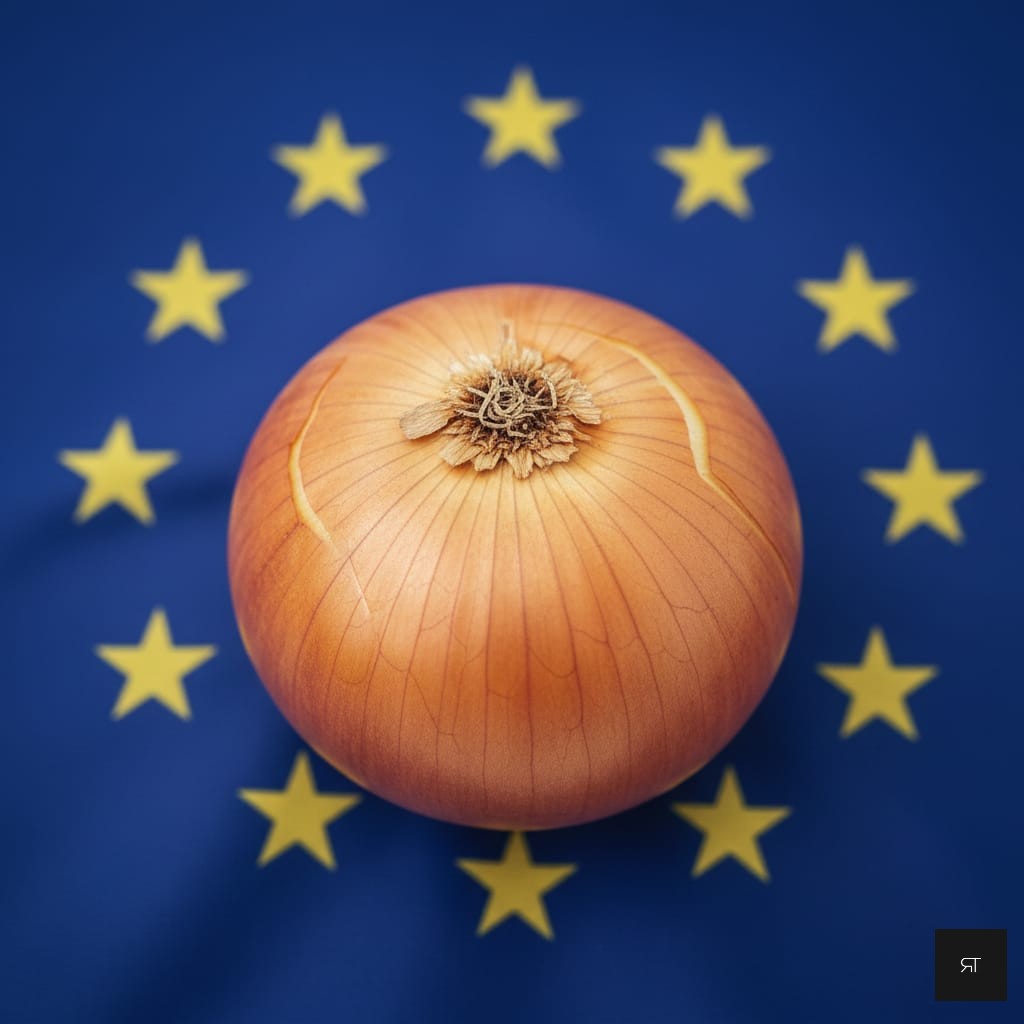
For decades, the dream of a “United States of Europe” has been the North Star for federalists in Brussels. They marched under various banners, Communities, Unions, and Councils, always pushing for a singular, synchronized leap toward integration. However, the reality of 2026 suggests a different path. We are witnessing the birth of what some playfully call the “European Onion”: a multi-layered, pragmatic model of continental cooperation.

The European Onion
The European Onion

Beyond the One-Size-Fits-Old Model

​The traditional EU approach, where every member must move at the same speed, is increasingly hitting a wall. In a geopolitical climate that demands rapid responses, the “slowest member” rule has become a liability. Whether it is military autonomy, trade policy, or technological independence, Europe can no longer afford to wait for total consensus.

​The “Onion” metaphor, popularized by Belgian Prime Minister Bart De Wever, envisions a Europe of concentric circles:

  • The Core (The Kernel): A pioneering group of “heavy hitters”, like the E6: France, Germany, Italy, the Netherlands, Poland, and Spain, pushing for deeper economic and military integration.
  • The Inner Layers: Countries participating in the Single Market and Schengen but perhaps opting out of certain federalist deeper dives.
  • The Outer Layers: Strategic partners like Ukraine or even the UK, who require a functional relationship with the bloc without immediately meeting every rigid bureaucratic standard.

​Pragmatic Federalism in Action

​We are already seeing this “variable geometry” take shape. When financial aid or security measures are blocked by a small minority, “coalitions of the willing” simply move forward. This is not about creating second-class citizens; it is about pragmatic federalism.

​History shows that where pioneers lead, others eventually follow. The Euro and the Schengen Area both started as smaller projects before becoming continental standards. By allowing a vanguard to forge ahead, we prevent the entire European project from ending in tears due to inertia.

If the current structure of the EU is too rigid for the modern world, we must be bold enough to peel back the layers and redesign it. A multi-speed Europe is not a sign of weakness; it is a strategy for survival.

The ‘Impoverishment’ of the French Economy: The ‘Argentina of Europe’

French Economy in Decline

The French economy has long been the problem child of the European Union. With the recently passed budget by Prime Minister Lecornu, little seems set to change. Economists and professors are increasingly alarmed by the state of France’s finances. “Our country has become the Argentina of Europe. France is trapped in a hellish spiral leading it toward third world status,” warns Nicolas Baverez, a renowned French economist.

French Economy in Decline © Roel Thijssen 2026
French Economy in Decline

The current state of the French economy is clearly reflected in its inflation figures. While inflation in many European economies has stabilized around 2%, Paris reports an unexpectedly low figure of 0.4%. For years, France has struggled with sky high national debt, while the budget deficit continues to spiral out of control. Attempts to tackle these deficits repeatedly hit a political dead end. Furthermore, major reforms never see the light of day because the French parliament is extremely divided, a situation that recent parliamentary elections have failed to resolve.

​A Tax Trap

​The core of the problem is that potential tax hikes may not provide a way out. Although they increase revenue, the national debt will continue to grow as long as government spending remains unchecked.

​Frédéric Douet, a professor of private law, observes how France is “slowly impoverishing” due to “consistent policies that are both costly and inefficient.” Writing in an op ed for Le Figaro, he expressed his disdain: “The mantra of our technocrats and politicians is that higher taxes will solve our problems.”

​High Unemployment and Low Productivity

​These concerns are well founded. For the third consecutive year, France’s GDP per capita has fallen below the European average. Additionally, inflation sits far below the eurozone average, and the country faces significantly higher unemployment than the EU mean. Baverez warns that raising taxes will be counterproductive, pushing more people into poverty without necessarily generating immediate revenue.

​Baverez believes increased productivity is the only solution. He points out that the French enter the workforce relatively late and have short careers. On average, the French start working at age 22.5 and retire at 62.5. This stands in stark contrast to life expectancy, which is 80 for men and 85.6 for women. Furthermore, the French work an average of only 679 hours per year, while other major European economies see between 715 and 780 hours. In the Netherlands, that figure reaches 837 hours (link to Eurostat). See the chart for 2024 here.

​Billion Euro Tax Burden

​The economist is also critical of the tax measures in the new budget, which aims to raise an additional 44 billion euros, including 12 billion euros from the corporate sector. Baverez warns that these plans accelerate France’s “financial suffocation” and create “the conditions for a major financial shock.” If France continues on this path, he fears the country will “no longer be among the world’s ten largest economies” by the end of this decade.

Former ECB President Mario Draghi Calls for a Federal Europe: “We Must Decide if We Want to Become a True Global Power”

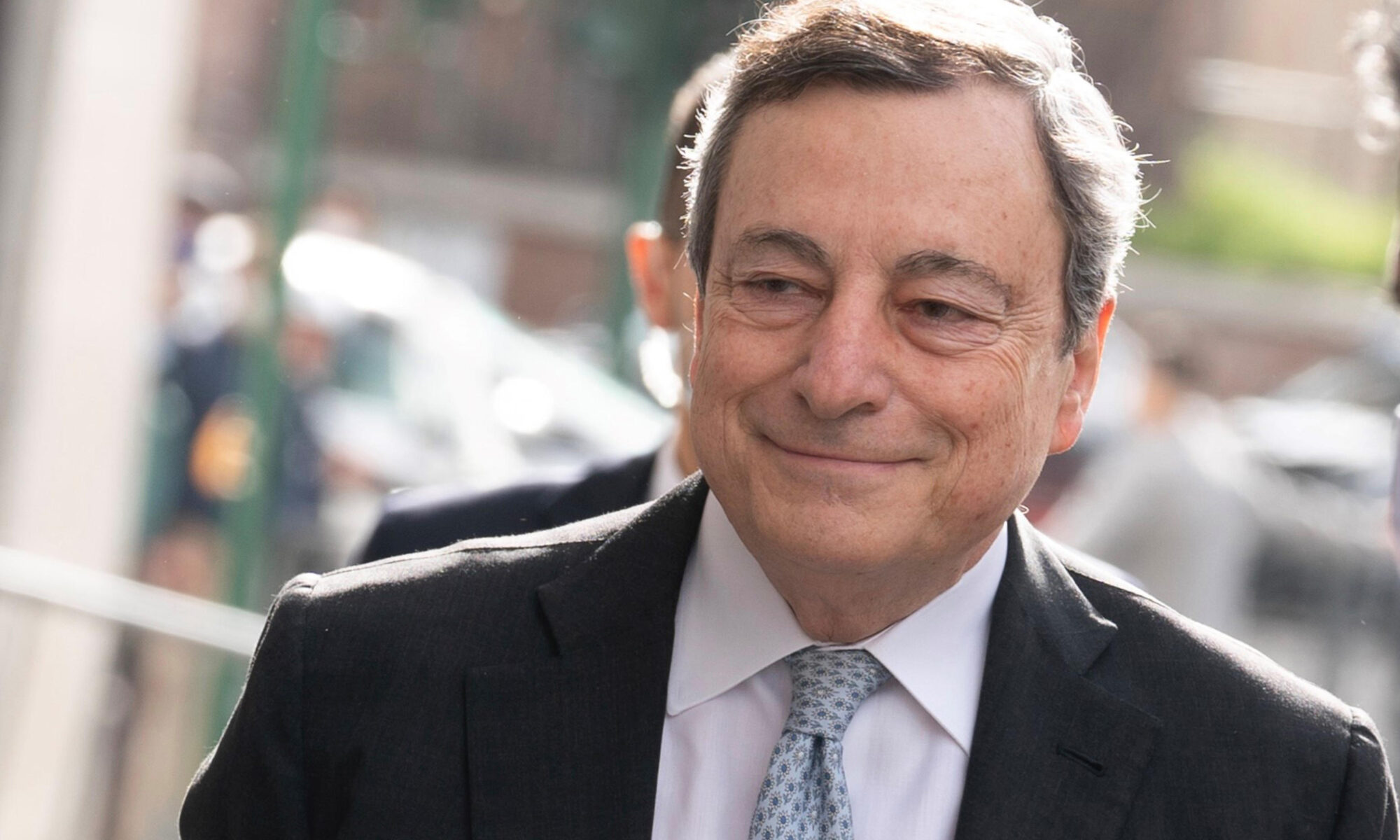
Mario Draghi

Europe must transform into a federation to survive in a world where the United States and China are rewriting the rules of the game. This was the core message from Mario Draghi, former President of the European Central Bank (ECB) and former Prime Minister of Italy. “We must decide whether we want to become a global power or remain subject to the priorities of others.”

Mario Draghi - May 2021

Mario Draghi

Mario Draghi advocates for a European federation to stand firm against superpowers like the US and China. Receiving an honorary doctorate at the University of Leuven (Belgium), Draghi argued that Europe must choose between being a market subservient to outside interests or becoming a sovereign global force. He proposes “pragmatic federalism,” where willing nations start building joint institutions with real decision-making power in specific sectors.

​The Collapse of the Old World Order

​During his acceptance speech at KU Leuven, the man credited with saving the euro did not mince words regarding Europe’s precarious global standing. Draghi noted that the global order, which underpinned European prosperity for decades, has permanently collapsed. This shift is driven by the changing stances of major powers.

​”Beijing controls critical points in global supply chains and does not hesitate to use that power as leverage,” Draghi remarked. “Meanwhile, our traditional ally, the US, is increasingly focused on its own costs and less on the mutual benefits derived from cooperation with Europe.”

​”We are facing a future where Europe risks becoming
simultaneously subordinate, divided, and deindustrialized.”

Mario Draghi

​From Confederation to Federation

​To counter these threats, Draghi insists Europe must move away from its current model as a confederation (a loose collection of states with veto powers) and evolve into a true federation, effectively a “United States of Europe.”

​”A group of states that merely coordinates remains just a group of states,” he argued. “We must decide: do we remain just a large market subject to the priorities of others? Or do we take the necessary steps to become a global power?”

​He pointed out that while Europe acts as a unified bloc in trade, competition, and monetary policy (earning respect as a global player) it remains a “loose collection of mid-sized states” in areas like defense and foreign policy. This fragmentation makes the continent vulnerable to being “picked off one by one” by superpowers.

​The Greenland Precedent

​Draghi cited Europe’s military deployment to Greenland as a prime example of successful unity. This move followed repeated suggestions by U.S. President Donald Trump regarding placing the island under American authority.

​”By acting together against a direct threat, Europeans discovered a level of solidarity that previously seemed unattainable,” Draghi noted. He believes this shared determination resonated far more with the public than the typical declarations following European summits.

​Pragmatic Federalism

​Draghi’s solution is “pragmatic federalism.” This approach does not require every nation to hand over power in every sector immediately. Instead, he suggests that countries willing to cooperate should lead the way in specific domains such as energy, technology, or defense.

​”As Robert Schuman said in 1950, Europe will not be built all at once,” Draghi reminded his audience. “Not all countries will participate in every initiative from the start. The door remains open to others, but not to those who would undermine the common goal.”

​His vision involves building common institutions with genuine authority to act decisively under any circumstances. He pointed to the success of the Euro as the ultimate blueprint: a group of countries took the lead, built institutions with real authority, and created a bond of solidarity that goes deeper than any treaty.

Watch Mario Draghi’s speech in Leuven (from the 4th minute onwards):

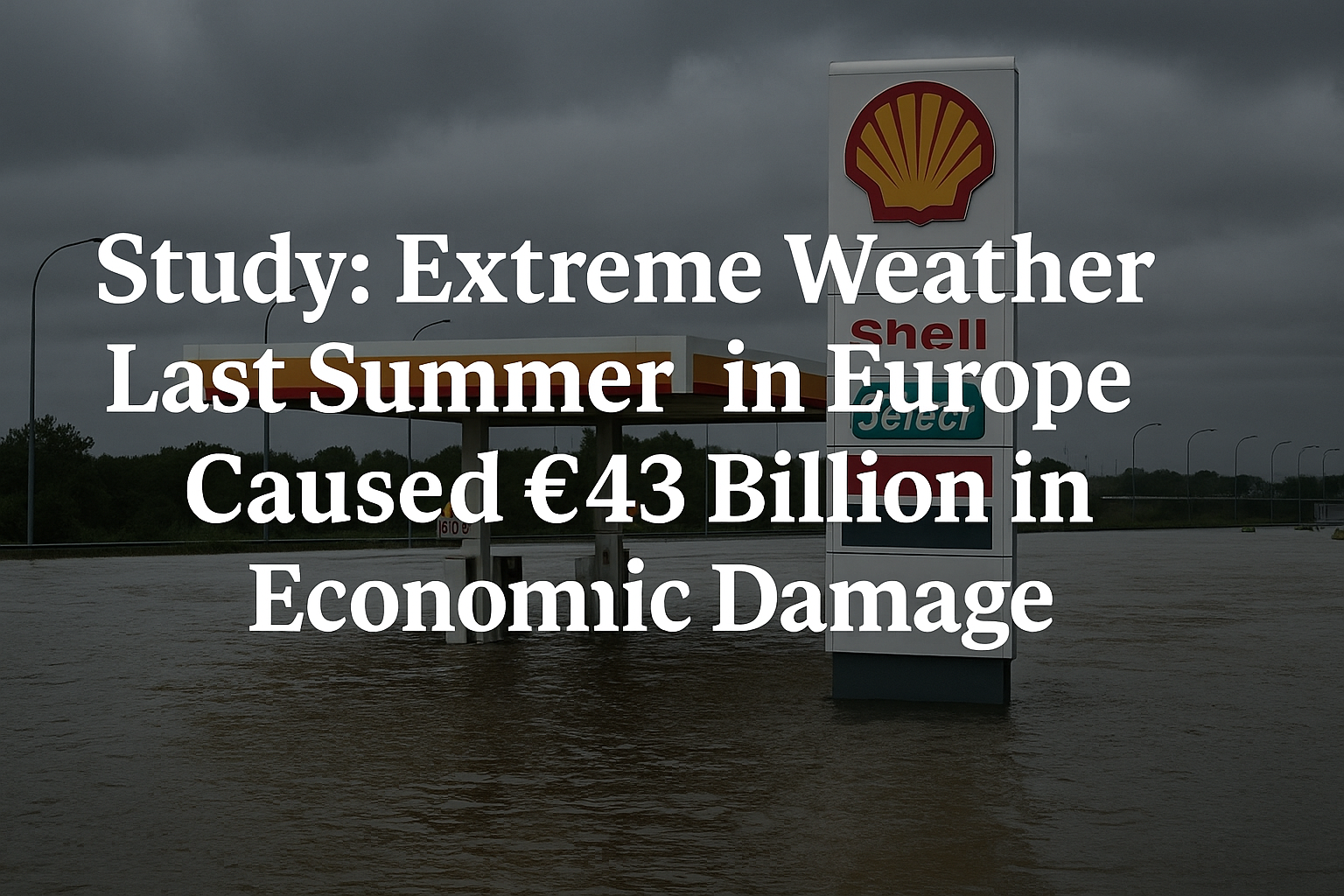
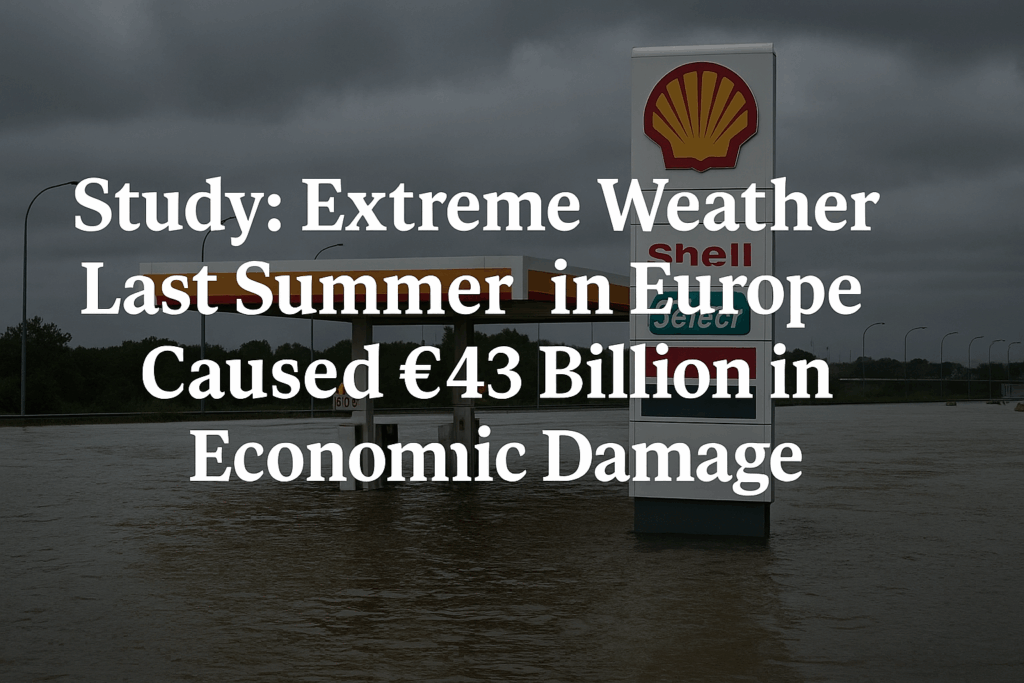
Study: €43 Billion in Economic Damage from Extreme Weather in Europe This Summer

Heatwaves, droughts, and floods that struck Europe over the past summer caused an estimated €43 billion in immediate economic losses, according to a new study by the University of Mannheim in collaboration with economists from the European Central Bank.

The researchers looked at the true cost of climate change in a broad sense: not only the direct and tangible destruction of homes and crops, but also indirect effects such as disruptions to rail transport and reduced labor productivity during extreme heat. Using meteorological data and economic modeling, they calculated that the macro-economic costs could rise to €126 billion by 2029.

The authors stress that their estimates are “conservative,” since several major events—such as the record-breaking wildfires in Southern Europe last month—were not included in the analysis.

Unequal Impact Across Europe

The damage is not evenly distributed. Low-income regions and those with higher temperatures are hit the hardest. Spain, France, and Italy, which faced prolonged heatwaves and drought, each recorded losses exceeding €10 billion this year alone. In the medium term, these costs could rise beyond €30 billion per country.

Central and Northern Europe saw less immediate damage, but floods are becoming increasingly common there as well, suggesting that the costs of climate change will continue to mount across the continent.

Long-Term Consequences

The study also highlights the long-term drag on productivity. Four years after a drought, a region’s GDP is on average 3 percentage points lower than before. In the case of flooding, GDP remains 2.8 percentage points lower.

These findings underscore how climate extremes are not only an environmental challenge but also a profound economic threat—one that will shape Europe’s future growth and resilience in the years to come.

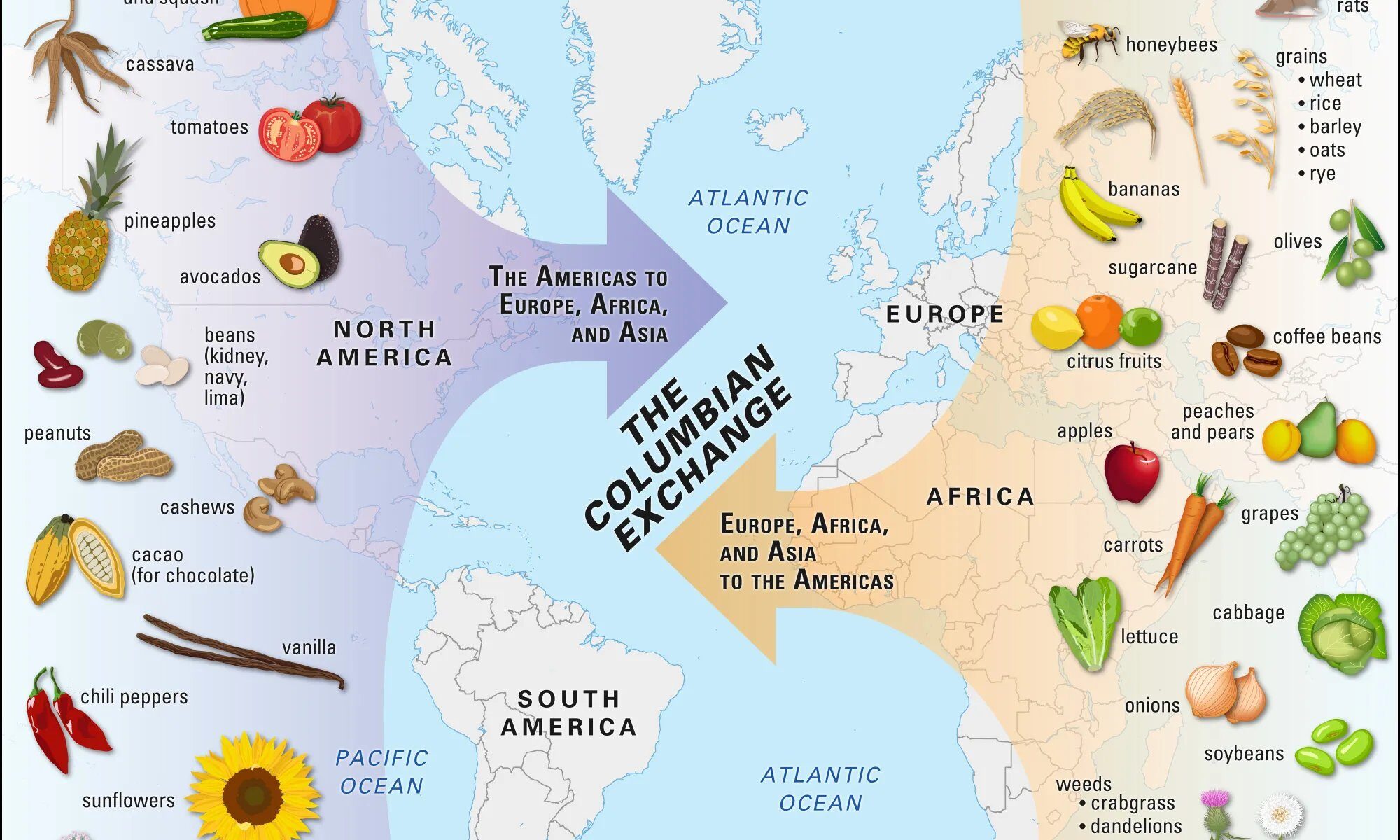
What is the Columbian Exchange?

Columbian Exchange

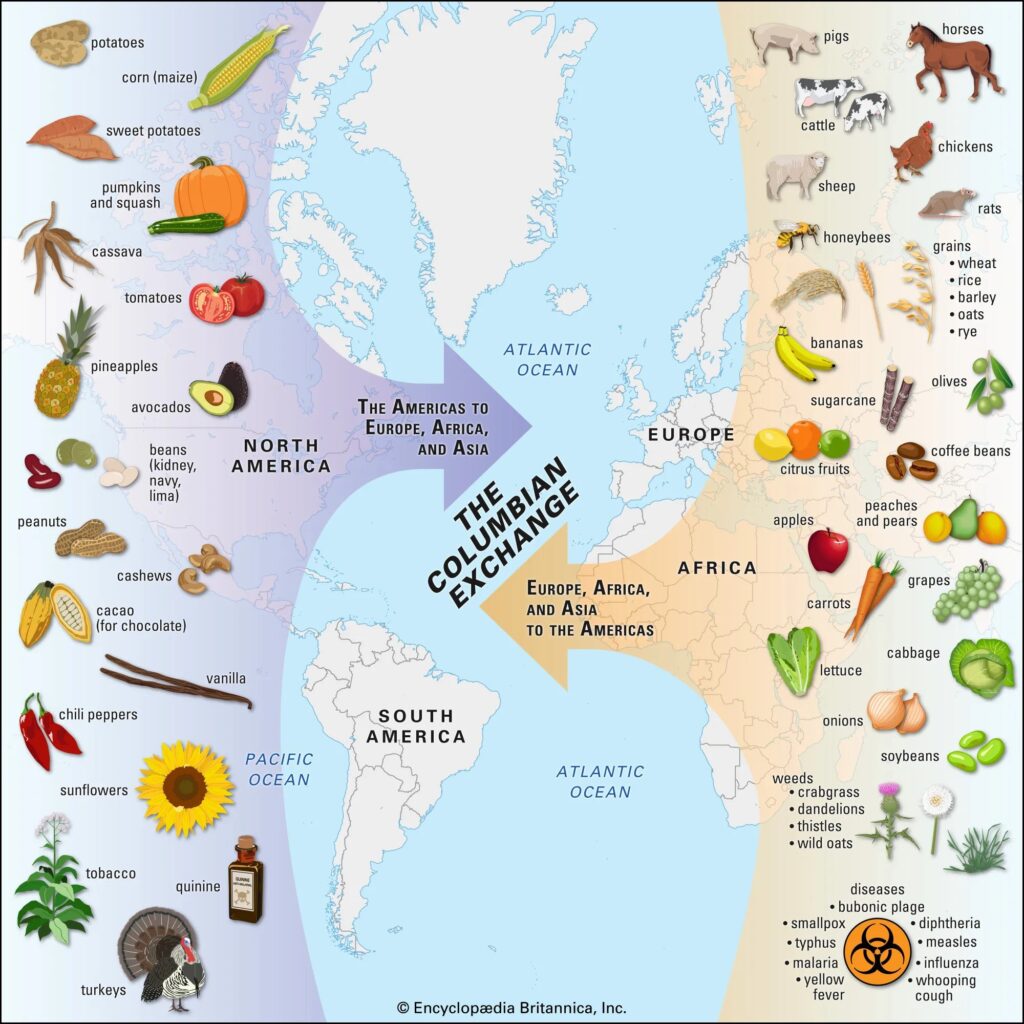
After Columbus’s 1492 voyage, the Columbian Exchange sparked a global food revolution. Europe got potatoes and tomatoes, while the Americas received wheat and sugar.

The Columbian Exchange refers to the massive transfer of plants, animals, culture, human populations, technology, and diseases between the Americas, West Africa, and the Old World (Europe and Asia) following Christopher Columbus’s 1492 voyage. This trade reshaped diets and economies but also unleashed diseases that devastated existing communities in the Americas.

​Key Impact Areas


Agriculture: The exchange introduced life changing crops to new continents. The Americas received wheat, rice, and coffee, while the Old World gained staples like potatoes, corn, tomatoes, and chocolate. These calorie dense foods fueled a massive population explosion in Europe and Asia.


​Livestock: Europeans brought horses, cattle, pigs, and sheep to the Americas. This fundamentally altered the landscape and the way of life for many Indigenous peoples, particularly on the Great Plains.


​Disease: The most devastating aspect was the unintentional transfer of Old World diseases, such as smallpox and measles, to the Americas. Lacking immunity, Indigenous populations suffered catastrophic declines, often estimated at 80 to 90 percent.


Global Economy: This period marked the beginning of true global trade. It connected hemispheres but also led to the rise of the transatlantic slave trade as Europeans sought labor for new plantations.


​Ultimately, the Columbian Exchange didn’t just move goods. It reshaped the biological and social makeup of the entire planet.