

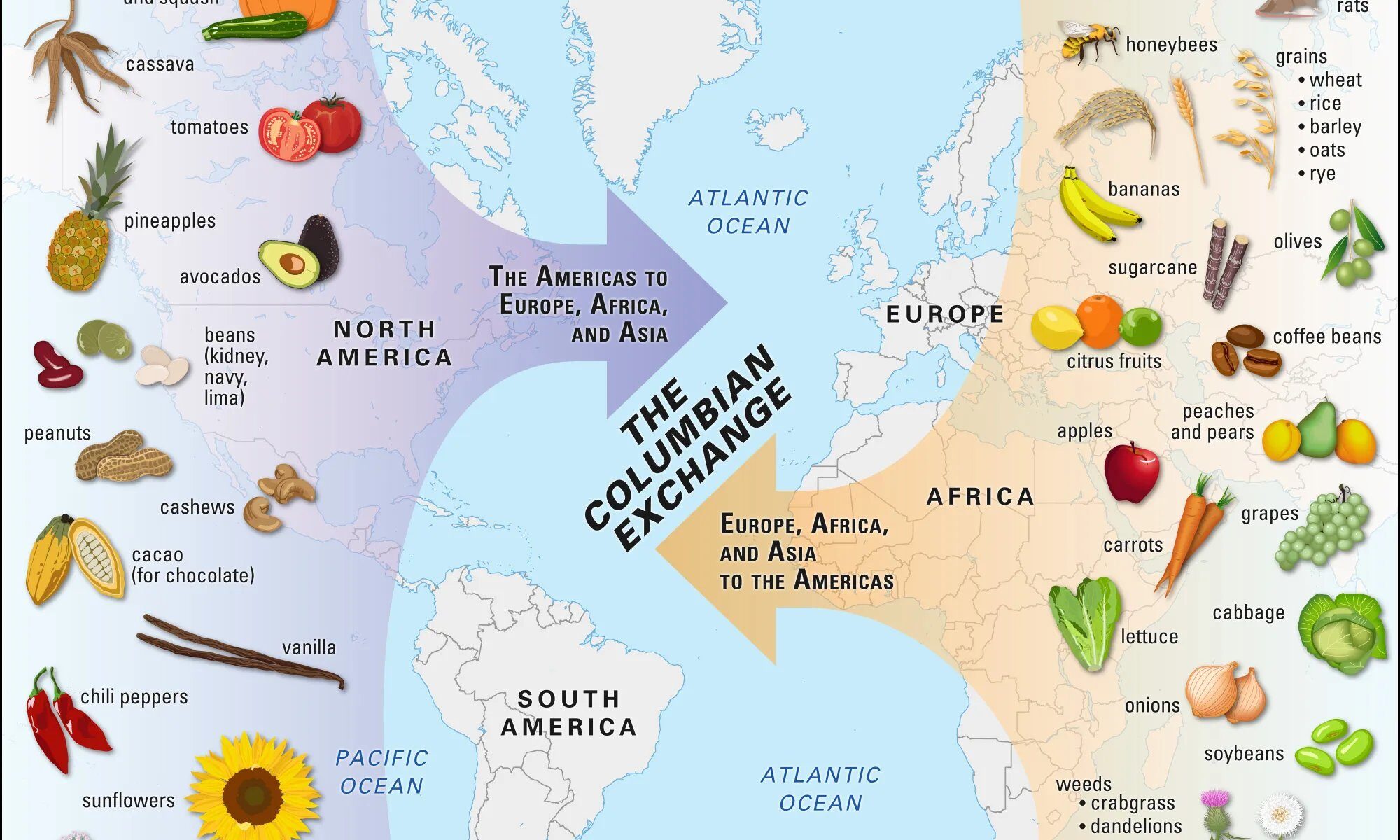
After Columbus’s 1492 voyage, the Columbian Exchange sparked a global food revolution. Europe got potatoes and tomatoes, while the Americas received wheat and sugar.
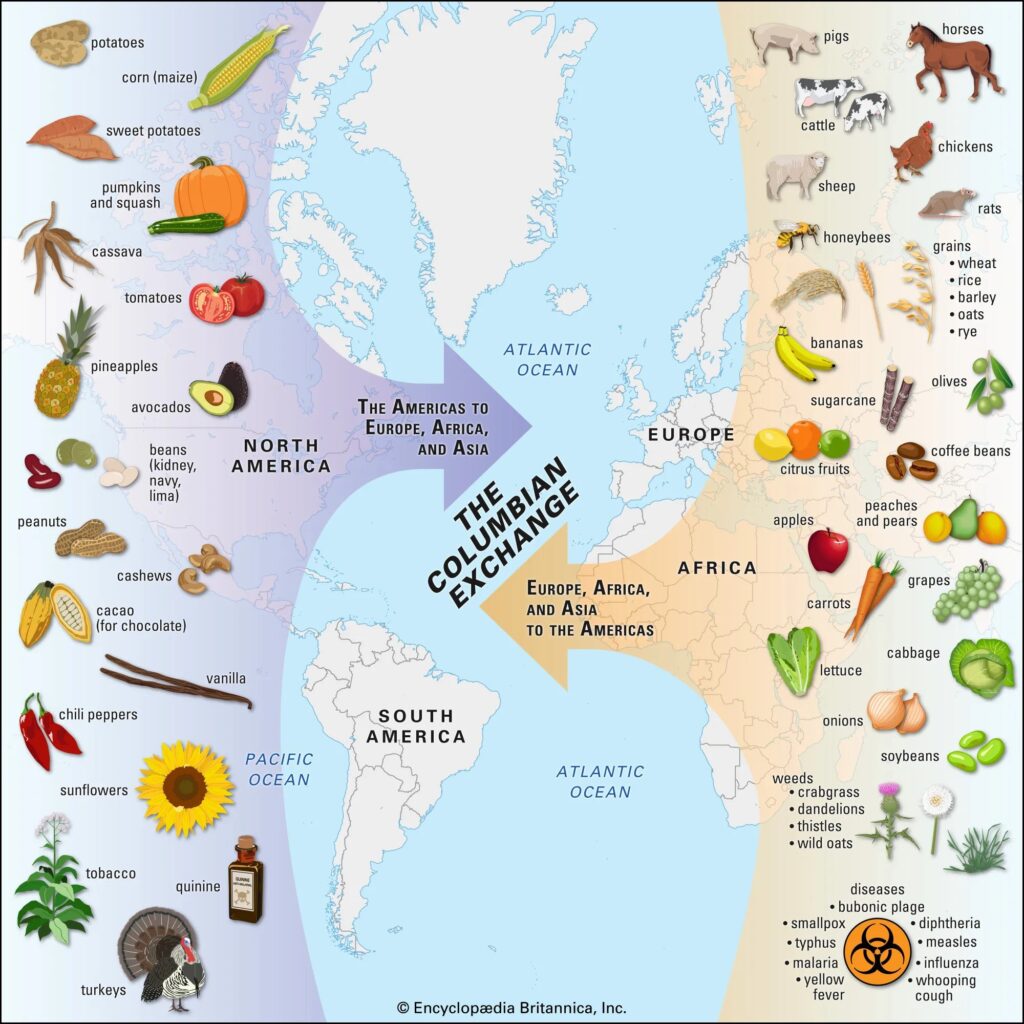
The Columbian Exchange refers to the massive transfer of plants, animals, culture, human populations, technology, and diseases between the Americas, West Africa, and the Old World (Europe and Asia) following Christopher Columbus’s 1492 voyage. This trade reshaped diets and economies but also unleashed diseases that devastated existing communities in the Americas.
Key Impact Areas
Agriculture: The exchange introduced life changing crops to new continents. The Americas received wheat, rice, and coffee, while the Old World gained staples like potatoes, corn, tomatoes, and chocolate. These calorie dense foods fueled a massive population explosion in Europe and Asia.
Livestock: Europeans brought horses, cattle, pigs, and sheep to the Americas. This fundamentally altered the landscape and the way of life for many Indigenous peoples, particularly on the Great Plains.
Disease: The most devastating aspect was the unintentional transfer of Old World diseases, such as smallpox and measles, to the Americas. Lacking immunity, Indigenous populations suffered catastrophic declines, often estimated at 80 to 90 percent.
Global Economy: This period marked the beginning of true global trade. It connected hemispheres but also led to the rise of the transatlantic slave trade as Europeans sought labor for new plantations.
Ultimately, the Columbian Exchange didn’t just move goods. It reshaped the biological and social makeup of the entire planet.
Very interesting!