
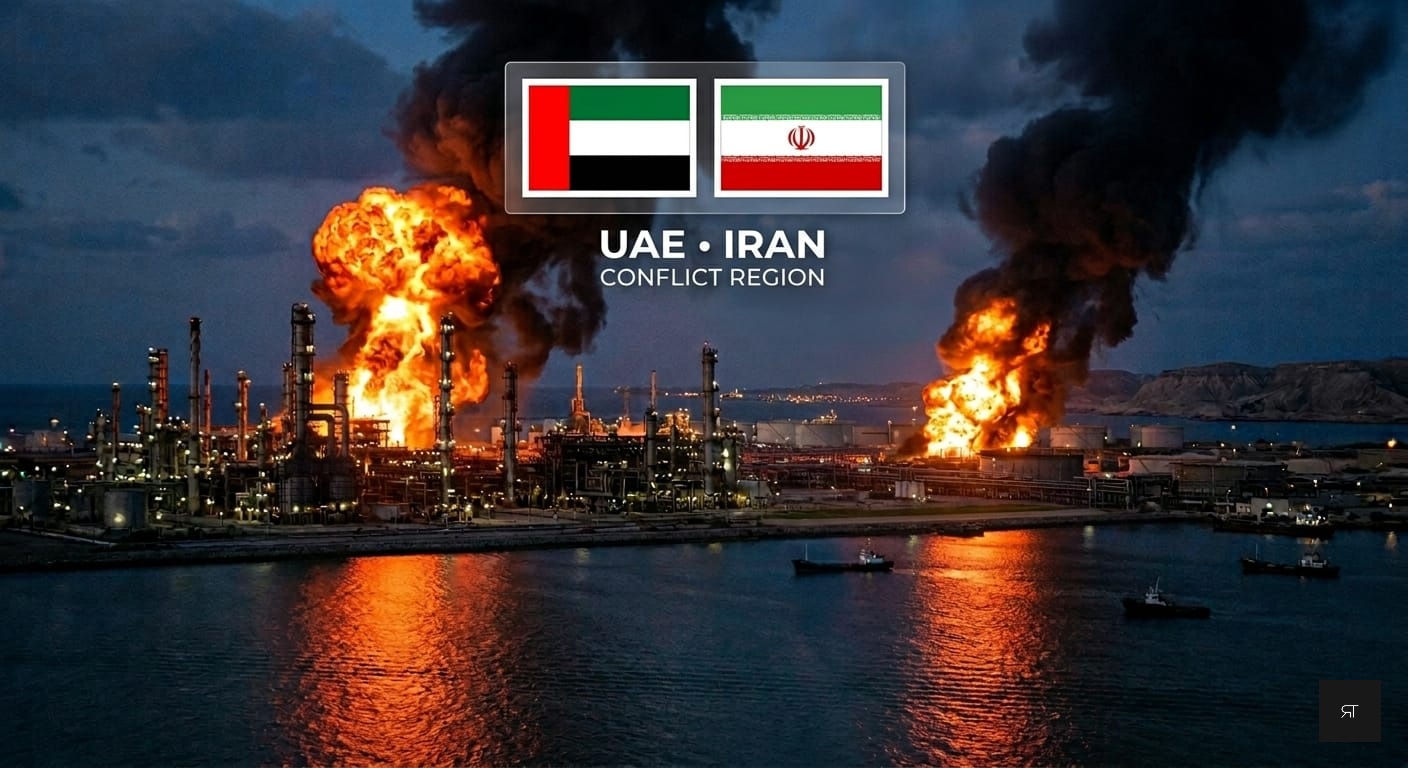
According to the American newspaper The Wall Street Journal, the United Arab Emirates carried out multiple airstrikes against Iran during the ongoing war initiated by Israel and the US. The report cites anonymous sources.
The UAE has not yet responded to the report. If confirmed, it reveals that a third country is actively involved in attacks on Iran, alongside Israel and the United States.
While not all alleged strikes were detailed, the report identifies the UAE as responsible for an attack on an Iranian refinery on Lavan Island in the Persian Gulf in early April. At the time, Iran reported that the refinery had been hit by enemy fire and responded by launching missiles and drones at the UAE and Kuwait. Both Israel and the US denied involvement in the Lavan Island strike.
The attack caused a major fire and rendered the refinery largely inoperable for an extended period. These actions took place while President Trump repeatedly claimed a ceasefire with Iran was imminent. The US has not commented on the potential active involvement of the UAE in the conflict.
Until now, there were mainly rumors, speculation, and regional media reports, but no major Western outlet had reported that Abu Dhabi was conducting strikes against Iran. This makes The Wall Street Journal report significant: it shifts the narrative from mysterious attacks on Iranian infrastructure to the suggestion that the UAE is an active participant in the war.
If true, this marks a major policy shift for Abu Dhabi. As the country that has faced the highest number of Iranian retaliatory strikes, the UAE appears increasingly willing to deploy independent military force to protect its economic and strategic interests. In doing so, they are charting their own course, moving further away from Saudi Arabia and becoming less dependent on the US.
However, the risks are escalating. Iran may now explicitly view the UAE as a direct adversary, further heightening tensions in the Gulf. This makes not only military targets more vulnerable, but also ports, airports, and energy facilities, the very infrastructure that drives the Emirati economy.
Escalation in the Gulf
Iran began launching airstrikes against the UAE and other neighboring Gulf states shortly after the war broke out in late February. The UAE has been the primary target, with over 2,800 Iranian missiles and drones fired at its territory, significantly more than the number of strikes directed at other Gulf nations or even Israel.
The consequences for the UAE have been severe, with key sectors such as aviation and tourism hit hard. According to The Wall Street Journal, this has prompted the country to adopt a more aggressive stance toward Iran, including direct military action.