Trump gets Putin Completely Wrong

Some interesting ideas from Sir Alex Younger, former head of MI6:

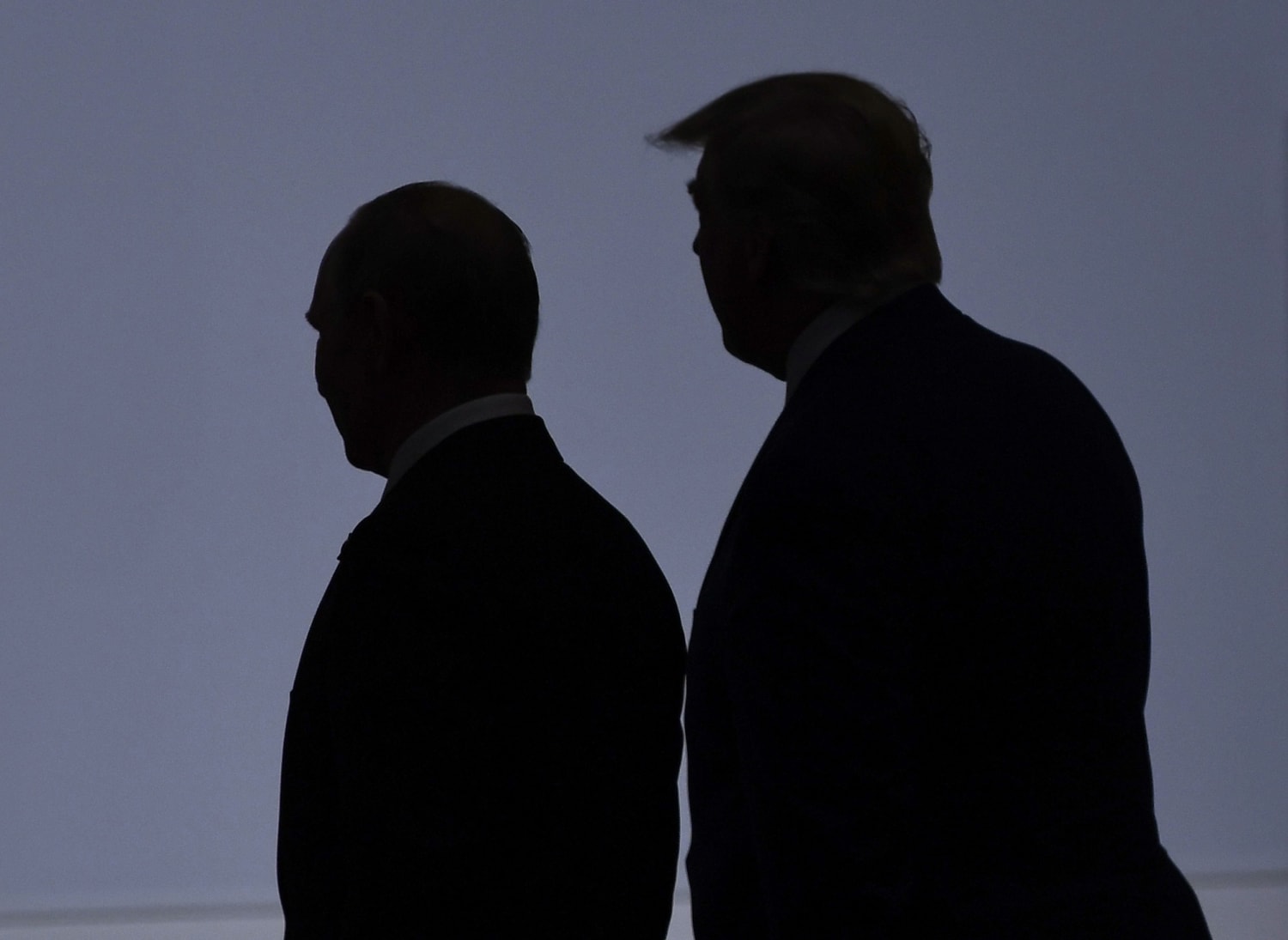
Trump and Putin

Younger: “Trump and Putin talk about different things. Trump thinks this is about territory, about giving land to Russia in exchange for peace. But it’s not about territory—Putin has said it’s about sovereignty.

The existence of Ukraine as a sovereign and free country was an unacceptable affront to Russian security. He will not stop until Ukraine ceases to be a country. And that is a completely different conversation.”

U.S. Special Prosecutor’s Report Released: ‘Trump Lied to Stay in Power’

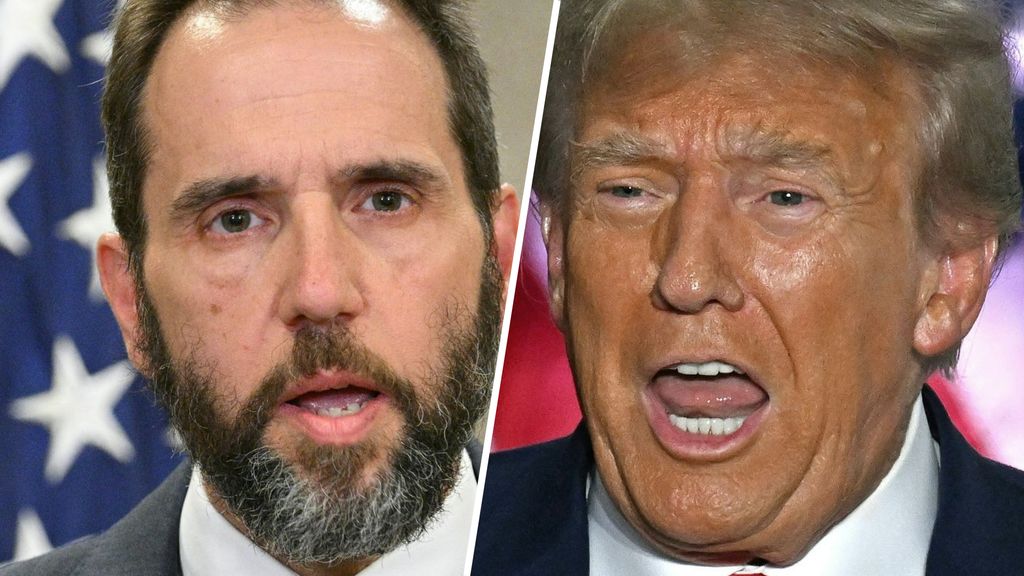
Donald Trump committed an “unprecedented criminal attempt” to remain in power. That is the conclusion of Special Prosecutor Jack Smith in a long-anticipated report on the outgoing U.S. president’s efforts to overturn the 2020 election, which he lost. The report was released today.

AFP

Since Trump won the most recent presidential election, the charges against him have been dropped. The U.S. Department of Justice does not prosecute sitting presidents. The report concludes that there was sufficient evidence to convict Trump, but his upcoming presidency makes that impossible.

The Justice Department submitted the report to Congress early this morning. “The common thread in all of Trump’s criminal activities was deceit,” the report states. “Knowingly and willingly, he made false claims of election fraud. The evidence shows that Trump weaponized these lies to obstruct a federal government function that is fundamental to the U.S. democratic process.”

Although many details of Trump’s attempts to overturn the election were already well known, the document contains, for the first time, a detailed assessment from Smith regarding his investigation. It also includes Smith’s response to Trump and his allies’ claims that the investigation was politically motivated.

Smith argues that his actions against Trump were in defense of the rule of law. He also addressed ongoing criticism from the newly re-elected president. “Trump’s claim that my prosecutorial decisions were influenced or directed by the Biden administration or other political actors is, in one word, ridiculous,” Smith wrote in a letter to the Attorney General about the report.

Quiet Resignation

Smith also intended to indict Trump for illegally storing sensitive national security documents at his Mar-a-Lago residence in Florida after leaving the White House in 2021. However, the Justice Department has pledged not to release that part of the investigation publicly, as legal proceedings are still ongoing against two Trump associates charged in the case.

Over the weekend, it was announced that Jack Smith had resigned. His departure had been expected ever since Trump won the election in November. Jack Smith (55), who previously prosecuted war criminals at the International Criminal Court in The Hague, was appointed in 2022 to prosecute Trump.

Trump himself responded in his typical fashion to the report’s release. On Truth Social, he called Smith a “dumb prosecutor who failed to get his case heard before the election.” He did not mention that his own legal team had filed numerous procedures to delay the trial.

Zuckerberg is Cozying Up to Trump: Meta Ends Partnership with Fact-Checkers in the U.S. Due to ‘Censorship’

Meta is ending its collaboration with fact-checkers in the United States, according to an announcement made today by owner Mark Zuckerberg. Instead, Meta, the parent company of Facebook and Instagram, will implement a system that allows users to comment on potentially misleading content.

Mark-Zuckerberg-2019

The new system, based on user comments, is similar to the Community Notes feature on X (formerly Twitter). In this system, users can provide feedback on potentially misleading posts, meaning that professional fact-checkers will no longer be responsible for verifying content.

The company says it is terminating its partnership with experts, including journalists from major international news agencies, because, according to Zuckerberg, they are “politically biased.” “The fact-checkers have done more harm than good in terms of building trust,” Zuckerberg stated in a video message.

Immigration and Gender

Zuckerberg also announced plans to change Meta’s moderation policy on certain topics. “We want fewer restrictions on subjects like immigration and gender,” he said. According to him, Facebook and Instagram have shifted from being inclusive platforms to spaces where people are silenced too quickly.

He also claimed that too many posts are being fact-checked and censored. The fact-checking is currently handled by employees of major international news agencies such as AFP, AP, and Reuters.

Zuckerberg pointed to recent U.S. elections as a major factor in his decision. “The last elections feel like a cultural turning point to bring freedom of speech back to the forefront,” he said.

Cozying Up to Trump

Zuckerberg is clearly seeking favor with Donald Trump, with whom he dined shortly after Trump’s election victory at Mar-a-Lago. Trump was informed of Meta’s plans in advance. Meta also donated $1 million to Trump’s inauguration, along with other tech companies.

By relocating moderation teams to Texas and shifting to user-driven corrections instead of professional fact-checking, Meta is following the example of Trump advisor Elon Musk, owner of X. Under Musk’s leadership, that platform has transformed into a propaganda machine for the new president.

How ‘Trumponomics’ Revives a Forgotten Economic Worldview

The Great Plundering Can Begin

Will the United States, under Donald Trump’s leadership, lean toward an authoritarian capitalism similar to China’s model? His protectionist ideology, inspired by a forgotten and assassinated president, can be summarized in four words: “We are America, bitch.”

U.S. President-elect Donald Trump walks with Elon Musk before attending a viewing of the launch of the sixth test flight of the SpaceX Starship rocket, in Brownsville, Texas, U.S., November 19, 2024 . Brandon Bell/Pool via REUTERS

The U.S. Economy Under Trump in 2029

By January 1, 2029, the United States feels emptier. Contrary to analysts’ predictions that President Trump would scale back his rhetoric, he has kept his promises. Eleven million undocumented immigrants have been deported during his second term. This has significantly impacted a total workforce of 160 million people. Yet, the economy thrives: the oil sector operates without restrictions, and Wall Street enjoys freedom from stringent financial regulations. The result? Businesses are flooded with cheap energy and loans.

Import tariffs—60% on Chinese products and 10-20% on others—have further revitalized America’s declining industries. Store shelves are now filled with goods Made in America. The cherry on top? Income tax has been abolished. Hardworking Americans no longer fund their government directly—foreigners do, thanks to protectionist tariffs.

It’s a vision Trump outlined in a rally in Arizona before his sweeping victory in the fall of 2024:

“We’ll ensure low taxes, minimal regulations, cheap energy, low interest rates, and low inflation so that everyone can afford groceries, a car, and a beautiful home.”

This Trumpian utopia—a fantasy, of course—raises questions. What is the essence of his economic worldview? For many supporters, the answer is simple: it’s not an ideology but common sense. That term appears 12 times in the Republican Party’s brief election manifesto. Despite low unemployment and a booming economy under President Joe Biden, the document paints a grim picture: “For decades, politicians sold our jobs and livelihoods to the highest overseas bidders with unfair trade deals and blind faith in globalism’s siren song.”

Now, with the presidency, Senate, and House under Republican control, Trump’s team declares: “America will once again be the richest, most powerful nation, built on Truth, Justice, and Common Sense.”

The Return of Protectionism

While Trump’s supporters see this as pragmatic, critics argue otherwise. Antonio Gramsci observed that every dominant societal view cloaks itself as apolitical common sense. Trump’s economic preferences are anything but neutral. Commentators dissect his policies—dubbed “Trumponomics” or “Maganomics”—to uncover their essence.

From the start in 2016, Trump’s economic strategy was dual-faced. Domestically, he embraced neoliberalism: tax cuts (mostly benefiting elites), deregulation, and endless tweets lauding stock market growth as a success metric. Internationally, Trump adopted economic nationalism, with China bearing the brunt, followed by Europe through higher tariffs on steel and aluminum.

Trump’s second term shifts gears. His administration promises even more tax cuts for U.S.-based manufacturers and slashes government spending, aiming to save $2 trillion, led by Elon Musk and former candidate Vivek Ramaswamy. Yet, tensions simmer as sectors like construction and hospitality face labor shortages, exacerbated by mass deportations and tariffs.

Echoes of Mercantilism

Trump’s vision of the economy mirrors mercantilism—a nationalist economic ideology dominant between 1600 and 1800. In this zero-sum view, wealth is finite, and nations must outcompete others to secure it. Protectionist tariffs serve as tools for economic supremacy.

Critics, including 16 Nobel laureates and Moody’s Analytics, predict rising inflation and a potential recession by mid-2025. Nevertheless, Trump dismisses these concerns, citing “common sense.”

The Bigger Picture: Toward Authoritarian Capitalism?

Trump’s policies, reminiscent of mercantilism and protectionism, contrast sharply with the Washington Consensus of the 1990s, which advocated liberal economic policies. Instead, his vision seems closer to the Beijing Consensus, emphasizing state-led capitalism and undermining democratic norms.

Analysts warn of the long-term costs. Studies show that populist and authoritarian leaders rarely deliver sustained economic growth, often prioritizing personal enrichment and political power over national prosperity.

In Trump’s America, protectionism isn’t merely policy—it’s an ideology cloaked in common sense, where the international economy is viewed as a battlefield rather than a collaborative space. As Trump declared in 1990: “I’d impose a tax on every Mercedes-Benz and Japanese product entering the U.S.” Decades later, that vision has taken center stage.

Original piece written in Dutch by Koen Haegens.

Former US Top Diplomat Paul Bremer: “Europe Underestimates Trump, Just Like They Did with Reagan”

Paul Bremer was the face of the neoconservative foreign policy of the U.S. Now that Trump is in power, there is no longer room for neocons among the Republicans. Yet he remained loyal to the party. Why? “Europe frustrates us.”

Photo: Stephen Voss

Republican Lewis Paul Bremer III had never before voted for Donald Trump. In the previous presidential election, he wrote “Nikki Haley,” Trump’s former UN ambassador and challenger, on the ballot.

He wanted nothing to do with Trump. But this time, Bremer was convinced and chose Trump. “I didn’t have great options on the ballot,” he says by phone from his home just outside Washington. “I have serious reservations about Trump, but I hope he surrounds himself with the right advisors. Maybe it won’t be so bad, and his election could actually be good news, even for Europe.”

Paul Bremer (83), who was the U.S. ambassador to the Netherlands in the 1980s, is a Republican of a fading kind. His name is forever linked to the era when neoconservatives held sway in the party in the early 2000s. It was the time of hawks, advocates of aggressive interventionism. After the September 11, 2001 attacks, the U.S. invaded Afghanistan (2001) and Iraq (2003). After the capture of Iraq, Bremer was appointed by Republican President George W. Bush as the head of the coalition authority in Baghdad. It was he who announced the capture of deposed dictator Saddam Hussein on December 14, 2003. (“Ladies and gentlemen, we got him.”)

But the neocons no longer hold power in the Republican Party in the Trump era. Trump called the Iraq War a mistake and labeled the interventionists of that time as warmongers. “Wars cost money,” Trump said, and the neocons’ ultimate goal—to spread democracy on American terms—does not fit his “America First” doctrine. Dick Cheney, Bush’s vice president, and his daughter Liz switched to the Democrats.

Bremer, who took up painting after his return from Iraq, just like Bush, remained loyal to the party, despite his reservations about Trump. And there are many like Bremer: those who haven’t left the party have either converted to Trumpism or kept quiet.

Do you, as a neoconservative, still feel at home in your party?

“Yes, but you need a thick skin. By the way, I always call myself an ‘old con,’ not a ‘neocon.’ I believe in Henry Kissinger’s ideas on foreign policy.” Former Secretary of State Kissinger, who passed away late last year, believed in an active American role but with stability as the goal, not creating a better world.

But the time of Kissinger is truly over in your party.

“The Republican Party has changed, just as society has changed. The party is traditionally internationally oriented. But there has always been a countercurrent. When NATO was founded in 1949, a faction led by Senator Robert Taft opposed it fiercely. I hope that faction doesn’t regain control.”

Is Trump part of that faction?

“If that’s the case, then we’re really in trouble. But it’s not just about Trump; it’s also about the people around him. That became evident during his first term. They will shape the policy. And I know that parts of his entourage see no role for America abroad, especially the incoming Vice President J.D. Vance.”

Vance said that the time of America actively shaping foreign policy and remaking the world in its image is over. That’s not what you stand for.

Measuring his words: “He has said controversial things, yes.”

Do you have confidence that Trump will listen to the right people, in your opinion?

“No, I’m not very optimistic. In his first term, the sensible people in his administration all left. He increasingly listened to family and close friends.”

Yet you voted for Trump. Why was that?

“It’s still my party. And the Democrats have become so radically left. They make various statements attacking Supreme Court justices, want to abolish the filibuster in the Senate [a tactic that allows the minority to delay legislation]. That’s an attack on the foundations of American democracy.

And the storming of the Capitol on January 6, 2021, wasn’t?

“It was clear that same day that it was a hopeless mission. The rioters had no way to overthrow or permanently change democracy. If you change the rules of the game in Washington, as the Democrats wanted, then you do.”

What will Europe notice about a Trump administration?

“Trump believes Europe should do more, and he’s right. In a certain way, I think he can shake up the discussion with Europe. European countries need to fairly contribute to NATO and be much more assertive, for instance, in Ukraine.”

In Europe, there’s concern that Trump might scale back support for Ukraine.

“I don’t know if that concern is justified. He says contradictory things. But if Trump’s election serves as a wake-up call for Europe, then let it be. The entire world order is shifting, and Europe should also think critically. We can’t afford a war with Russia. Plus, we also have China and Taiwan to consider; we can’t do it all.”

What should European countries say if they sit down with Trump?

“Something like: ‘Congratulations, Mr. Trump. Well done. Like you, we believe we need to do more for our security. And here’s our plan to drive the Russians out of Ukraine.’”

Do you see that as a realistic scenario?

“Europe frustrates us. Kissinger once asked, ‘Who do I call if I want to speak to Europe?’ It’s only gotten worse. Leaders of prominent countries, like Germany and France, are weakened by internal divisions. There has also been little respect for what Trump achieved in his first term. He helped create the Abraham Accords in 2020 [an agreement Israel signed with Gulf states Bahrain and the UAE], but no one congratulated him. He ordered the killing of [Iranian General] Qassem Soleimani, which was a bold decision. But the European countries were only angry about the relocation of the U.S. Embassy from Tel Aviv to Jerusalem.”

Do you see parallels between Reagan and Trump?

“Reagan, like Trump now, was underestimated, also in Europe. They saw him as a B-movie actor. And they ignored the fact that he already had substantial political experience. He also used a style of tough language intended to intimidate opponents. Once, when asked about his strategy against the Soviet Union, he said, ‘We win, they lose.’ I see a similar style in Trump. Reagan followed a weak Democrat, Jimmy Carter, just as Trump must now solve Biden’s problems.”

Do you still believe in a dominant America on the world stage?

“After the fall of communism, we missed the chance to create a new, stable world order. I still wish for that. But for that, America needs the help of European allies, even if it’s done quietly. As long as we don’t lecture each other on how to do it.”

CV

Former diplomat Lewis Paul Bremer III (1941) is best known as the American head of the Coalition Provisional Authority in Iraq, shortly after the fall of Saddam Hussein. From May 2003 to June 2004, he was the highest-ranking American in Iraq.

Between 1983 and 1986, Bremer was the U.S. ambassador to the Netherlands, appointed by President Ronald Reagan. He previously worked for former Secretary of State Henry Kissinger.

Interview (originally published in Dutch) by Guus Valk for NRC.