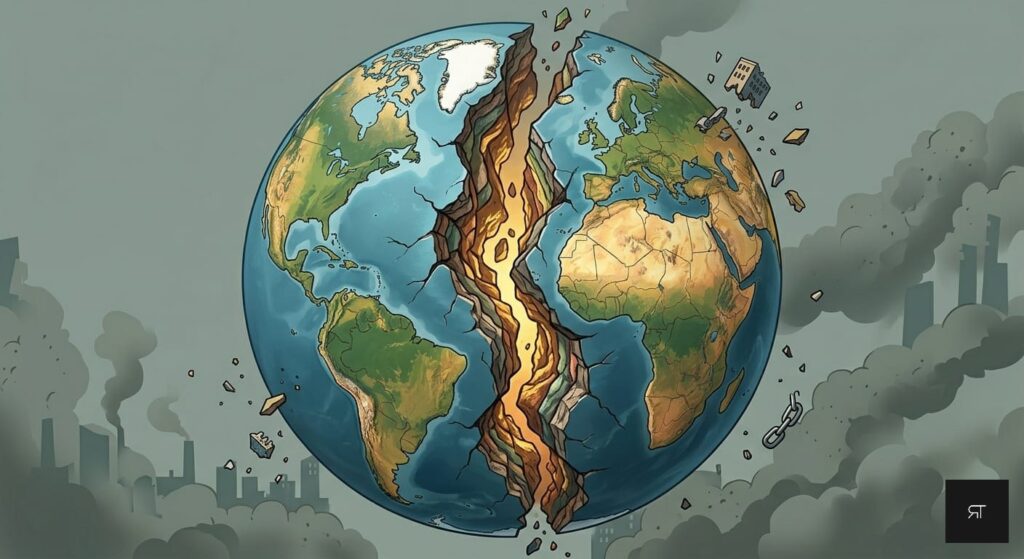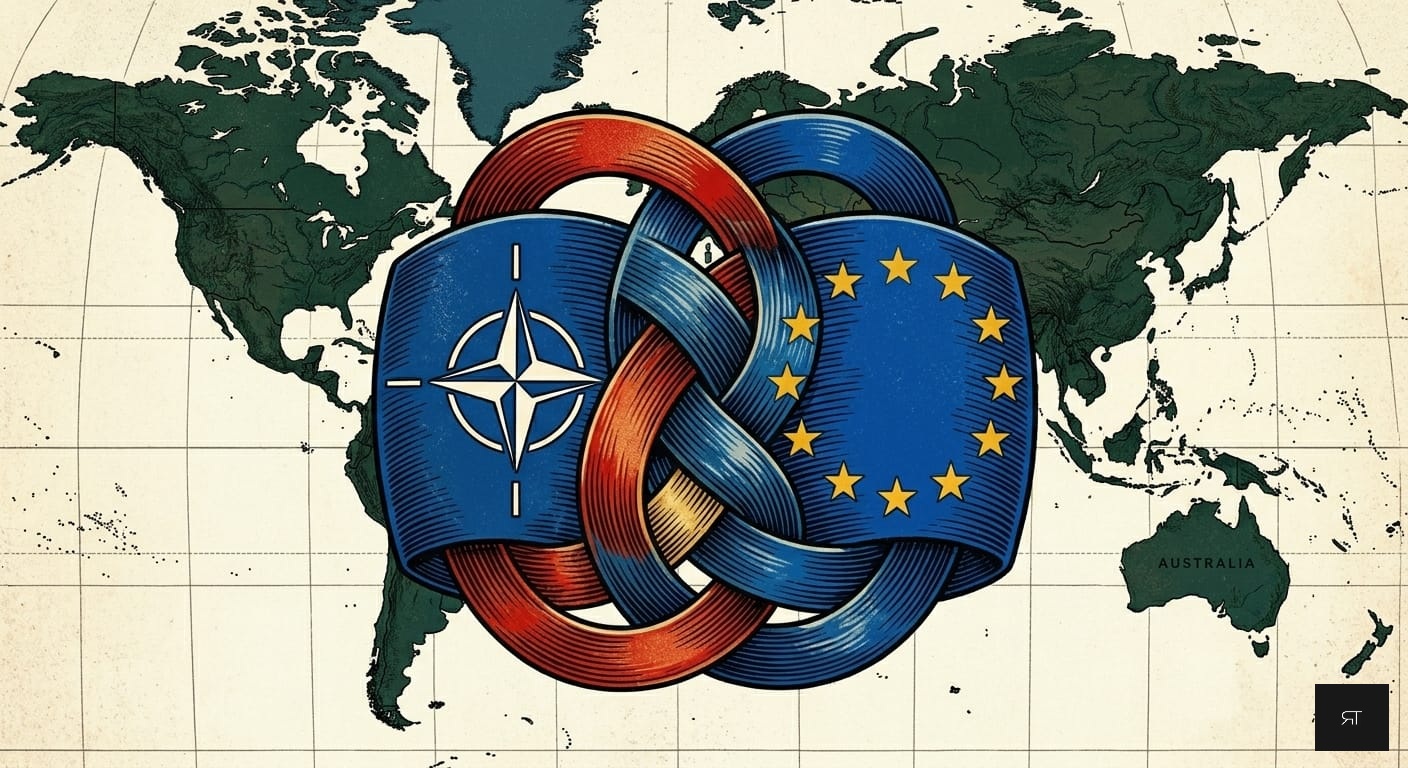
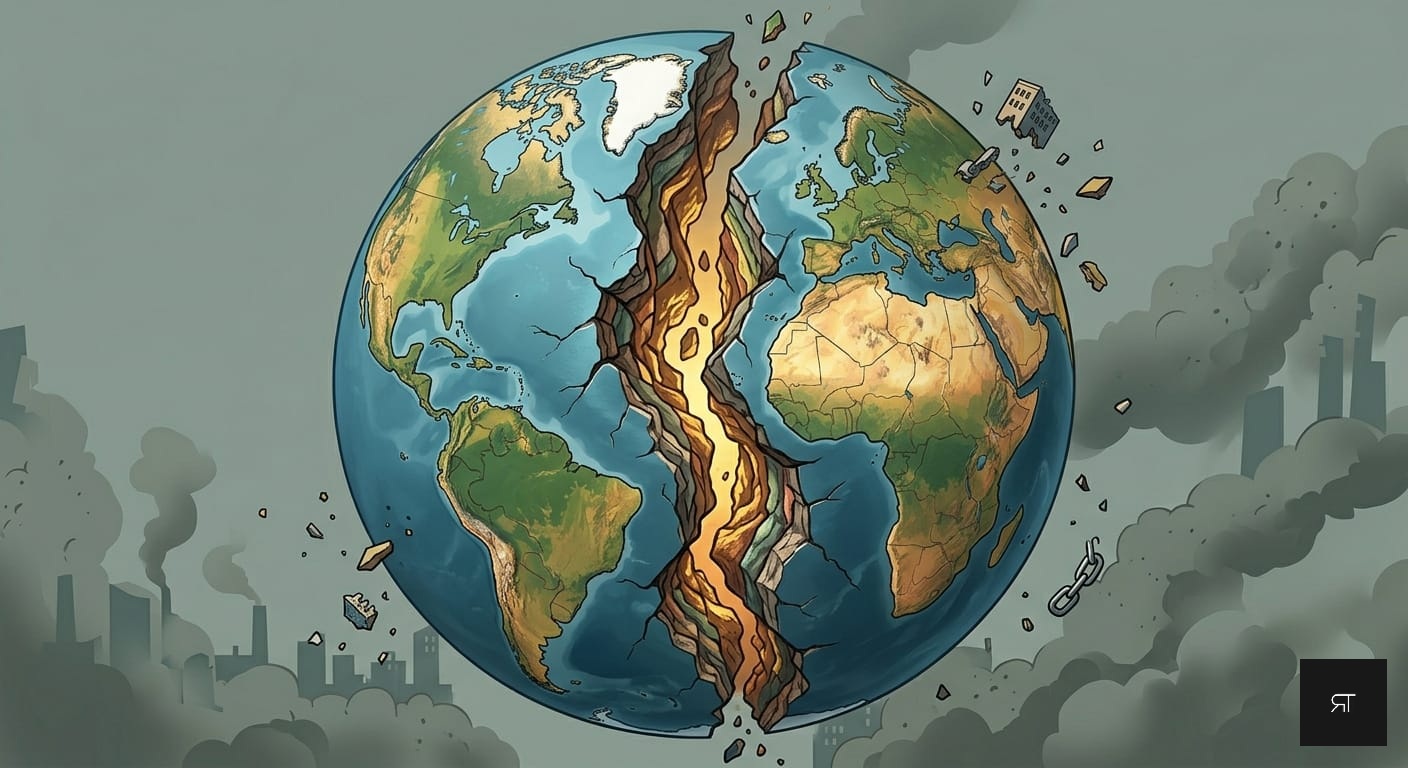
The geopolitical landscape of the 21st century is shifting rapidly, demanding a reassessment of established security structures. For decades, the European Union has relied on the North Atlantic Treaty Organization (NATO) as the bedrock of its security. This alliance provided stability during the Cold War, but in today’s multipolar world, this deep and limiting dependency on the United States is becoming increasingly untenable.
If the EU is to become a truly independent global actor, it must make the difficult but necessary decision to step out of NATO and build its own sovereign defense architecture. One of the clearest, most damaging proofs of this divergent reality can be found in the West’s fractured approach to Iran.
The Divergence of Strategic Interests and the Iran Lesson
The core of the problem lies in the fundamental strategic priorities of Washington and Brussels, which are no longer fully aligned. While the United States is increasingly focused on the Indo-Pacific region and its systemic rivalry with China, Europe’s primary security concerns remain centered on its immediate neighborhood: Eastern Europe, the Mediterranean, North Africa, and the Middle East.
This divergence is nowhere more apparent than in the catastrophic failure of unified transatlantic policy towards Iran. For decades, European powers, notably the E3 (Germany, France, and the UK), led meticulous diplomatic efforts to prevent an Iranian nuclear weapon, culminating in the Joint Comprehensive Plan of Action (JCPOA) in 2015. This agreement was hailed as a benchmark for European soft power and a critical security measure for the region.
However, the 2018 unilateral withdrawal from the deal by the Trump administration, followed by the re-imposition of crippling economic sanctions, fundamentally undermined European strategic interests. The EU was effectively held hostage by American policy. European businesses, which had started to invest in Iran, were forced to retreat, and European banks were threatened with exclusion from the US financial system.
The EU’s subsequent attempts to create alternative payment mechanisms, like INSTEX, proved ineffective, highlighting how American unilateralism can invalidate European sovereignty. The US’s “maximum pressure” campaign on Iran, far from stabilizing the region, heightened tensions, creating a direct security threat for Europe.
The lesson from Iran is clear: As long as the EU is bound within a security framework dominated by the United States, it will remain vulnerable to Washington’s policy swings. European security and economic interests are too often subordinated to American strategic goals, limiting Europe’s diplomatic flexibility and its ability to engage with critical regional actors on its own terms.
The Catalyst for Military and Technological Autonomy
True geopolitical power requires military and technological independence. Currently, European defense relies heavily on American hardware, intelligence, and command structures. This reliance creates a comfort zone that prevents the European defense industry from reaching its full potential.
Leaving NATO would serve as a forced catalyst for integration. It would compel the EU to consolidate its fragmented military capabilities, invest heavily in its own defense technology, and create a unified European command. Instead of buying off-the-shelf American systems, European capital would flow into European innovation, strengthening our technological independence and creating a robust, self-sufficient defense industrial base.
Confronting the Consequences
We must be realistic about the consequences of such a monumental shift. Transitioning away from NATO is not a step to be taken lightly. The immediate effects would be severe and demanding:
Financial Burden: The cost of replacing the American security umbrella will be immense. EU member states will need to drastically and permanently increase defense spending, diverting funds from other national budgets.
Short-Term Vulnerability: During the transition phase, the EU would experience a temporary gap in deterrence capabilities, particularly regarding nuclear deterrence and high-end military logistics.
Diplomatic Friction: A European exit from NATO would fundamentally alter transatlantic relations, likely leading to economic and political friction with the United States and non-EU NATO members like the United Kingdom.
Internal Political Division: Forging a unified European army and foreign policy will require overcoming deep-seated national interests and political resistance within the EU itself.
The Path Forward
Despite these daunting hurdles, the challenges are not insurmountable. Every complex systemic problem can be analyzed and solved with sufficient political will and strategic foresight.
For the European Union to secure its future, protect its economic interests, and stand as an equal among global superpowers, it must graduate from its historical reliance on Washington.
The path to a sovereign, secure, and technologically independent Europe will be expensive and politically fraught. However, the alternative is to remain a permanent junior partner in a changing world order.
True European autonomy is only possible outside the confines of NATO.
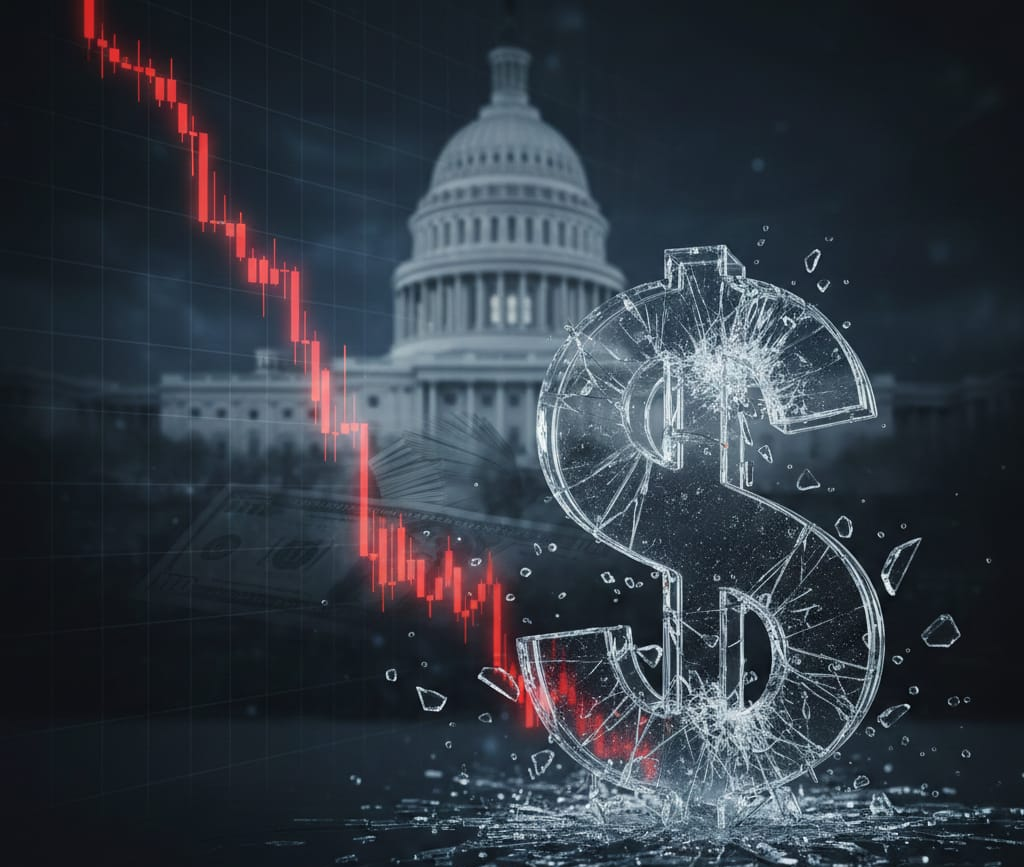
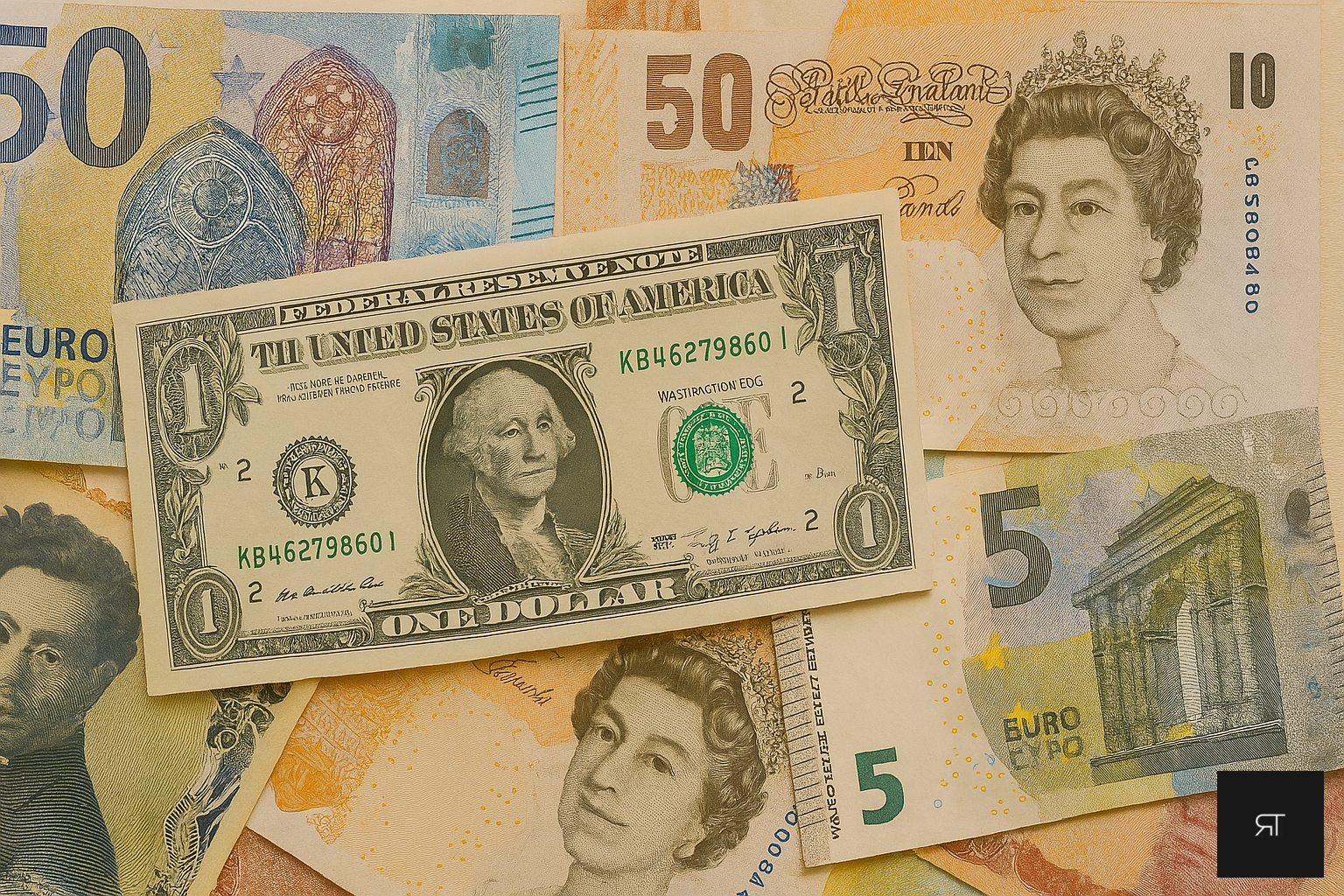
The US dollar suffered a historic blow on Tuesday January 27th, sending ripples through global financial markets. In a final hour of frantic trading, the currency breached the crucial support level of 96.00, entering a freefall that bottomed out at 95.38.
For the world’s primary reserve currency, a single-day loss of over 1.1% is not just a dip; it is a systemic shock.
US Dollar Collapse
What makes this decline exceptional is the context. Historically, geopolitical tension or the threat of conflict triggers a “flight to safety,” where investors flock to the dollar. Currently, international instability and rising tensions surrounding Iran would typically strengthen the Greenback.
This time, the opposite occurred: the world fled from the dollar. For many market observers, this serves as definitive proof that confidence in the US currency has been fundamentally compromised.
A Convergence of Geopolitical Crises
The causes of this sell-off extend beyond domestic economic figures, pointing toward a massive shift in the global order. The dollar is no longer seen as the inevitable safe harbor in times of war:
Erosion of the “Safe Haven” Status: The traditional logic that investors buy dollars during Middle Eastern unrest has failed. As tensions around Iran escalate, the market is actively decoupling from US assets, signaling a profound lack of trust in American diplomatic and military stability.
Fiscal and Political Vulnerability: A rapidly mounting national debt, paired with chronic budget deficits, has left the US vulnerable. International partners are increasingly wary of a government facing persistent political paralysis, questioning its ability to lead on the world stage.
Structural Weakening: With US consumer confidence at its lowest since 2014, the “economic engine” that once backed the dollar’s global dominance appears to be sputtering, making the currency a risky bet for foreign capital.
A Historic Turning Point
Analysts are beginning to view this sell-off as a historic inflection point. The long-held status of the dollar as the “ultimate safe haven” is being severely, and perhaps permanently, undermined. As investors conclude they can no longer trust the US government with their capital, we are witnessing a shift in the global financial hierarchy.
While some contrarians argue that this is merely a temporary dip, given the lack of a viable alternative, the market’s reaction to geopolitical unrest suggests a deeper shift. If the dollar no longer serves as the world’s refuge during a crisis, its reign as the de facto global currency may be entering its twilight.
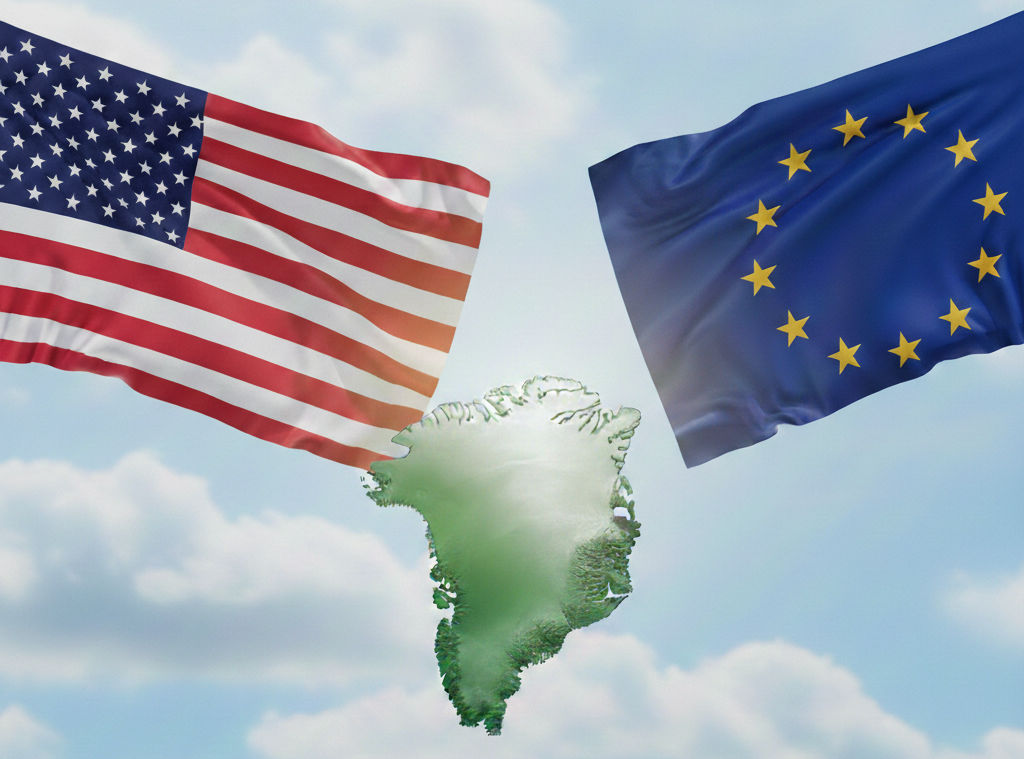
After weeks of threatening language from the American presidency, the European Union has reached its limit. Yesterday, the 27 member states proposed a 93 billion euro package of measures following the announcement of import tariffs on eight European countries participating in a Greenland mission.
US-EU Greenland Conflict
EU Strategy
Whether this will be enough to force a reversal of policy remains to be seen. However, observers suggest the EU has more than one strategic advantage.
There is a growing realization among member states that a firm stance is now required. When an ally threatens to seize territory from a European nation, the Union is left with no other choice.
The EU package is viewed as a significant opening signal. The measures involve import tariffs on American products such as jeans, motorcycles, and aircraft. These products are primarily manufactured in regions with high concentrations of government supporters. By targeting these areas, the EU believes it can cause significant economic and political pressure.
The announced 10 percent import tariff for the eight countries, including the Netherlands, is set to take effect on February 1. If this plan is not withdrawn, the European counter-tariffs will also commence.
EU member states hope to avoid this escalation through diplomacy. In the coming week, efforts will be centered on the annual meeting of the World Economic Forum in Davos, where many leaders will be present. However, the period of caution and accommodation appears to be over, replaced by a shift toward firmer action.
The EU had already drafted this list of import tariffs last year following the outbreak of a global trade war. While the measures were withdrawn after a temporary agreement in July, they were brought back into play during an emergency meeting yesterday.
‘Trade Bazooka’
The EU holds another major strategic asset: the Anti-Coercion Instrument (ACI). This tool, often referred to as the ‘trade bazooka’, allows the EU to deny companies from third countries access to the European internal market.
This instrument has been in development for several years, intended primarily as a deterrent. The expectation is that the threat of its use should be sufficient to prevent economic aggression from other nations.
While there have been repeated calls for its deployment over the past year, the likelihood of it being activated has now increased significantly.
Boundaries
The EU is currently navigating a difficult diplomatic path. While it is deemed necessary to use the language of power to influence decision-making, there are clear risks involved.
A major concern is the potential impact on other geopolitical conflicts, such as the situation in Ukraine. A severe escalation in trade tensions could lead to a scenario where security guarantees for Europe are weakened, a situation that must be avoided.
Despite these risks, there is a consensus that the EU must keep all options on the table. The European market remains the most powerful tool available, and there is a readiness to utilize the provisions within the anti-coercion instrument if necessary.
Playing on Prestige
Strategic efforts may also focus on the American desire for historical prestige regarding the acquisition of Greenland. This ambition has existed for over a century, though previous attempts were always rebuffed.
The EU can frame the consequences of this conflict by highlighting how such actions could be remembered as the catalyst for the fragmentation of Western alliances and NATO. This appeal to historical legacy is seen as a potential point of leverage.
What is the ‘trade bazooka’?
The term trade bazooka is the unofficial nickname for the European Union’s Anti-Coercion Instrument (ACI). This is a powerful trade policy weapon that was officially adopted in 2023.
This is what the instrument entails:
Purpose: It is designed to retaliate when non-EU countries apply economic pressure to force the EU or a member state into specific political concessions.
Extensive powers: Beyond standard tariffs, the EU can deny companies access to the internal market, restrict foreign investment, block access to public contracts, and limit intellectual property rights.
Speed: The European Commission has been granted the authority to act faster and more decisively, reducing the time previously required for consensus among all member states.
Deterrence: The impact of these measures is designed to be so significant that the mere threat should discourage other countries from attempting economic blackmail.
The global economy rests on a delicate balance of trust and investment. At the heart of this system lies the US Treasury market. However, a hypothetical scenario exists that economists often describe as a financial nuclear bomb.
This scenario is no longer just a mathematical exercise but a potential geopolitical tool. If the United States, under the Trump administration, were to take the unprecedented step of militarily attacking and conquering Greenland, Europe could be forced to respond with its most powerful economic weapon.
Imagine if every European entity (including governments, central banks, and private investors) decided to simultaneously dump their combined holdings of approximately $3.6 trillion in US Treasury bonds as a direct consequence of such an invasion.
The Chain Reaction
If this “horror scenario” were to unfold, here is the step by step breakdown of what would likely happen:
A Crash in Bond Prices: A sudden flood of $3.6 trillion worth of bonds onto the market would cause their value to plummet instantly due to the massive oversupply.
Skyrocketing Interest Rates: As bond prices crash, the yields (interest rates) would spike to extreme levels. This would make US government debt significantly more expensive to maintain.
The Dollar in Freefall: To exit these investments, European investors would need to sell their US dollars. This massive sell-off would likely cause the value of the US dollar to collapse against the Euro.
Global Market Chaos: Because the US Treasury bond is the benchmark for the global financial system, its collapse would trigger a domino effect. Stock markets would likely tank, and borrowing costs worldwide would become unaffordable overnight.
While the military conquest of Greenland remains a shocking concept, this financial “nuclear option” highlights that Europe’s choice to divest could be the ultimate check on such a massive shift in international relations.
A neutral analysis of political, ideological, and structural barriers to the Trump administration’s peace proposal.
The peace framework proposed by U.S. President Donald Trump aimed to end hostilities between Israel and Hamas by combining ceasefire measures, economic incentives, and regional mediation. Despite its ambition, the plan underestimates entrenched ideological positions, fragmented Palestinian representation, mediator credibility constraints, and implementation risks—factors that comparative peace-process research identifies as decisive.
1. Ideological incompatibility
Hamas does not recognize Israel’s legitimacy and prioritizes armed resistance; Israel treats Hamas as a terrorist actor to be contained or dismantled. Absent reciprocal legitimacy, negotiations on sovereignty and coexistence lack a viable foundation.
Peace agreements rely on a minimum level of mutual recognition. Without it, negotiations collapse into tactical pauses rather than long-term settlements. Transformative peace requires a shift in legitimacy, not just tactical compromise.
2. Fragmentation of Palestinian representation
The Trump plan largely bypassed the Palestinian Authority (PA), the internationally recognized representative of the Palestinian people. By implicitly engaging with Hamas while marginalizing the PA, the proposal deepens the political split between the West Bank and Gaza. Without internal Palestinian unity, any peace agreement lacks credibility and implementation capacity.
Durable peace agreements depend on unified leadership. As long as the Palestinian Authority and Hamas pursue separate agendas, no framework can represent the Palestinian people as a whole.
3. Misplaced emphasis on economic incentives
The plan’s emphasis on economic growth and infrastructure investment misunderstands the nature of the conflict. The struggle is not primarily about poverty; it is about sovereignty, self-determination, and historical justice. Economic aid cannot substitute for political compromise. Previous attempts to “buy peace” through development funding have failed because they ignored these fundamental issues.
4. Perceived bias of the mediator
The credibility of the United States as a mediator was undermined before negotiations even began. The Trump administration’s decision to move the U.S. embassy to Jerusalem and cut funding to UNRWA was interpreted by Palestinians as clear evidence of pro-Israeli bias. Effective mediation requires both power and perceived impartiality; the U.S. under Trump possessed the former but lacked the latter.
5. Implementation and enforcement challenges
The proposed multi-phase process—ceasefire, disarmament, reconstruction, and administrative reform—faces daunting implementation challenges. The security environment in Gaza remains volatile, and trust between the parties is virtually nonexistent. Without robust monitoring and enforcement mechanisms, compliance with the plan’s provisions would likely erode rapidly.
6. Lack of regional and legal anchoring
Successful peace agreements in the Middle East have historically relied on regional buy-in and international legal legitimacy. The Trump plan’s lack of clarity on Palestinian statehood, refugee rights, and international law left it isolated from both regional actors and global institutions. Without legal grounding and multilateral support, such initiatives struggle to achieve lasting acceptance.
Conclusion
While the Trump peace plan incorporated some pragmatic components—such as reconstruction, governance reform, and regional diplomacy—it neglected the essential political and ideological foundations of peace. Without mutual recognition, unified Palestinian representation, credible mediation, enforceable mechanisms, and a clear legal framework, the proposal remains a symbolic gesture rather than a viable roadmap to peace.
It appears that Hamas is using the deal as a breathing space and an opportunity to retreat with minimal loss of face. Israel is releasing 2,000 prisoners, and Hamas can regroup and strengthen. The leverage they had—the Israeli hostages—is now gone. The question is whether the majority of Palestinians still recognize Hamas’s legitimacy or whether they are weary and ready to hand over governance to the international community, with Israel playing a significant role in that process.
—
References and Further Reading
International Crisis Group — Israel/Palestine analyses
Based on President Trump’s public statements about the EU-US trade deal announced on 27 July 2025, here’s how they align or potentially contradict the European Commission’s framing:
Points of Agreement
Both sides emphasize:
The 15% tariff ceiling: Trump confirmed that the U.S. will impose a flat 15% tariff on most EU goods, including cars, which is consistent with the EU’s statement.
Energy and investment commitments: Trump highlighted the EU’s agreement to purchase $750 billion in U.S. energy and invest $600 billion in the U.S., which matches the EU’s announcement.
Strategic product exemptions: Both sides noted that certain products like aircraft parts,chemicals, and pharmaceuticals will receive special treatment or exemptions.
Section 232 investigations: Trump acknowledged that pharmaceuticals and semiconductors will temporarily face 0% tariffspending national security reviews, aligning with the EU’s description.
Here’s where Trump’s tone or framing may differ from the EU’s:
Tariff Framing:
Trump described the deal as a “very powerful” and “biggest of all the deals”, emphasizing tough negotiations and portraying the 15% tariff as a win for the U.S.
EU framing presents the 15% as a ceiling that reduces existing tariffs (e.g., on cars from 25% + 2.5% MFN), suggesting relief rather than escalation.
EU Expectations:
Reports indicate that Europe had hoped for lower tariffs, around 10%, and some EU officials expressed relief mixed with concern over the final deal.
Trump’s tone suggests the EU market was “essentially closed” and now “opened up,” which may not reflect the EU’s view of its own openness.
Military Purchases:
Trump mentioned that the EU would be “purchasing hundreds of billions of dollars worth of military equipment”, a claim not mentioned in the EU’s official statement.
Steel and Aluminum Tariffs:
Trump indicated that 50% tariffs remain for now, with a quota system to be negotiated. The EU emphasized cutting tariffs and protecting against global overcapacity, suggesting a more cooperative tone.
Moreover: the EU-US trade deal announced on 27 July 2025 is a political agreement and not legally binding until it is formally ratified through the EU’s internal procedures, which may require approval from all 27 member states.
What defines a strong NATO ally? Since the alliance’s founding in 1949, debates over burden-sharing have been constant. Donald Trump, both in his first and current term, has sharply criticized European members for underfunding their defense while relying on U.S. protection—and not without reason.
His message is resonating. Belgium’s defense minister recently vowed to end the country’s “national shame” of being NATO’s most notorious free rider. Even Iceland, which lacks a standing army, is exploring how to contribute more meaningfully.
Image: Pixabay
To assess NATO members’ contributions, consider the “three Cs”: cash, capabilities, and commitment.
Cash: More Members Are Meeting Targets—But Is It Enough?
Today, 22 of NATO’s 32 members meet the 2% of GDP defense spending target, a big jump from just seven a decade ago. Italy and Spain are on track to join them this year. But the bar is rising: at the upcoming summit in The Hague, NATO is expected to adopt a new target of 3.5% of GDP, plus 1.5% for supporting infrastructure.
Still, raw spending figures can be misleading. Some countries inflate their numbers by including loosely related expenses under “defense.”
Capabilities: What the Money Buys Matters More
NATO recommends that at least 20% of defense budgets go toward equipment—most members comply, and that threshold may soon rise to 33%. But quantity doesn’t equal quality. Greece, for example, spends heavily on gear, but much of it is aimed at deterring Turkey, not Russia.
The NATO Defense Planning Process aims to align national purchases with alliance needs. After years of counterterrorism focus, the threat from Russia is refocusing priorities. Allies are now being asked to build forces primarily for deterrence in Europe. New “capability targets” expected this month will guide what each country should provide—especially in areas where the U.S. may scale back, like intelligence, long-range strike, and logistics.
Commitment: Who Shows Up?
Operationally, even the most frugal allies are stepping up. Spain leads a multinational brigade in Slovakia; Italy commands one in Bulgaria. Portuguese jets patrol Baltic airspace. Smaller nations like Albania and Slovenia also contribute troops to NATO’s eastern flank.
But NATO wants more. In a major conflict, it aims to deploy 100,000 troops within 10 days and another 200,000 within 30. Without more European investment in recruitment and readiness, those goals may be out of reach—especially without U.S. troops.
A Smarter Division of Labor?
NATO is exploring a “multi-speed” model: larger militaries take on high-end combat roles, while smaller states focus on logistics, cyber, or niche capabilities. Luxembourg, for instance, supports satellite communications and surveillance; Iceland runs an air-defense system.
Getting underperformers like Spain and Italy to specialize more effectively may be key. Encouraging them to invest in maritime capabilities could be a strategic win.
It’s a strange phenomenon. Americans keep buying Mercedes cars and other expensive items—even though they can’t actually afford them. Normally, a country that does that would be in serious trouble. But we lend them the money to buy those things. What’s going on here?
US Dollar and other currencies
Trade Deficit America has been living beyond its means for decades. They buy far more than they produce, and that gap is filled with imports. Last year, Americans bought over $1.2 trillion more from abroad than they sold abroad. That’s more than the Netherlands produces and consumes in a whole year. And they’re buying on credit—Europe or China lends them the money for those Mercedes cars and other goods.
Budget Deficit It’s not just trade that shows a big deficit; government spending is also way out of balance. Last year, the budget deficit was $1.8 trillion, or 6 percent of GDP. The government structurally spends more than it takes in. Many developing countries are doing better financially than the U.S.
Normally, a country with such deficits would face a huge problem. Financiers would demand high interest rates for loans—if they’re willing to lend at all. That forces a country to make painful choices to fix its deficits.
Many developing countries are doing better financially than the U.S.
Greece Take Greece ten years ago. The country had major deficits. To fix them, they had to slash government spending, which mostly hurt the public. Thousands of civil servants lost their jobs, and wages dropped sharply so they could become competitive with foreign countries again. For Greeks, no more new Mercedes—only second-hand Dacias.
But the U.S. has no problem financing its deficits. In fact, we’re lining up to lend them money. While Greece saw interest rates on new government bonds spike to 35 percent, the U.S. borrows at just 2 to 4 percent.
The Secret There’s no talk of painful measures in the U.S. On the contrary, the government—recently with Congress’s approval—raised the debt ceiling again. So the state can borrow even more. Elon Musk might be laying off millions of civil servants, but not as a government spending cut. That money is meant for tax cuts, which means less income for the government.
So what’s America’s secret? How can they rack up debt for decades without serious consequences? The answer: the dollar.
This requires some explanation. The U.S. dollar is the world’s dominant currency. The vast majority of international trade transactions are settled in dollars—just think of the oil trade. As global trade grows, so does the demand for dollars. That demand helps the dollar maintain its value. This is a major reason why investors and countries keep investing in the U.S.
That’s why the U.S. can borrow at low interest rates despite its large deficit—unlike Greece, which had to offer sky-high rates.
Mountains of Dollars Because many countries have trade surpluses with the U.S., they end up with large reserves of dollars. They reinvest those dollars in the U.S., buying U.S. government bonds—called treasuries. These treasuries are considered the safest government bonds in the world. And the market is enormous.
So you can always sell those bonds if you need dollars, or buy them if you have dollars to spare. The euro or the Chinese yuan offer nothing similar and thus can’t compete with the dollar.
There’s something ironic about it. The fact that Americans have such a massive and growing mountain of debt actually makes the dollar strong. And the dollar’s dominant position seems untouchable—there are no credible alternatives to the American currency.
A Drawback But the dollar isn’t only beneficial to Americans. Because there’s always demand for dollars, the exchange rate stays high compared to other currencies. And that expensive dollar is a disadvantage for U.S. companies that export. It’s one reason much of U.S. industry has disappeared. Countries with weaker currencies can produce more cheaply.
That’s why Trump is trying to improve the competitive position of American companies by imposing tariffs on imports. That makes imports more expensive compared to domestic production.
Milton Friedman, a Nobel Prize-winning economist and leading advocate of free-market capitalism, was a strong proponent of free trade and firmly opposed to tariffs.
Milton Friedman
He believed that free trade promotes economic efficiency, consumer choice, and global prosperity, while tariffs distort markets, protect inefficient industries, and ultimately harm consumers by raising prices.
Friedman argued that even if other countries impose tariffs, it is still in a nation’s best interest to keep its own markets open. He viewed trade as a voluntary exchange that benefits both parties and saw government interference, such as tariffs and quotas, as economically damaging and politically motivated.
In his view, the best policy was unilateral free trade — reducing or eliminating trade barriers regardless of what other countries do — because this would benefit the domestic economy by allowing consumers access to cheaper goods and encouraging competition and innovation among producers.
The new American tariffs resemble those of President Herbert Hoover in the 1930s, which helped plunge the world into the Great Depression. Economists and historians consider them one of the greatest blunders in history. Trump does not.
Workers in a Ford factory in Minnesota, 1935
Ben Stein is the most famous economics teacher in American film history thanks to Hollywood. He played the role of the dreadfully boring teacher in the 1986 movie Ferris Bueller’s Day Off. In a monotone voice, he attempts to explain the Smoot-Hawley Tariff Act, which was signed on June 17, 1930—eight months after the Wall Street crash of October 1929—by then-President Herbert Hoover.
On that “Liberation Day,” import tariffs were imposed on 20,000 goods from other countries in an attempt to protect domestic agriculture and industry from “unfair foreign competition.”
Stein can’t hold the students’ attention. By repeatedly asking, “Anyone? Anyone?”, he tries in vain to involve them. The film became a huge success.
Japan
When Wall Street experienced a crash on Black Monday, October 19, 1987—an even worse drop than Black Thursday in 1929—then-President Ronald Reagan decided to do absolutely nothing. As a neoliberal, free trade was sacred to him, even though the U.S. faced massive trade deficits at the time. China wasn’t the main culprit back then—Japan was, with its Datsuns, Toyotas, and products from Sony and Panasonic.
Barely a year later, the markets had recovered. World trade and the global economy would experience an unprecedented boom in the 1990s thanks to globalization and digitalization. After the credit crisis in 2008, the world’s major industrial nations—now united in the G20—decided not to worsen the looming recession and unemployment with protectionist measures.
Economists and historians consider Smoot-Hawley one of the greatest policy blunders in global history. Trump does not. The comparison is inevitable. Just like in 1930, the Republicans now control both the White House and Congress. And just as we are now in the midst of a technological revolution driven by social media and artificial intelligence, the 1930s were marked by one as well—leading to the loss of many “well-paid jobs” in agriculture and craftsmanship.
‘Economic stupidity’
Thanks to the gasoline engine and electricity, the 1920s saw a massive increase in productivity. In rural areas, draft and work animals were replaced by tractors and trucks. Land previously needed for grazing could now be used for production.
Like Trump, Hoover called the tariffs countermeasures. By the late 1920s, France had imposed 100 percent tariffs on American cars like the famous Model T. Italy and Germany had restricted imports of American grain. In 1928, Hoover won the presidential election with a promise to protect American jobs—just like Trump did last year.
Nevertheless, there was significant opposition to Smoot-Hawley. In May 1930, 1,028 leading economists signed a petition urging Hoover to veto the law. Automobile magnate Henry Ford called it “economic stupidity.” JP Morgan CEO Thomas Lamont said he “begged Hoover on his knees not to go through with the plan.”
Two-thirds untaxed
But Hoover stuck to his “beggar-thy-neighbor” strategy: improving one’s own economy at the expense of others by creating trade barriers. U.S. trade partners retaliated. Canada was the first to impose tariffs on sixteen key American products, which together accounted for 30 percent of total U.S. exports to the country.
American exports to countries that responded—among them Canada, France, Cuba, Mexico, Spain, Argentina, and Switzerland—fell by 31 percent. In the following years, the highest tariffs rose to nearly 60 percent on some products. But unlike now, two-thirds of imports remained untaxed. Trump’s tariffs apply to all imports.
Weak financial system
World trade collapsed in less than four years. U.S. imports dropped 66 percent, from $4.4 billion in 1929 to $1.5 billion in 1933. Exports fell from $5.4 billion to $2.1 billion. GDP was cut in half, from $103 billion in 1929 to $55.6 billion in 1933. Unemployment rose from 8 percent in 1930 to 25 percent in 1933.
Not everyone blames Smoot-Hawley for that. According to monetarists like Milton Friedman, the weak U.S. financial system was more to blame for the Great Depression than protectionism—after the crash, 9,000 of the 25,000 banks failed. In 1930, trade only accounted for 5 percent of U.S. GDP. Today, it’s 25 percent.
‘Never again’
Regardless, it was a vital lesson. After World War II, Western nations made massive agreements under the motto: never again. Organizations were created to promote free trade. In 1947, GATT (the General Agreement on Tariffs and Trade) came into effect, gradually reducing import barriers.
Whether Trump has seen Ferris Bueller’s Day Off is unknown. He may have fallen asleep. Either way, he shows no regard for the fact that after Smoot-Hawley, the Great Depression followed—a prelude to another world war.
Manage Cookie Consent
To provide the best experiences, roelthijssen.nl uses technologies like cookies to store and/or access device information. Consenting to these technologies will allow us to process data such as browsing behavior or unique IDs on this site. Not consenting or withdrawing consent, may adversely affect certain features and functions.
Functional
Always active
The technical storage or access is strictly necessary for the legitimate purpose of enabling the use of a specific service explicitly requested by the subscriber or user, or for the sole purpose of carrying out the transmission of a communication over an electronic communications network.
Preferences
The technical storage or access is necessary for the legitimate purpose of storing preferences that are not requested by the subscriber or user.
Statistics
The technical storage or access that is used exclusively for statistical purposes.The technical storage or access that is used exclusively for anonymous statistical purposes. Without a subpoena, voluntary compliance on the part of your Internet Service Provider, or additional records from a third party, information stored or retrieved for this purpose alone cannot usually be used to identify you.
Marketing
The technical storage or access is required to create user profiles to send advertising, or to track the user on a website or across several websites for similar marketing purposes.