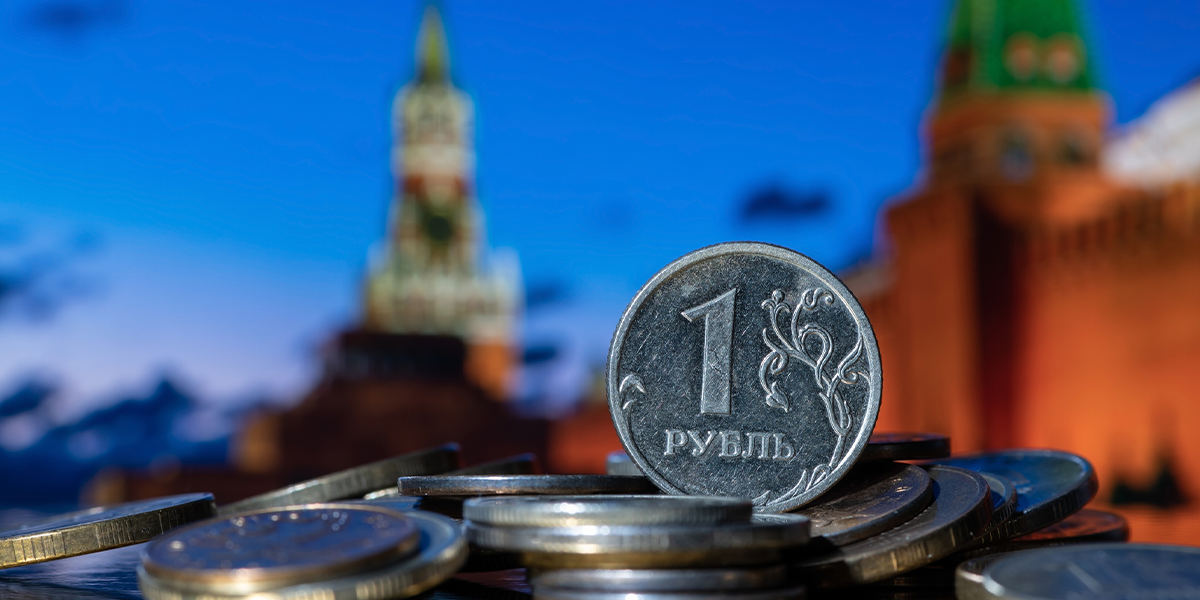
Europe must protect its own green industry against Chinese overcapacity


Something remarkable is happening in China. With potentially significant consequences for Europe. Last week, The Economist reported that the fall in profitability of Chinese companies has never been as severe as it is now.

Well, you might think they would go bankrupt. But that doesn’t happen. The influx of the Chinese government continues, and these companies keep producing. China is creating ‘overproduction’ to keep its own economy going. The country produces large quantities of electric cars, solar panels, and wind turbines. This drives prices down significantly. Good for the consumer, good for the sustainable energy transition.

What exactly is wrong with this? A lot.

Because it’s more than just the consumer and the energy transition. Every society needs an industrial base to provide everyone with decent work: whether local or migrant, man or woman, theoretically or practically educated. Not only to give everyone an income safely, but especially to give everyone a decent place in a community: meaningful work, self-confidence, a social network. This fact often remains underexposed in the industrialized rich Western economies. China has realized this and has industrialized at breakneck speed. It is not just about increasing consumption; it directly involves the core of society. This affected millions of people and gave rise to a middle class. It became the vital breeding ground for discontent in industrial states like Ohio, Michigan, and Wisconsin. It was precisely from these areas that the victory of Trump in 2016 emerged.

The new wave of overcapacity that China is creating will hit Europe especially hard.

America has since better shielded its own industry with its industrial policy, the Inflation Reduction Act (IRA), which includes higher energy prices. The blow will be even greater here. Chinese overproduction is much larger, and Europe has already lost twice as much production. Moreover, the social fabric in large European countries has been showing deep cracks. The rise of extremist rights in France and Germany and the shocking results in England illustrate this. And this process threatens to accelerate further.

Europe must come out of this. It is precisely here that the consensus was based on globalization for a long time. The idea was always that purchasing power would increase and that as a result, everyone would have better things: things that are made elsewhere that are the best (read: cheapest). Yes, but that only works if you have your own industry for everything that is needed.

Yet in 2019, when the European Commission laid the foundation for its Green Deal, it was written that what was needed was a massive scaling up of the production of wind turbines, solar panels, and electric cars in the European Union. Not to mention the question of where all those things would come from. Europe didn’t realize that at the time, but that should have been the purpose of the new green industry.

Five years later, three times the amount of production has been outsourced worldwide. Then Russia invaded Ukraine, and it became clear that raw materials for our prosperity were not subject to the laws of Friedman but rather to the laws of Putin and Xi. In response, China is accelerating its own industry.

The European Commission has now realized that and has come up with the ‘Net Zero Industry Act.’ A European answer to the American IRA. But where the IRA is well-funded with an estimated $2 billion annually, the money and ambition in the European Industry Act is completely lacking.

The coming months must bring about change.

Europe must allow the green industrial revolution to take place here and show China where to go. Not because of the climate. But primarily because society demands it. An agreement must be made between the ECB president and the European heads of government to direct their policy towards prosperity in their own countries. How much industry is needed for that? How much prosperity must come from that? Europe must now take that step. Otherwise, the Chinese will keep shouting that there’s no alternative. But that can’t last much longer.

This piece was published by Diederik Samsom in Dutch. See the original here: https://www.volkskrant.nl/columns-opinie/europa-moet-de-eigen-groene-industrie-beschermen-tegen-chinese-overcapaciteit~bda61e7d/

Diederik Samson is a Dutch physicist, former politician, and columnist for de Volkskrant


For the first time in history, more electricity comes from solar and wind than fossil fuels in the EU

In Europe, for the first time over a six-month period, more electricity was produced from solar and wind than from fossil fuels.

Electricity from solar panels and wind turbines grew to 30 percent of total production in the European Union over the past six months. At the same time, production from fossil fuels fell to 27 percent. The remaining electricity is generated from sources such as hydro and nuclear power.

In thirteen EU countries, more electricity was generated from solar and wind than from coal and gas. This milestone was reached for the first time in Germany, Belgium, Hungary, and the Netherlands.


Can the most polluting country save the climate?


Experts are optimistic about the speed of the energy transition, with China playing a key role.


The fact that, for the first time in Europe, more electricity is being produced from solar and wind than from fossil fuels over a six-month period is a milestone, but it only concerns electricity, which accounts for 20 percent of our energy demand.


Although electricity from solar and wind is increasing and the demand for electricity is decreasing, the price of electricity is barely falling. As long as gas plants are still needed, the electricity sector suffers from high gas prices. This is because the price depends on the most expensive generation method, which is often gas plants. These are used when wind and solar are not available.


The bottleneck in the use of solar and wind energy is mainly in storage. Currently, we can hardly store electricity temporarily when demand is lower than production. This is a pity because it means we “waste” a lot of electricity.

EU leaders at the table: who gets which top job and will determine the course?

Who will secure top European positions? One week after the European elections, 27 heads of state and government leaders will meet tonight in Brussels to discuss this question.

Over dinner, they will decide who will fill the key positions and thus have the most influence on the EU’s direction for the next five years. Decisions on these positions are expected to be made in about ten days at the next summit.

Brussels rumor mill

For months, various names have been speculated behind the scenes about potential candidates. This opaque backstage process resembles a Brussels rumor mill, where names are dropped to gauge reactions.

EU leaders are deciding on four positions: President of the European Commission, President of the European Council (who leads the summits of government leaders), the new EU foreign affairs chief, and the President of the European Parliament. Political preferences play a crucial role in these appointments, but geographic distribution and gender balance are also important.

The Christian Democrats strengthened their position as the largest faction in last week’s European Parliament elections. This increases the chances that Ursula von der Leyen, the German President of the European Commission, will secure a second term.

The Christian Democrats are also likely to initially provide the President of the European Parliament. Currently, Roberta Metsola from Malta holds this position, and she is expected to remain.

The Social Democrats, the second-largest party in Parliament, will provide the President of the European Council. Antonio Costa, the former Prime Minister of Portugal, is a long-rumored candidate for this role. Costa resigned last year due to a corruption scandal, but was later cleared by an investigation, and Portugal is now putting him forward as their candidate.

Candidates in the running

Ursula von der Leyen from Germany: current and potential future President of the European Commission.

Roberta Metsola from Malta: current President of the European Parliament.

Kaja Kallas, the Estonian Prime Minister: in the running to become the EU foreign affairs chief.

Antonio Costa, former Prime Minister of Portugal: potential President of the European Council.

Estonian liberal Prime Minister Kaja Kallas is a contender to become the new “high representative,” responsible for EU foreign policy. Kallas, a hardliner on Russia, has strong support from Eastern EU countries warning against naivety towards Putin. Kallas was also previously mentioned as a candidate for NATO chief.

Mark Rutte’s potential last summit?

Mark Rutte, a strong candidate for the NATO chief position, may be attending his last EU summit for the Netherlands. This depends on whether the new Dutch cabinet is sworn in before the next EU summit on June 27. If so, Rutte’s successor, Schoof, will attend.

Discussions tonight will also likely address Rutte’s NATO candidacy, which is not yet approved by Hungary, Romania, and Slovakia.

“Total package” approach

EU leaders aim to finalize a comprehensive package for all these roles due to the current geopolitical situation. With the war in Ukraine and the upcoming US presidential elections, timely decisions are crucial.

The goal is to have everything settled by the next summit on June 27-28, though it could be finalized sooner. French President Macron mentioned that this might be possible in the coming days.

The European formation process

Heads of state and government leaders will nominate a new President for the European Commission, who must be approved by a majority of the new European Parliament through a secret vote, expected in July or September.

Once the new President is appointed, they will form a new European Commission with 27 members, one from each member state. Governments nominate candidates for the position of European Commissioner. For the Netherlands, this is currently Wopke Hoekstra (CDA) for climate action, but his future depends on the new government’s support, as the CDA is now in opposition.

All nominated Commissioners will face hearings before the European Parliament. By mid-December, a new European Commission will be ready to address key issues for the coming years, such as defense, security, and strengthening the EU’s competitiveness.

Macron: Europe Could Perish, It Depends on Our Choices

Future of the EU: Fewer regulations, more investments, and improved cooperation are needed to keep Europe viable, according to French President Macron. “The awakening is too slow.”

Macron @ Sorbonne 25-04-2024

Macron delivered his speech at the Sorbonne University in Paris in front of students, French politicians, and European diplomats.

Europe could die, and decisions must be made now to prevent this. This grave message was at the heart of the speech delivered by French President Emmanuel Macron on Thursday morning in the lavish amphitheater of Sorbonne University in Paris. The successive shocks that Europe has faced in recent years with the coronavirus pandemic, global trade conflicts, the war in Ukraine, and the rise of populism have exposed the weaknesses of the European Union, and according to Macron, immediate intervention is needed for the EU to withstand the test of time.

The weaknesses of the European Union are numerous and significant – the president named them one by one in front of students, French politicians, and European diplomats in a nearly two-hour-long speech. Macron is particularly concerned about the poor state of European militaries, which also lack cooperation, and dependence on other world powers in areas including defense, technology, food safety, and medicines. Also, the climate and biodiversity crises pose challenges to Europe, as do immigration at European external borders, foreign interference, and the lack of oversight on social media. “We do not set the rules in this digital space, where our democracy is shaped.”

The president came up with numerous proposals to make Europe a significant geopolitical player again, with the same core message: EU member states should cooperate more and invest more and smarter so the EU can become autonomous and compete with China and the United States. This is necessary, according to Macron, because these power blocs “no longer adhere to trade rules” with the massive support packages they are pumping into their economies.

To prevent Europe from being crushed, member states should invest heavily in existing sectors and several “sectors of the future” such as artificial intelligence, quantum mechanics, aerospace, biotechnology, and green energy forms. He also wants European countries to form more “real partnerships” with third countries to counteract the “bipolar confrontation” of China and the US. “We must show that we are a balancing power.”

Europe is also “too complicated,” Macron believes: there are too many and too complicated regulations, particularly in the area of climate. “It is not sustainable to have the strictest environmental rules, invest less, and be more naive [than other power blocs].” Trade rules within the EU would also weaken the international competitive position of the Union. “We need to dismantle the rules among the 27 countries so we can have a real shared market. Only then can you compete.”

Campaign Kickoff

In France, the speech is seen as an attempt by Macron to revive the campaign for the European elections of his Renaissance party. It could use it: the lead candidate Valérie Hayer struggles to gain momentum, in the polls the radical-right Rassemblement National leads by a large margin, and the third party, the Socialists, are dangerously close to Renaissance. As the socialist lead candidate Raphaël Glucksmann held a large gathering on Wednesday evening, it almost seemed like a duel between the two.

But within the Élysée, it is denied on all fronts that the speech is part of the European campaign. “It is a speech of a head of state speaking on behalf of France. (…) That is something entirely different,” says a source.

For the Élysée, ‘Sorbonne’ was mainly a continuation of the speech Macron gave in the same amphitheater in 2017. At that time – newly elected and very young – he was the one who put the theme of European autonomy on the European agenda with an inflated speech that is still often quoted. Then, it led to other EU member states tempering Macron’s words. But after the unrest and conflicts filled recent years, Macron sees that he has been proven right by his European partners. “The very French concept of sovereignty is increasingly spreading across Europe,” he said with satisfaction.

‘The EU is Awakening’

The French president was also cautiously positive about other developments. Where he portrayed a dozing European Union in 2017, he now described how member states have realized the dangers of being dependent on Russian gas and Chinese medicines. He celebrated the steps announced in recent years to reduce this dependence. He also repeatedly emphasized that the importance of the existence of the European Union is hardly disputed anymore. Where in 2017 radical-right parties like the Dutch PVV and the French Rassemblement National still advocated for Frexit and Nexit, “no one dares to talk about leaving the EU or the euro now.”

We are awakening, Macron concludes. “But the awakening is too slow.”

French democracy in crisis: Macron lacks support, opposition also powerless

Macron

One year ago today, Emmanuel Macron was re-elected as president of France. Yet no one seems to be in the mood for a party. Macron is doing badly in the polls: only 26 percent of the French still trust him.

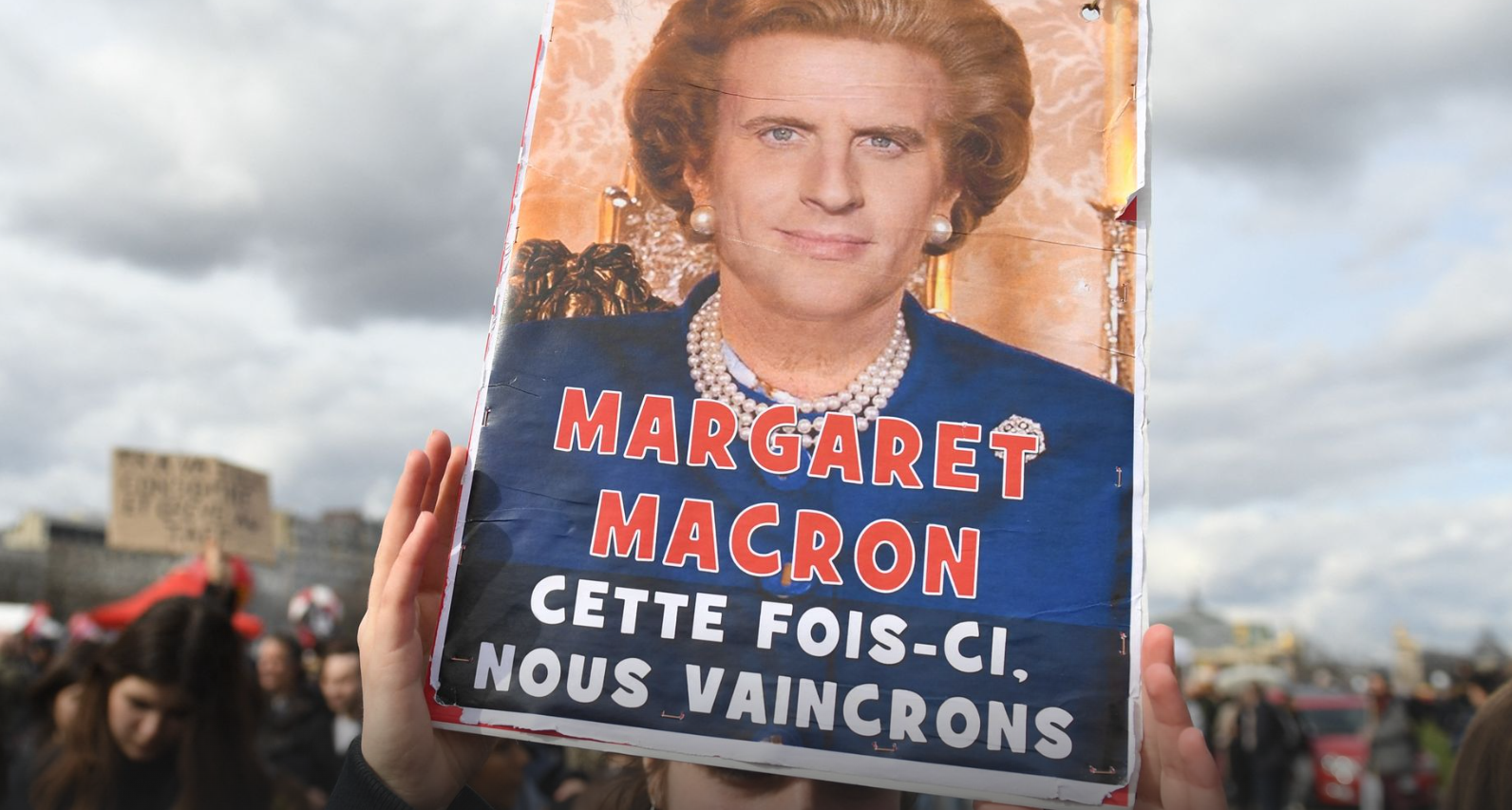
Protest signs against Macron, at a protest earlier this month – AFP

Demonstrations have been taking place across France against Macron’s pension reforms since January. This leads to concerns about the state of the country. “We are in the worst democratic crisis France has seen in decades,” said historian and sociologist Pierre Rosanvallon. Political scientist Adrien Broche sums up: “There is a social crisis, there is a political crisis and more than three-quarters of the French say that French democracy is in bad shape. In short: all signals are on red.”


From day one relatively little support


What’s going on in France? For that we have to go back in time. On April 24, 2022, Emmanuel Macron won the presidential election for the second time. He had already served five years as head of state and was therefore allowed by the voters to stay in office for another five years.\


But it was not a victory with flying colors. Many French people did not vote. As a result, Macron ultimately received the support of only 38.5 percent of all French voters: a minority.
Legally it didn’t matter. The winner is the one with the most votes. But there were warnings about a president with relatively little public support.


Two months later, parliamentary elections were held in France. Macron’s party became the largest, but failed to win an absolute majority. From now on he was forced to negotiate with the opposition before passing bills.


The declining turnout also played a role in the background. The enthusiasm to vote has been decreasing for years among the French. For example, only 46 percent of the French entered the voting booth in the parliamentary elections. By way of comparison: in the Netherlands, the turnout in the last parliamentary elections was 78.7 percent.


President vs. population


In that climate, Emmanuel Macron began his second term in office. Raising the retirement age from 62 to 64 was the first major reform in that new political context: with little public support as president, and without a majority in parliament.


President Macron tried to overcome those obstacles. He initially wanted to raise the retirement age to 65 years, but because of social resistance he made a concession and made it 64 years. The resistance remained the same.,


Macron negotiated in parliament with the conservative opposition to gain support for his plans. That also failed; there was no majority. The result: the president pushed through a plan that the French did not like. He simply sidelined parliament because most MPs would vote against.


Meanwhile, three months of strikes and demonstrations by millions of French people have taken place, making the pension protests among the largest in French history. “The vote of the street should not outweigh the vote of the electorate,” the president said. He meant: the increase in the retirement age was in his election manifesto, so the voter knew what he was opting for. In fact, there is no in-between. But that ‘voter’s vote’ is the 38.5 percent of the French who voted for him. That is what many protesters mean when they say that Macron is not “the people’s president.”


The pension protests exposed the legitimacy problem warned about a year ago. Macron has too little support from the French and too few friends in parliament. Critics say Macron has driven voters away and antagonized the opposition.


Weak opposition


Macron’s opponents cannot make a fist either. The opposition in parliament is hugely divided. They fail to offer an alternative together or in coalitions. And the trade unions have mobilized millions of French people in recent months, but the result has been nil: the protest has had no effect. The pension crisis has only produced losers. “The crisis we are going through has not been good for anyone,” philosopher Florent Guénard said last month. “Democracy is divided and weakened. Emmanuel Macron is our legitimate president. But ‘legitimate’ does not mean you can do what you want. A president has responsibilities: he must listen.”


Emmanuel Macron still has four years left as president. He is now plotting a route for the next hundred days. In that short period of time, new policy plans must be launched, and he also wants to regain the confidence of the French.

Think tank: Putin still firmly believes in complete victory

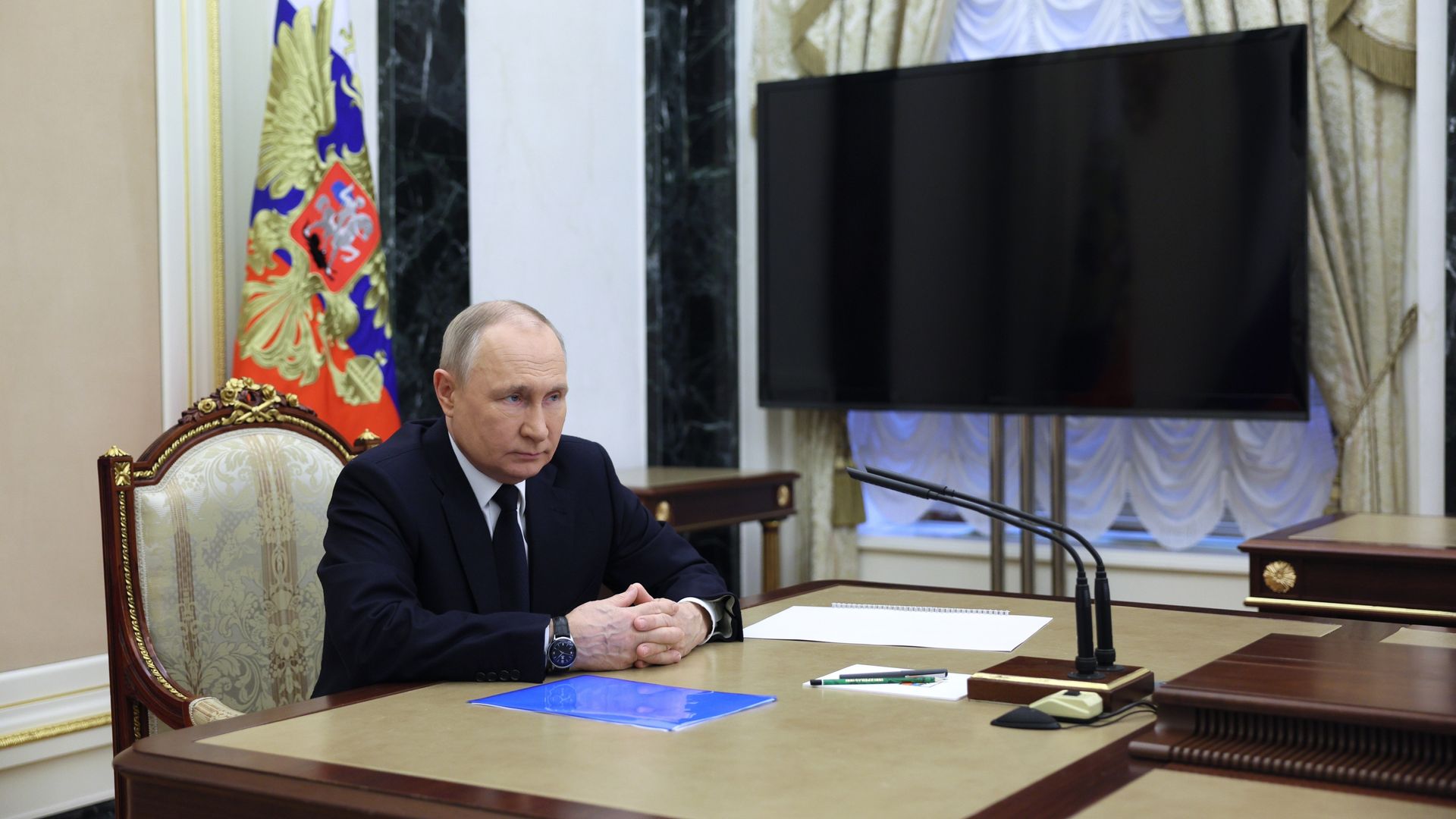
Russian President Putin still firmly believes in a complete victory in Ukraine. That is what experts from the American think tank Institute for the Study of War (ISW) write in a latest update on the war.

According to them, neither the West nor Ukraine have yet succeeded in convincing Putin that a compromise is needed to end the war. Putin is prepared for a long, drawn-out war to eventually force Ukraine to surrender or to make the West war-weary, leaving Kyiv alone, the ISW writes.

Based on the recent rhetoric and actions of the Russian president, the experts believe that only several successful counter-offensives by Ukraine can force Putin to the negotiating table. But the question is whether Putin will accept the reality on the battlefield.

‘The Netherlands has become a bit more corrupt, because of lobbyists’

The Netherlands became slightly more corrupt last year, Transparency International (TI) reports in its annual corruption ranking. With 80 points, the Netherlands achieved its lowest score ever. The country is still one of the ten countries with the least corrupt public sector. The Netherlands is in eighth place, as in previous years.

Tweede Kamer (Dutch parliament)

The fact that the Netherlands has dropped a few points is mainly due to the lack of political integrity, explains TI spokesperson Andor Admiraal. “For example, there is no good lobbyists’ register, which means there is insufficient supervision of lobbyists. There are also far fewer rules about the financing of political parties than in other countries. Furthermore, a cooling-off period for politicians is not properly arranged.”

For example, CDA Member of Parliament Raymond Knops announced last week that he will lead the lobby club for the arms industry. Knops is now a deputy member of the Defense Committee of the Dutch House of Representatives.

Earlier there was a fuss about the transfer from Minister Cora van Nieuwenhuizen (Infrastructure and Water Management) to the sector association of energy companies. This raised doubts about conflicts of interest and undesirable political influence.

Admiraal: “Almost half of national former politicians start working as lobbyists when their political career is over. That is a real problem in the Netherlands, because voters must know that people in politics make decisions based on their political ideas. Even the appearance of a conflict of interest is enough to undermine that trust.”

A bill is now being drafted for a national lobbying ban, but only for (former) ministers and not for other politicians.

Japan and US strengthen military relationship due to threat from China

Japan and the United States will strengthen their military ties. The two countries announced this in a joint statement. With the cooperation, they say, they are addressing the threats from China and North Korea in the region. They call China’s role “the biggest security challenge”.

Image: APF

According to Japan and the US, China’s policy is aimed at turning international relations in its favor by, among other things, exerting great political, economic and military pressure. British Prime Minister Sunak also signed an agreement to strengthen military ties between Japan and the United Kingdom.

Tensions between China and Taiwan

In the region, there are particularly high tensions between China and Taiwan. The Chinese army regularly conducts exercises near the island state. The Chinese government sees Taiwan as a renegade province. The Taiwanese have a strong ally in the US.

Last August, top American politician Nancy Pelosi visited Taiwan, which was seen as a provocation by China. In Beijing’s eyes, any visit by a foreign administrator or politician is equivalent to recognition of Taiwan’s independence.

Earlier, US President Joe Biden announced that the US military would defend Taiwan in the event of a Chinese invasion.

The military cooperation includes a new naval unit on the Japanese island of Okinawa, not far from Taiwan. The Americans already have a large base there and will expand the existing army. The site is seen as a strategic location in the region, from which it is possible to react quickly.

Additional troops are also stationed on other islands south of Japan. Both countries will also practice multiple times.

Japan strengthens its military

Last year, Japan announced to significantly strengthen its own defense. It will be the largest reinforcement since World War II. Japan feels the threat from North Korea, which regularly fires missiles, and sees that China has expanded its navy and air force in the vicinity of Japan. According to Japan, Chinese naval vessels regularly sail in Japanese territorial waters.

Russia is recruiting Afghan commandos for war in Ukraine

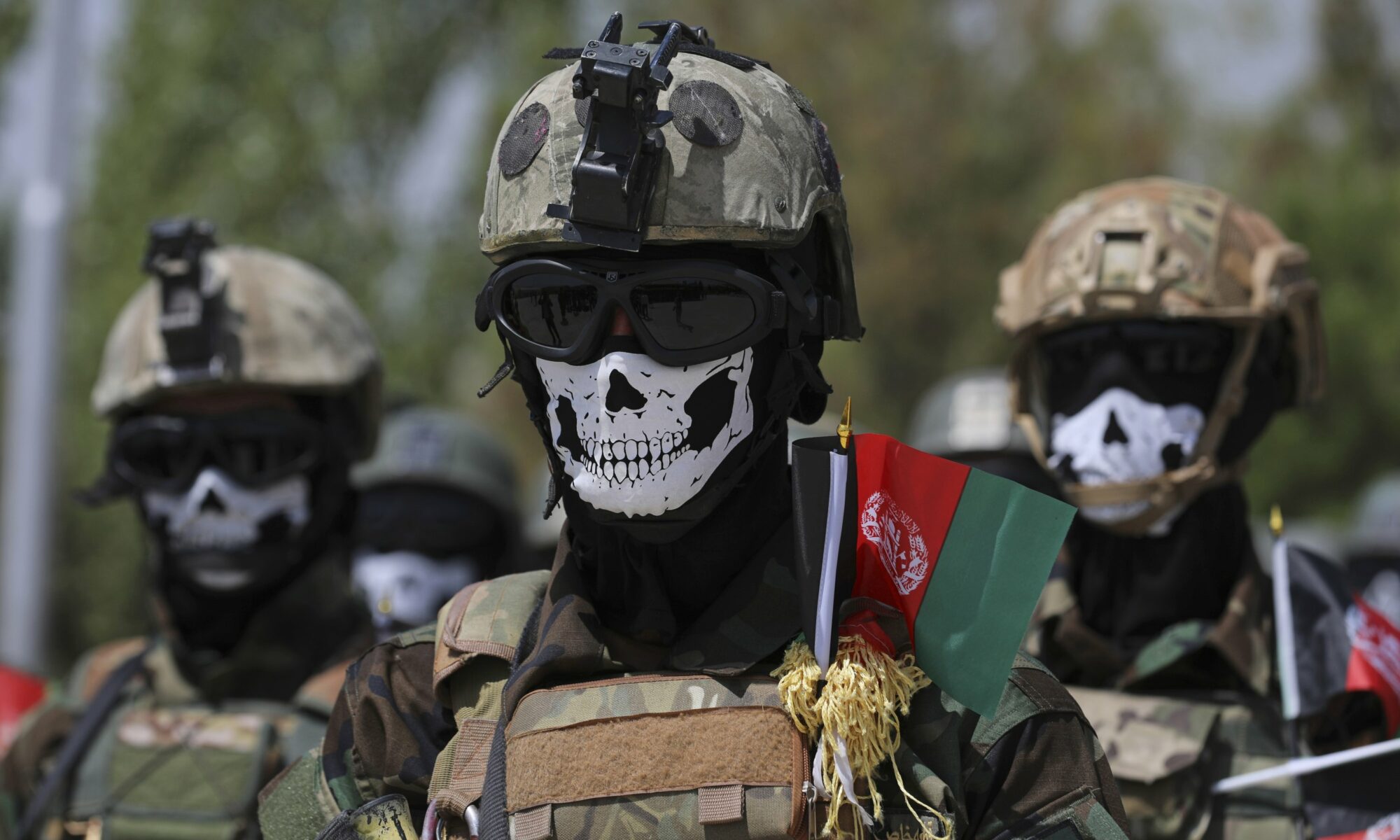
Russia is trying to recruit Afghan commandos to fight in Ukraine, Sky News reports. According to several Afghan military sources, these special forces could have a major impact on the outcome of the battle, should they decide to join the fight. They are trained by the British and US military.

Afghan commando forces

There is a chance that about 10,000 of these men will join Russia, according to an anonymous Afghan source. “They have no country, no jobs, no future. They have nothing to lose,” the source told Sky News. The soldiers are said to have been approached by Russia via WhatsApp and the encrypted messaging service Signal.

After the last US troops left Afghanistan in August last year, the Afghan commandos were left behind. Only some of them were evacuated when the Taliban took power. The men who remained in Afghanistan had to go into hiding to avoid prison or execution.

The Russian economy appears to be more robust than estimated at the start of the Ukraine war. But the outlook is far from rosy.

Russian gas exports have already fallen sharply, but the oil industry has yet to be affected. The Russian economy is contracting this year and the next, but less sharply than previously estimated. On balance, income from oil and gas exports has increased considerably, which is filling the state treasury. The European oil boycott will put pressure on revenues, while other sanctions will also hurt more.

Russian economy

Is Europe sinking as Russia climbs out of the trough? A Russian journalist recently asked this question during a press conference of the International Monetary Fund. Wishful thinking, the IMF economists clearly hinted in their response. They expect a contraction of -3.4% for this year, -2.3% for next year, while the eurozone is expected to grow slightly in 2023. However, last April, a contraction of more than 8% was expected for 2022.

Energy exports

Where does this relative windfall come from? Earlier analysis of the Russian economy still assumed a financial crisis. This scenario did not materialize because capital movements were restricted. Russian monetary authorities also prevented a bank run by raising interest rates. Friend and foe praise the attitude of the Bank of Russia, which operates independently and paints a fairly realistic picture of the economy. In a recent publication, the central bank stated that the economic recovery stalled in September, while inflation is rising again — partly due to ‘the exodus of suppliers and retail chains from unfriendly countries’.

Higher returns from energy exports keep Russia going. It is true that Moscow has largely turned off the gas tap to Europe of its own accord (exports are 80% lower than a year ago), but the sale of gas before the war ‘only’ accounted for a quarter of oil revenues. Oil is therefore much more important to the Russian economy. The price per barrel is higher this year than in 2021 (the recently announced production cut by the oil cartel Opec sets a new floor), while the export volume has remained stable. The state is likely to receive RR 11,700 billion (€194 billion) from oil and gas sales this year, an analyst estimates, compared to RR 9,100 billion last year (€151 billion).

The big blow

Western sanctions are potentially disastrous for Russian industry, which relies heavily on imports of machinery and technology. So far, Moscow has succeeded in limiting the effects with a bit of trickery and wizardry. As soon as the stocks run out, it is expected that major problems will arise. In the meantime, the combination of robust energy exports, falling imports and strict monetary policy is resulting in a strong ruble. This also dampens inflation, as imported consumer goods are relatively cheap as a result.

Normally, the strength of the currency says something about the strength of the underlying economy. But in the case of Russia, this is misleading. Analysts still expect the war to cost the country 10% to 15% of GDP, although this bill is spread over several years. The biggest blow will be the European boycott of Russian oil, which will take effect in December.

Emigration wave

This impending intervention has already led to shifts in trade flows: less to Europe, more to Asia. But can the entire decline of exports to Europe (accounting for about half of Russia’s oil exports before the war) be absorbed by, for example, China? It would then have to import more than twice as much Russian oil. Given the limited supply of tankers, this is only possible if new pipelines are built — and that costs time and money. Bofit, the think tank of the Finnish central bank, foresees an ‘exceptionally large drop’ in Russian exports before 2023. Finnish economists expect a 4% contraction for the Russian economy this year and next, making them more pessimistic than the IMF.

Oil and gas sales account for 40% of Russian government revenue. Lower exports will push up the budget deficit. In view of the low, largely domestically financed government debt, this is not an acute problem.

The decline of the Russian economy is happening in slow motion. This not only concerns the effects of the sanctions, but also of the wave of emigration as a result of the mobilization. Demographers expect a declining birth rate, accelerating the population decline that started in 2018. Bloomberg economists now estimate Russia’s potential economic growth at 0.5% annually — up from 2.5% before the war.