The Russian economy is teetering on the brink of collapse and disintegration, despite persistent claims of ‘resilience.’ While many economists prematurely predicted this outcome in 2022, their timing was off largely due to underestimating the Russian state’s wartime preparations and the Central Bank’s resourcefulness.
However, the cracks are now undeniable. Key economic indicators—GDP growth, inflation rates, and the dollar exchange rate—are being heavily manipulated by the government. Yet, these measures are becoming harder to sustain. The dollar exchange rate, a straightforward metric to monitor, tells a clear story. Last year, when it crossed the 100-ruble mark, even officials within Putin’s administration admitted the severity of the situation. Temporary measures brought it down to 88-92, but with the rate once again exceeding 100, it appears the government is running out of tools to stabilize it.
If the ruble continues to weaken and the dollar gains another 20%, inflation will undoubtedly surge. More critically, the risk of widespread panic looms large. Fear among the population, even sparked by rumors on social media, could ignite a chain reaction leading to an economic collapse worse than 1998.
The government is acutely aware of this danger, as reflected in their public reassurances downplaying the significance of the dollar exchange rate and interest rates. But such reassurances may not be enough. Should panic set in, the entire economic structure could crumble within days.”
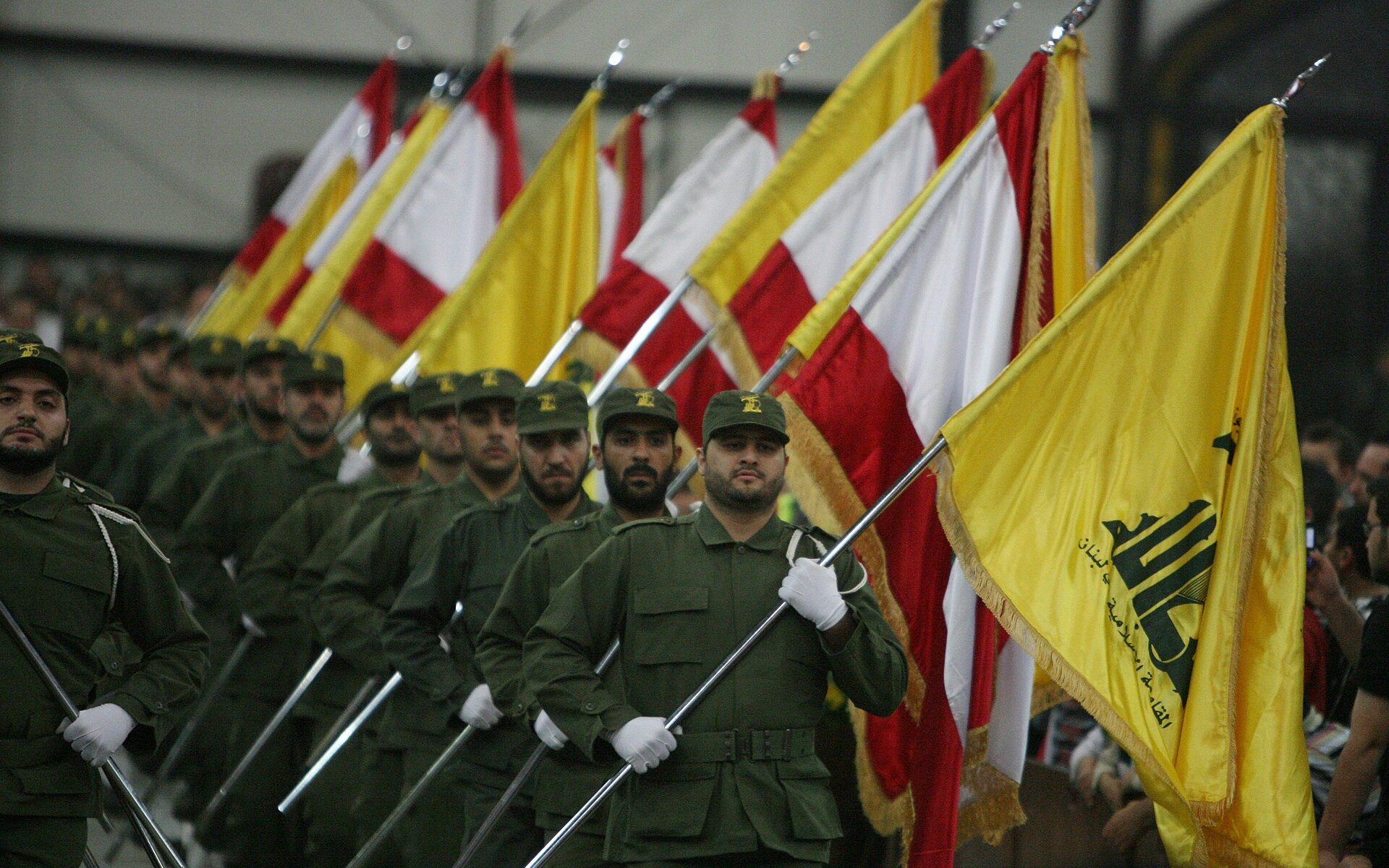
There is celebration and relief among the Lebanese, as well as division among Israelis, following the implementation of the ceasefire between Israel and Hezbollah. While it appears at first glance that both parties are adhering to the agreement, both Lebanese and Israelis express a “wait and see” attitude.
Khamenei.ir
This sentiment is reinforced by the 2006 ceasefire between Israel and Hezbollah, to which the current situation is often compared. Although weapons were also immediately laid down back then, tensions persisted, and there were repeated violations by both sides.
An international commission has been established to monitor this agreement. How effective that oversight will be remains uncertain. Israel reserves the right to intervene if Hezbollah breaches the terms. Things could easily escalate again, and there’s no guarantee we’ll get through the next 60 days without incidents.
Lebanese Army’s Key Role
Alongside countries like France and the United States, the Lebanese Army is expected to play a crucial role in maintaining the truce. Thousands of soldiers will be deployed in southern Lebanon to oversee the situation.
However, several experts criticize this plan, arguing that while it may look promising on paper, the Lebanese Army is relatively weak in practice. Despite suffering significant blows, Hezbollah is still believed to be much stronger, and the army’s capacity to counterbalance it is considered minimal.
Joy Among Lebanese
Still, both fighting parties have reasons to be satisfied with the agreement and a vested interest in its success. For Hezbollah, it is important to project that they have not been defeated, even though the organization has suffered significant losses.
Hezbollah commanders and leaders were killed, weapon depots destroyed—it’s clear Israel dealt significant blows. Israel likely couldn’t have entirely defeated Hezbollah, but had they continued fighting, the situation would have worsened considerably.
Eye on Trump
Israel has its own strategic considerations, particularly as public fatigue with the war grows. Israel is also looking toward Washington, where Donald Trump is set to assume power in two months. You could view this as an early Christmas present to him, a gesture to gain favor.
Israel will expect something in return—likely greater leeway to act in Gaza under Trump’s administration, including potentially expanding settlements there.
Mixed Reactions in Israel
Reactions to the ceasefire are divided in Israel. For tens of thousands of residents displaced from the border region, there is no immediate reason to return home. Israeli media express skepticism about whether Hezbollah will honor the agreement.
Others oppose the ceasefire outright, arguing that Israel missed an opportunity to decisively defeat Hezbollah while the group is weakened. Critics warn that this pause gives Hezbollah a chance to regroup and regain strength.
Bad News for Palestinians
Regardless of the perspective, the ceasefire is seen as bad news for Palestinians. IDF troops no longer required in Lebanon will now be available for deployment in Gaza.
This works in Israel’s favor, as they’re struggling to send enough soldiers to the front. In that sense, this is bad news for Hamas and the Palestinians.
Most analysts overestimate energy demand and underestimate technological advances
Conventional wisdom suggests decarbonizing the global economy will be exorbitantly expensive, but this is a misconception.
New analysis reveals the cost of transitioning to clean energy is far lower than predicted, primarily due to overestimated energy demand, underestimated technological advancements, and the failure to account for inevitable investments in energy infrastructure regardless of its source.
@roelthijssen
Key Points:
Overblown Cost Estimates
Many models assume rapid emission cuts, high energy demand, and inflated economic growth. Adjusting these assumptions significantly lowers cost projections.
Cheaper Technology
Advances in renewable energy, such as solar and wind, have drastically reduced costs, making clean energy investments more affordable.
Business-as-Usual Comparison
Even without decarbonization, the world would still invest heavily in energy infrastructure, minimizing the additional costs of going green.
Optimistic Outlook
Incremental costs of achieving a 2°C warming limit are as low as 0.5% of global GDP annually, challenging narratives that green transitions are financially unfeasible.
Despite bottlenecks, such as high costs in poorer countries and political inefficiencies, decarbonization is affordable and crucial.
While limiting warming to 1.5°C may be unrealistic, staying below 2°C is achievable with lower-than-anticipated costs.
Addressing climate change remains a manageable and necessary challenge.
Gezien de huidige politieke situatie met spanningen rondom racisme binnen het kabinet en de impact van het vertrek van staatssecretaris Nora Achahbar, kunnen we een aantal scenario’s schetsen voor de toekomst van het kabinet-Schoof.
Hier zijn de meest waarschijnlijke opties:
Catshuis
Scenario 1: Herstel en focus op beleid (meest waarschijnlijke)
Het kabinet blijft in zijn huidige samenstelling, maar voert belangrijke aanpassingen door. Er worden maatregelen genomen om de communicatiecultuur te verbeteren en een hernieuwde focus gelegd op inclusiviteit. Dit omvat bijvoorbeeld:
Interne bewustwordingsprogramma’s:
Trainingen over racisme en diversiteit voor ministers en staatssecretarissen.
Duidelijke beleidsverklaringen:
Het kabinet presenteert een plan om racisme en discriminatie te bestrijden, wat publieke steun moet herstellen.
Stabiele samenwerking met NSC:
Pieter Omtzigt en NSC blijven kritisch, maar ondersteunen de regering zolang er concrete verbeteringen worden doorgevoerd.
Kans van slagen:
Dit scenario is het meest waarschijnlijk, gezien de wens van NSC en andere coalitiepartners om politieke instabiliteit te voorkomen. Premier Schoof zal echter transparanter moeten zijn en sneller moeten handelen om het vertrouwen terug te winnen.
Scenario 2: Vervroegde verkiezingen
Als het vertrouwen tussen de coalitiepartners verder afbrokkelt of NSC zijn steun intrekt, kan dit leiden tot een kabinetscrisis en vervroegde verkiezingen.
Dit kan gebeuren als:
NSC leden massaal opstappen vanwege gebrek aan verbeteringen.
Het publiek massaal vertrouwen in het kabinet verliest, waardoor de druk op premier Schoof groeit.
Impact:
Vervroegde verkiezingen zouden de politieke onzekerheid nog meer vergroten en de duur van ‘onbestuurbaarheid’ verlengen.
Scenario 3: Herstructurering van het kabinet
Een andere uitkomst is een beperkte herstructurering waarbij een aantal ministers of staatssecretarissen opstappen, terwijl de coalitie in stand blijft. Dit kan premier Schoof de ruimte geven om politieke goodwill terug te winnen zonder vervroegde verkiezingen.
Mogelijke acties:
Het vertrek van ministers die betrokken zijn bij controversiële uitspraken.
De aanstelling van nieuwe bewindspersonen die de coalitie in een positiever daglicht stellen.
Kans van slagen:
Dit scenario is minder waarschijnlijk, omdat het de kern van de spanningen (het gebrek aan onderling vertrouwen) niet oplost. Ook zal met name de VVD dit niet accepteren.
Gekozen scenario: Scenario 1 – Herstel en focus op beleid
Het meest waarschijnlijke scenario is dat het kabinet overeind blijft en zich richt op het verbeteren van de communicatiecultuur en inclusiviteit. Dit scenario vereist leiderschap van premier Schoof en samenwerking met NSC om een breuk te voorkomen.
Hoewel het vertrouwen niet onmiddellijk zal worden hersteld, kan deze aanpak tijd kopen om concrete resultaten te leveren.
Waarom dit scenario?
Coalitiepartners hebben belang bij stabiliteit.
NSC wil haar invloed behouden zonder een volledige kabinetscrisis uit te lokken.
Vervroegde verkiezingen zijn momenteel politiek riskant voor de meeste partijen.
Scenario 1 is slechts een tijdelijke ‘oplossing’ voor het Kabinet Schoof.
In mijn persoonlijke mening lijkt scenario 1 – het herstel van het kabinet met een focus op beleid en cultuurverandering – slechts een tijdelijke oplossing te bieden.
Hoewel de intentie om de communicatiecultuur te verbeteren prijzenswaardig is, ontbreekt het dit kabinet aan het morele leiderschap en de daadkracht om het vertrouwen van de samenleving structureel te herstellen. De spanningen binnen de coalitie en de samenleving zijn te diepgeworteld voor oppervlakkige maatregelen.
De polarisatie in de samenleving wordt naar mijn idee alleen maar groter als dit kabinet blijft zitten. De gebeurtenissen rondom de vermeende racistische uitspraken en het aftreden van staatssecretaris Achahbar hebben laten zien dat er een fundamenteel probleem is in hoe dit kabinet met gevoelige maatschappelijke thema’s omgaat. Het ontkennen of bagatelliseren van racisme, zoals door premier Schoof werd gedaan, voedt juist de onvrede en het wantrouwen bij brede lagen van de bevolking.
Door aan te blijven, versterkt dit kabinet het beeld van een gesloten politieke elite die niet bereid is verantwoordelijkheid te nemen voor structurele problemen. Dit zal de kloof tussen burgers en politiek vergroten en bijdragen aan een verdere polarisatie in de samenleving. Uiteindelijk denk ik dat scenario 1 slechts uitstel van een grotere crisis betekent.
Conclusie:
Een diepgaande herstructurering of vervroegde verkiezingen lijkt onvermijdelijk om het vertrouwen in de politiek en de sociale cohesie in Nederland te herstellen. Aan de oppositie de taak om hiervoor klaar te zijn.
Paul Bremer was the face of the neoconservative foreign policy of the U.S. Now that Trump is in power, there is no longer room for neocons among the Republicans. Yet he remained loyal to the party. Why? “Europe frustrates us.”
Photo: Stephen Voss
Republican Lewis Paul Bremer III had never before voted for Donald Trump. In the previous presidential election, he wrote “Nikki Haley,” Trump’s former UN ambassador and challenger, on the ballot.
He wanted nothing to do with Trump. But this time, Bremer was convinced and chose Trump. “I didn’t have great options on the ballot,” he says by phone from his home just outside Washington. “I have serious reservations about Trump, but I hope he surrounds himself with the right advisors. Maybe it won’t be so bad, and his election could actually be good news, even for Europe.”
Paul Bremer (83), who was the U.S. ambassador to the Netherlands in the 1980s, is a Republican of a fading kind. His name is forever linked to the era when neoconservatives held sway in the party in the early 2000s. It was the time of hawks, advocates of aggressive interventionism. After the September 11, 2001 attacks, the U.S. invaded Afghanistan (2001) and Iraq (2003). After the capture of Iraq, Bremer was appointed by Republican President George W. Bush as the head of the coalition authority in Baghdad. It was he who announced the capture of deposed dictator Saddam Hussein on December 14, 2003. (“Ladies and gentlemen, we got him.”)
But the neocons no longer hold power in the Republican Party in the Trump era. Trump called the Iraq War a mistake and labeled the interventionists of that time as warmongers. “Wars cost money,” Trump said, and the neocons’ ultimate goal—to spread democracy on American terms—does not fit his “America First” doctrine. Dick Cheney, Bush’s vice president, and his daughter Liz switched to the Democrats.
Bremer, who took up painting after his return from Iraq, just like Bush, remained loyal to the party, despite his reservations about Trump. And there are many like Bremer: those who haven’t left the party have either converted to Trumpism or kept quiet.
Do you, as a neoconservative, still feel at home in your party?
“Yes, but you need a thick skin. By the way, I always call myself an ‘old con,’ not a ‘neocon.’ I believe in Henry Kissinger’s ideas on foreign policy.” Former Secretary of State Kissinger, who passed away late last year, believed in an active American role but with stability as the goal, not creating a better world.
But the time of Kissinger is truly over in your party.
“The Republican Party has changed, just as society has changed. The party is traditionally internationally oriented. But there has always been a countercurrent. When NATO was founded in 1949, a faction led by Senator Robert Taft opposed it fiercely. I hope that faction doesn’t regain control.”
Is Trump part of that faction?
“If that’s the case, then we’re really in trouble. But it’s not just about Trump; it’s also about the people around him. That became evident during his first term. They will shape the policy. And I know that parts of his entourage see no role for America abroad, especially the incoming Vice President J.D. Vance.”
Vance said that the time of America actively shaping foreign policy and remaking the world in its image is over. That’s not what you stand for.
Measuring his words: “He has said controversial things, yes.”
Do you have confidence that Trump will listen to the right people, in your opinion?
“No, I’m not very optimistic. In his first term, the sensible people in his administration all left. He increasingly listened to family and close friends.”
Yet you voted for Trump. Why was that?
“It’s still my party. And the Democrats have become so radically left. They make various statements attacking Supreme Court justices, want to abolish the filibuster in the Senate [a tactic that allows the minority to delay legislation]. That’s an attack on the foundations of American democracy.
And the storming of the Capitol on January 6, 2021, wasn’t?
“It was clear that same day that it was a hopeless mission. The rioters had no way to overthrow or permanently change democracy. If you change the rules of the game in Washington, as the Democrats wanted, then you do.”
What will Europe notice about a Trump administration?
“Trump believes Europe should do more, and he’s right. In a certain way, I think he can shake up the discussion with Europe. European countries need to fairly contribute to NATO and be much more assertive, for instance, in Ukraine.”
In Europe, there’s concern that Trump might scale back support for Ukraine.
“I don’t know if that concern is justified. He says contradictory things. But if Trump’s election serves as a wake-up call for Europe, then let it be. The entire world order is shifting, and Europe should also think critically. We can’t afford a war with Russia. Plus, we also have China and Taiwan to consider; we can’t do it all.”
What should European countries say if they sit down with Trump?
“Something like: ‘Congratulations, Mr. Trump. Well done. Like you, we believe we need to do more for our security. And here’s our plan to drive the Russians out of Ukraine.’”
Do you see that as a realistic scenario?
“Europe frustrates us. Kissinger once asked, ‘Who do I call if I want to speak to Europe?’ It’s only gotten worse. Leaders of prominent countries, like Germany and France, are weakened by internal divisions. There has also been little respect for what Trump achieved in his first term. He helped create the Abraham Accords in 2020 [an agreement Israel signed with Gulf states Bahrain and the UAE], but no one congratulated him. He ordered the killing of [Iranian General] Qassem Soleimani, which was a bold decision. But the European countries were only angry about the relocation of the U.S. Embassy from Tel Aviv to Jerusalem.”
Do you see parallels between Reagan and Trump?
“Reagan, like Trump now, was underestimated, also in Europe. They saw him as a B-movie actor. And they ignored the fact that he already had substantial political experience. He also used a style of tough language intended to intimidate opponents. Once, when asked about his strategy against the Soviet Union, he said, ‘We win, they lose.’ I see a similar style in Trump. Reagan followed a weak Democrat, Jimmy Carter, just as Trump must now solve Biden’s problems.”
Do you still believe in a dominant America on the world stage?
“After the fall of communism, we missed the chance to create a new, stable world order. I still wish for that. But for that, America needs the help of European allies, even if it’s done quietly. As long as we don’t lecture each other on how to do it.”
CV
Former diplomat Lewis Paul Bremer III (1941) is best known as the American head of the Coalition Provisional Authority in Iraq, shortly after the fall of Saddam Hussein. From May 2003 to June 2004, he was the highest-ranking American in Iraq.
Between 1983 and 1986, Bremer was the U.S. ambassador to the Netherlands, appointed by President Ronald Reagan. He previously worked for former Secretary of State Henry Kissinger.
Interview (originally published in Dutch) by Guus Valk for NRC.
Dark clouds are looming over European industry. More experts are sounding alarms about the EU’s economic transition. A worrying signal came this week with the quarterly figures of Germany’s biggest carmaker, Volkswagen.
@roelthijssen
“If we do nothing, in fifty years, Europe will be just an open-air museum for American tourists,” warned former European Central Bank president Mario Draghi in a recent report on the EU’s economic future.
Most countries agree that action is needed. But what should Europe do to remain a global financial power alongside China and the United States? Economists say clear goals must be set and significant investment made over the coming years.
In Europe, much thought is being given to this. The EU remains a global player but risks being overtaken by emerging economies in the coming years. China has invested heavily in the green industry for years. Over the past ten to fifteen years, the country has become a major producer of solar panels, everyday semiconductors, and batteries.
Now, China is also making significant strides in the production of electric cars, putting pressure on European automakers from their East Asian competitors.
Europe is also increasingly struggling to keep pace with the United States. Of the fifty largest tech companies, only four are from the EU. Over the past decades, numerous startups in the U.S. have grown into major companies with trillion-dollar valuations.
Everyone in Europe agrees that something must be done, but what? “If we Europeans think we can build major companies from the ground up in just a few years, we are mistaken,” says Samuele Murtinu, professor of economics at Utrecht University. Competing with other global economies will require a lot of time and money.
Should European industrial companies collaborate more closely?
This happened with General Motors in the United States, now one of the world’s largest car companies. A successful European example is Airbus, which began in the 1960s as a collaboration between British, French, and German aircraft manufacturers.
However, economists see little support for this idea. Market competition leads to lower prices. “There was an idea to merge large European companies, but this was ultimately prohibited due to monopoly concerns,” says Niclas Poitiers, an economist at the EU think tank Breugel. “It would be a death knell for other existing European companies.”
Alarm
What everyone does agree on is that significantly more money needs to be invested in the European economy soon. The United States is investing $700 billion in the green transition. Estimates suggest China is doing the same, but Europe does not yet have a unified plan.
Former ECB chief Draghi also proposed such an amount for the EU. Some may be alarmed by this, but economists warn that if Europe is not willing to invest in the new economy, the price could become even higher. Without a long-term view, it may soon be too late to catch up.
Five Tips for the EU from Economists
Be bold in investing heavily in sustainability over the coming years.
Collaborate, even with companies outside the EU.
Gain control over the supply of essential raw materials.
Set clear political objectives.
Countries must come together for more unified policies.
Besides funding, having a clear plan is crucial for Europe. Although the 27 EU member states form a union, they often do not align their national policies. The member states also seem divided on their priorities.
What is more important: accelerating sustainability or maintaining major European companies and thus preserving jobs? Opinions on this choice currently differ significantly.
Nevertheless, it is not an impossible task. Europe has faced bigger challenges in the past. “The closure of coal mines was actually the last major transition,” says Poitiers. “A huge number of jobs were lost back then. I estimate this green transition to be smaller. I don’t expect as many jobs to be at risk.”
European tech sector lags behind the U.S. Market value of companies in billions of euros:
It is high time for a drastic overhaul of European economic policy. The survival of the European Union is at stake, facing an “existential challenge.” These strong words come from a report on the future of European competitiveness presented this morning by former European Central Bank head Mario Draghi. According to him, hundreds of billions of euros are needed annually.
@roelthijssen
Last year, Draghi was asked for advice by Ursula von der Leyen, President of the European Commission. The European economy lags behind the US and China. Disposable income growth in the US has been nearly double that of Europe since the early 2000s, Draghi writes.
The struggles of European industry were highlighted again last week when Volkswagen considered closing factories in Germany due to increasing pressure from Chinese competitors.
At a press conference this morning, Von der Leyen stressed that improving the economic position is “top of the agenda,” with Draghi’s report serving as guidance for the new European Commission.
Investing in innovation Draghi points out that all three factors driving European economic growth—thriving international trade, cheap Russian energy, and America’s defense of Europe—have become uncertain or have disappeared. Significant changes are needed in the EU, according to Draghi.
Investing more in knowledge and innovation is crucial for the EU to compete with economic giants like China and the US. Currently, the EU is “punching below its weight,” writes Draghi. He calls for removing strict regulations and barriers hindering innovative entrepreneurs in Europe.
Expensive energy Energy policy is another challenge. Since Russia stopped supplying cheap energy following the invasion of Ukraine, gas prices for European industry have risen to over three times those in the US. The EU needs to accelerate its clean energy plans, Draghi urges.
The report includes over 170 concrete proposals to bring about the “radical change” needed, according to Draghi.
The EU must also become more self-reliant in security matters, investing and collaborating more in defense. Additionally, the EU should ensure the supply of crucial raw materials, forming partnerships with resource-rich countries and increasing domestic production, such as opening new lithium mines.
Various EU processes must also change. For example, the report suggests better coordination of competitiveness and quicker decision-making in the European Council by reducing veto powers.
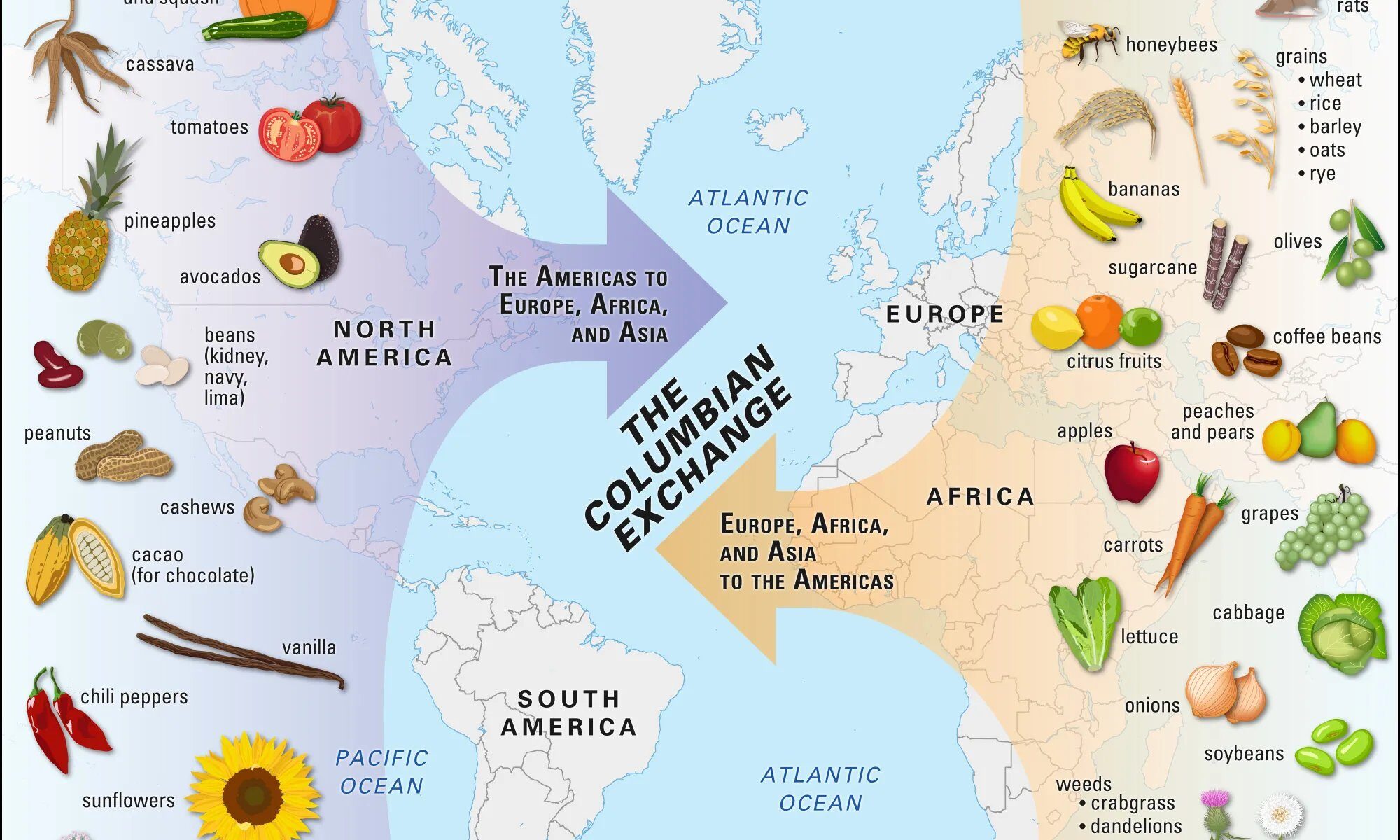
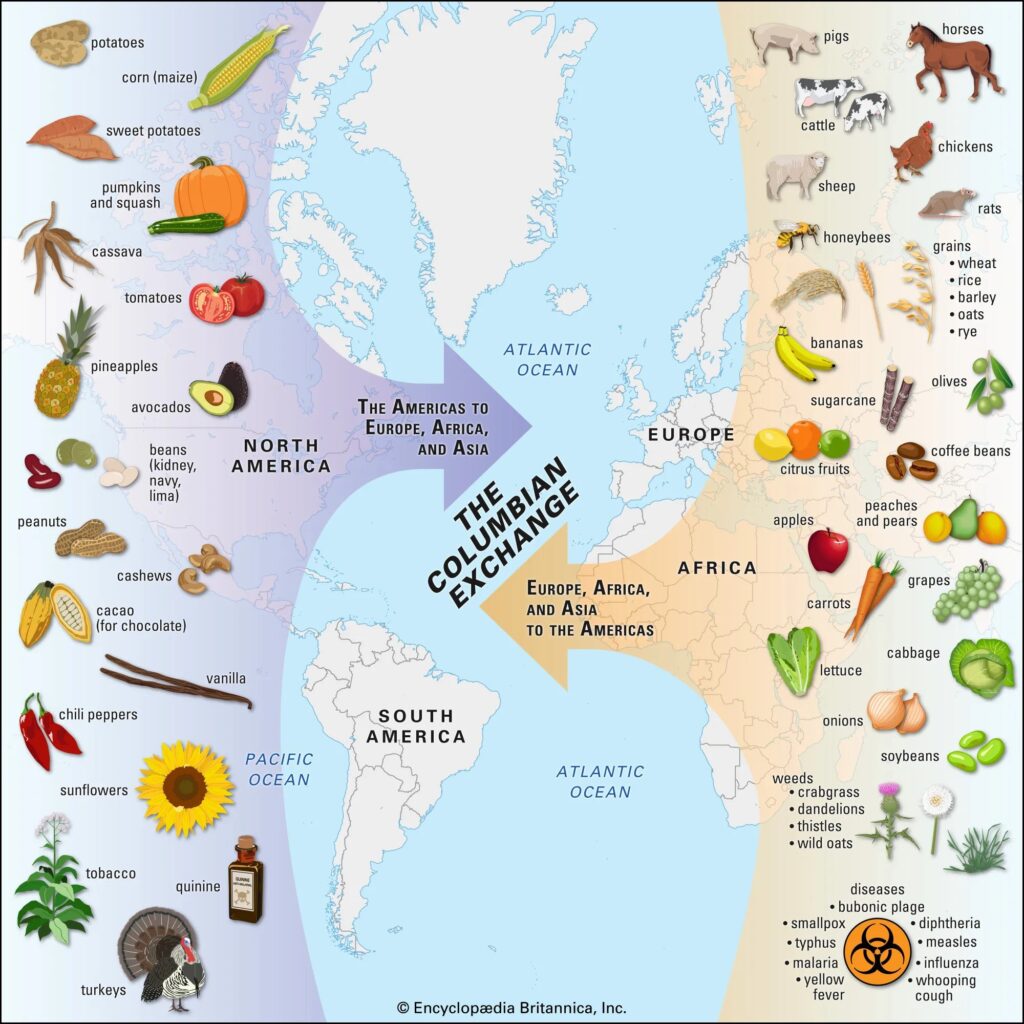
After Columbus’s 1492 voyage, the Columbian Exchange sparked a global food revolution. Europe got potatoes and tomatoes, while the Americas received wheat and sugar.
The Columbian Exchange refers to the massive transfer of plants, animals, culture, human populations, technology, and diseases between the Americas, West Africa, and the Old World (Europe and Asia) following Christopher Columbus’s 1492 voyage. This trade reshaped diets and economies but also unleashed diseases that devastated existing communities in the Americas.
Key Impact Areas
Agriculture: The exchange introduced life changing crops to new continents. The Americas received wheat, rice, and coffee, while the Old World gained staples like potatoes, corn, tomatoes, and chocolate. These calorie dense foods fueled a massive population explosion in Europe and Asia.
Livestock: Europeans brought horses, cattle, pigs, and sheep to the Americas. This fundamentally altered the landscape and the way of life for many Indigenous peoples, particularly on the Great Plains.
Disease: The most devastating aspect was the unintentional transfer of Old World diseases, such as smallpox and measles, to the Americas. Lacking immunity, Indigenous populations suffered catastrophic declines, often estimated at 80 to 90 percent.
Global Economy: This period marked the beginning of true global trade. It connected hemispheres but also led to the rise of the transatlantic slave trade as Europeans sought labor for new plantations.
Ultimately, the Columbian Exchange didn’t just move goods. It reshaped the biological and social makeup of the entire planet.
To provide the best experiences, roelthijssen.nl uses technologies like cookies to store and/or access device information. Consenting to these technologies will allow us to process data such as browsing behavior or unique IDs on this site. Not consenting or withdrawing consent, may adversely affect certain features and functions.
Functional
Always active
The technical storage or access is strictly necessary for the legitimate purpose of enabling the use of a specific service explicitly requested by the subscriber or user, or for the sole purpose of carrying out the transmission of a communication over an electronic communications network.
Preferences
The technical storage or access is necessary for the legitimate purpose of storing preferences that are not requested by the subscriber or user.
Statistics
The technical storage or access that is used exclusively for statistical purposes.The technical storage or access that is used exclusively for anonymous statistical purposes. Without a subpoena, voluntary compliance on the part of your Internet Service Provider, or additional records from a third party, information stored or retrieved for this purpose alone cannot usually be used to identify you.
Marketing
The technical storage or access is required to create user profiles to send advertising, or to track the user on a website or across several websites for similar marketing purposes.