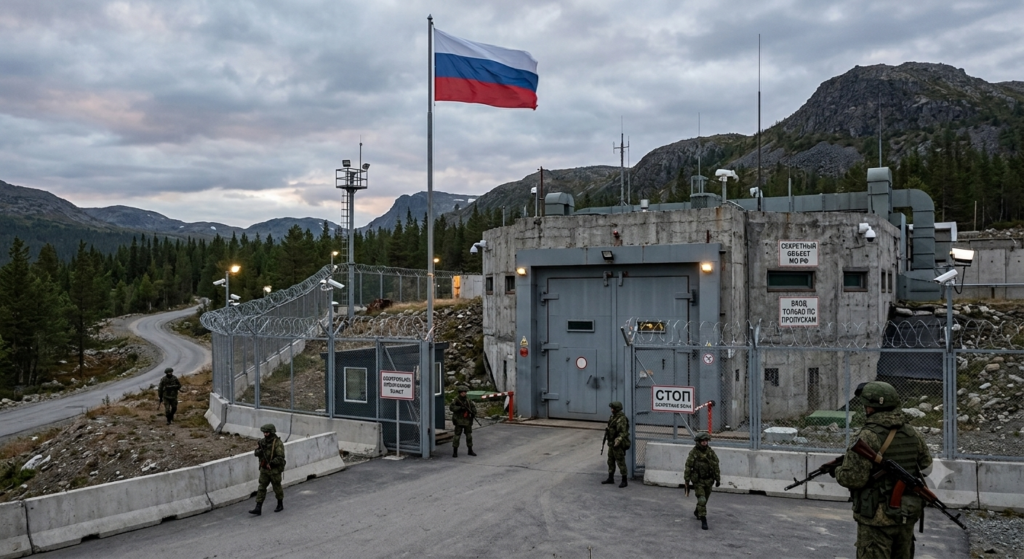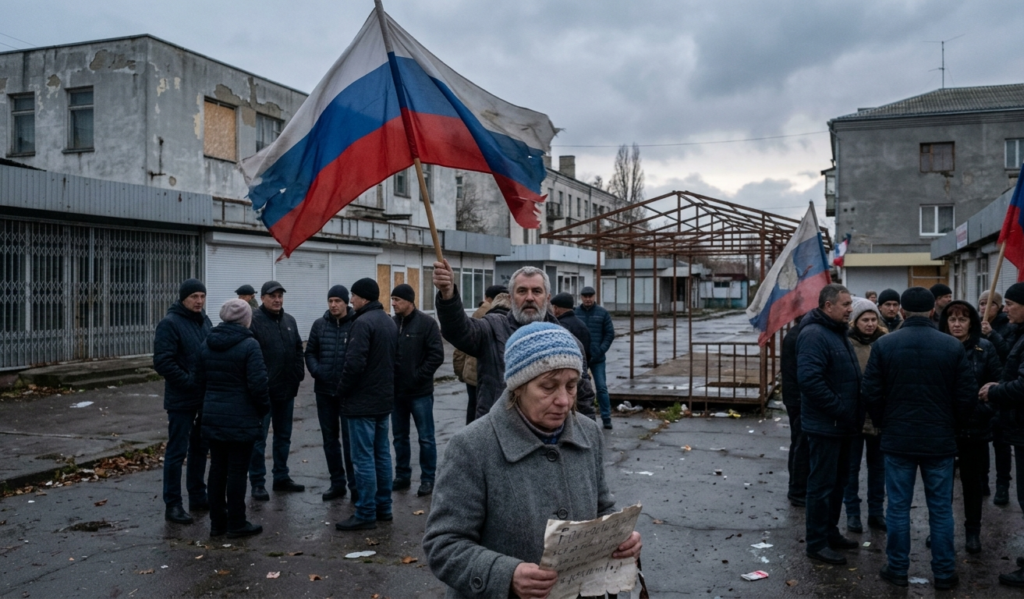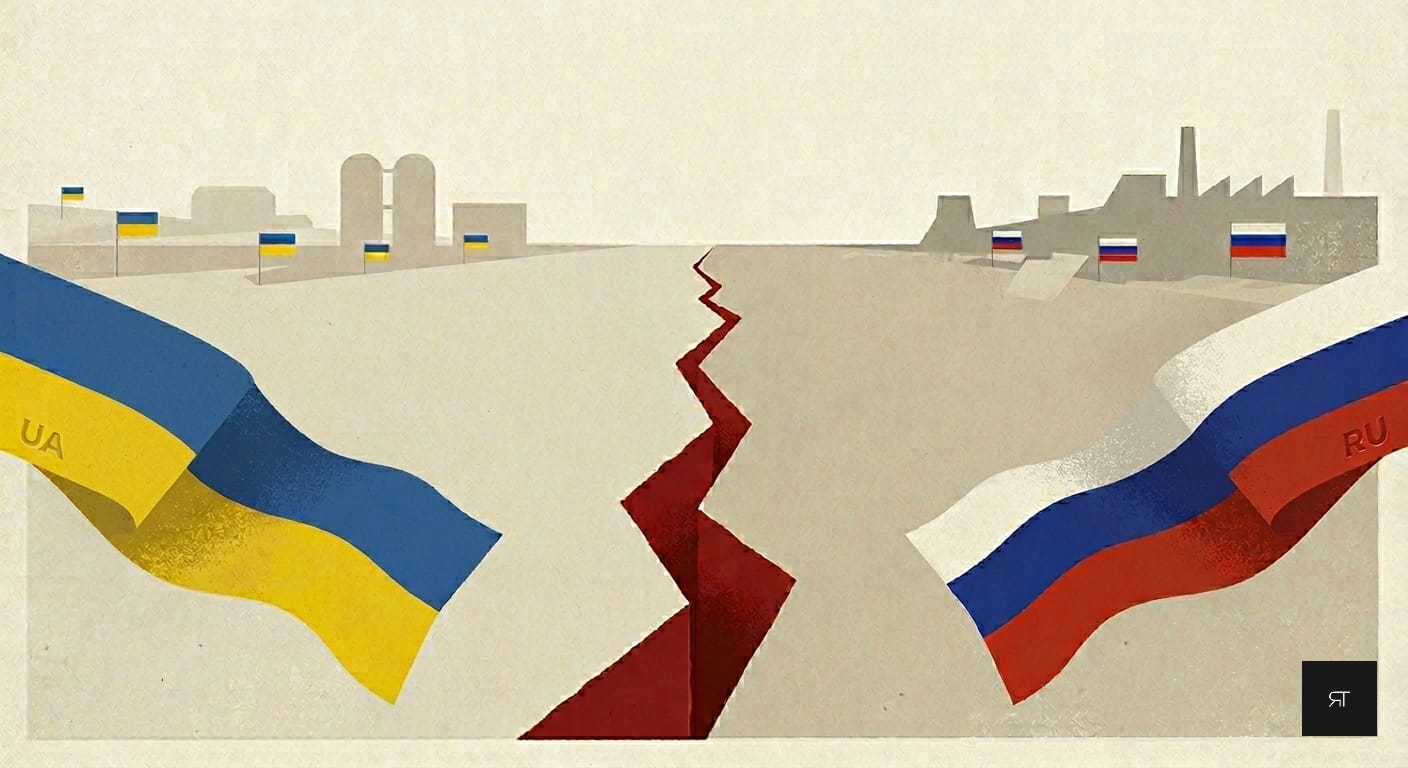
Russian Economy in ‘Endstage’, Risk of Total Collapse Threatens

The Russian economy has entered an ‘endstage’, according to economists in a report published by the German Kiel Institute for the World Economy. The authors warn that ‘an economic collapse of Russia’ is a distinct possibility.

Russian Economy is Collapsing
Economic collapse of Russia?

Earlier in May, the Russian central bank adjusted its outlook, projecting a 0.5% contraction of the economy rather than the previously anticipated 1.6% growth. According to the report, even this revised forecast is likely ‘too optimistic’, raising further doubts regarding the accuracy of official data.

Growth is now confined strictly to the Russian defense sector, while the civilian economy stagnates. The report notes that Russian foreign trade volumes have hit a 15-year low, and fixed asset investments have ground to a near-total standstill.

​High inflation leaves the Russian central bank with virtually no room to lower interest rates, which currently stand at 14.5%. Furthermore, Russia’s financial reserves are largely depleted. At the outbreak of the war, the National Wealth Fund held reserves equivalent to roughly 6.5% of gross domestic product (GDP). These reserves have now dwindled to 1.8% of GDP.

Oil

Following Ukrainian strikes on Russian oil infrastructure, Russian oil production dropped to a one-year low in May. Over the past month, Ukraine launched at least 31 attacks targeting refineries and pipelines inside Russia. A monthly report from the oil cartel OPEC indicates that Russia produced an average of just over 9 million barrels of crude oil per day in May.

As a result of these attacks, Russian oil processing volume has dropped in June to its lowest level in two decades, according to estimates by analysts at the consultancy firm Energy Aspects.

​The report reveals that higher oil prices driven by conflicts in the Middle East offer only temporary relief to the state budget, as export volumes have fallen significantly. Nevertheless, revenue from oil and gas exports remains ‘by far the most critical variable’ funding the war machine. Consequently, the economists call for stricter enforcement of sanctions and the introduction of a special import duty on remaining trade with Russia, with the proceeds used to support Ukraine.

Dependence on China

​A key point highlighted in the report is Russia’s growing dependence on China. The economists describe this relationship as increasingly lopsided: China purchases Russian raw materials at a discount, while Russia buys Chinese goods at premium prices. Report co-author Alicia García-Herrero notes that while Moscow has received an ‘economic lifeline’, China is the one dictating ‘the terms of the relationship’. Although trade with China enables Russia to sustain its war economy, it leaves Moscow more vulnerable in the long term due to restricted economic autonomy.

Russian Regions

The report notes that many poorer Russian regions have benefited from increased defense spending, narrowing the income and wage gap within the country. High salaries offered to military recruits also contribute to this trend.

Earlier this month, data showed that Russian regions are collectively facing record deficits this year due to the war. According to Russian Finance Minister Anton Siluanov, the deficit this year will rise by 400 billion rubles ($5.3 billion) compared to last year. An increasing number of Russian regions are heading toward financial shortfalls. While 49 provinces recorded a deficit last year, 73 regions are expected to be in the red this year, the finance minister reported. Siluanov acknowledged the severity of the situation, noting that regional deficits typically total between 200 and 300 billion rubles.

Last year, the total reached 1,500 billion rubles, and at least another 400 billion will be added this year, pushing the final figure close to 2,000 billion rubles.

Putin Suddenly Signals Openness to Peace Talks with Europe. Why Now?

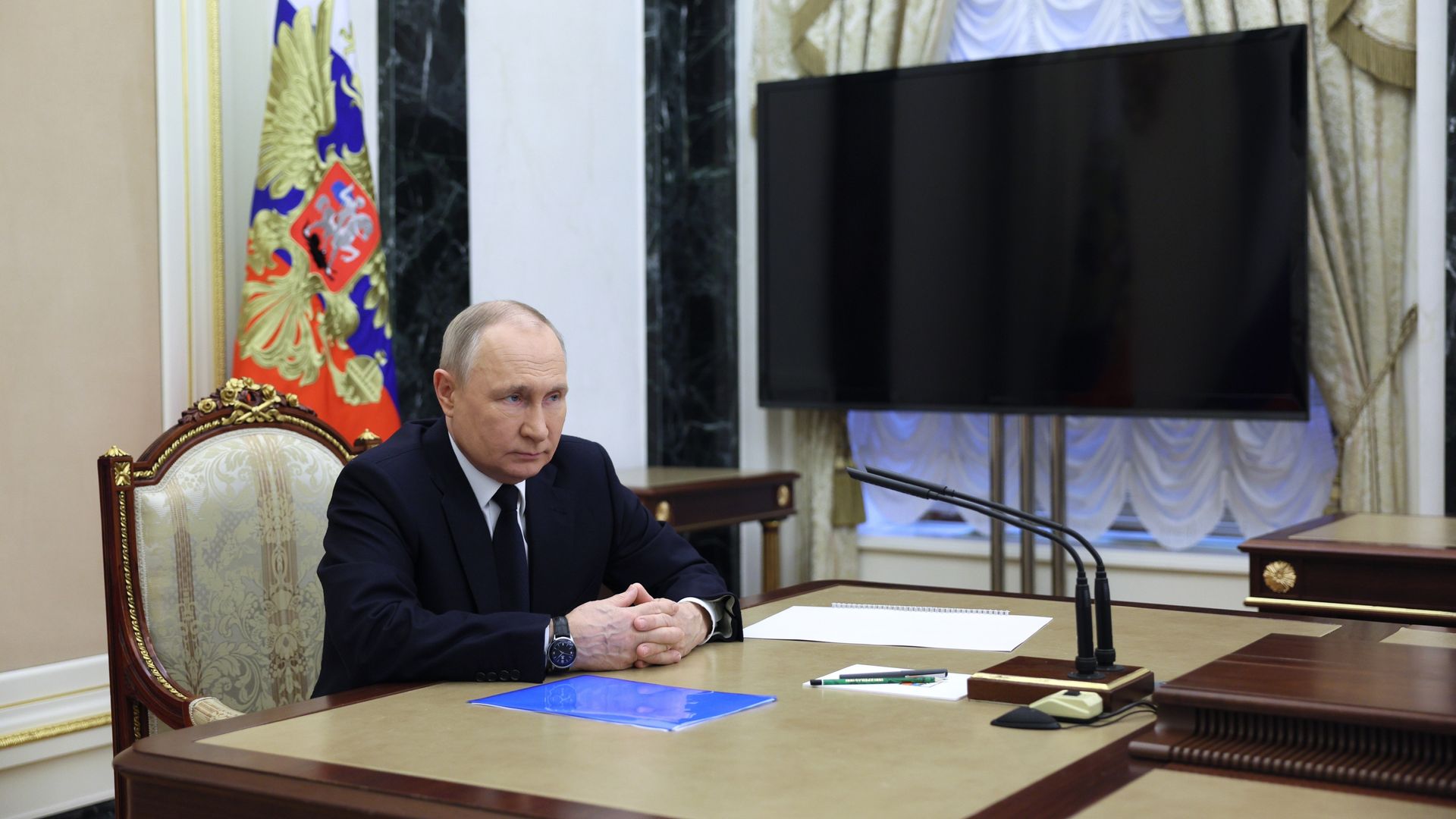
Putin wants Peace Talks

Russian President Vladimir Putin has unexpectedly indicated a willingness to engage in peace talks with the European Union. According to reports, he has proposed former German Chancellor Gerhard Schröder as a potential intermediary. However, these statements are open to multiple interpretations, a recurring theme with Putin’s rhetoric.

Two Sides of the Same Coin

Speaking to journalists at the conclusion of Victory Day, Putin suggested that the end of the conflict is drawing near. This could be interpreted in two very different ways.
On one hand, it may signal internal realization within the Kremlin that the war is not progressing as planned and cannot be sustained indefinitely. On the other hand, it could be a display of confidence, implying that Russia believes it is on the verge of victory and that Ukraine and Europe are about to face defeat.

The Schröder Connection

The choice of Gerhard Schröder is significant. While Schröder has become a political pariah in Germany since the 2022 invasion, losing several of his official privileges, he remains on good terms with the Russian President.

Schröder’s history with Gazprom and his long-standing friendship with Putin mean he is still trusted by the Kremlin. If there is to be any dialogue with Europe, Putin sees him as the ideal bridge.

A Shift in Strategy?

This overture is particularly striking given the Kremlin’s previous stance. Until now, Putin has largely focused on potential negotiations with Donald Trump or insisted that Russia and Ukraine settle the matter directly. Furthermore, Foreign Ministry spokesperson Maria Zakharova has frequently dismissed Europe’s relevance in any peace process.
While the motive remains unclear, this shift could represent a “tiny ray of light” for future diplomatic developments.

Ceasefire Violations

The news comes as a fragile three-day ceasefire, brokered partly under pressure from Donald Trump for Victory Day, officially expires today. Both Russia and Ukraine have accused each other of violations.

While aerial activity appeared to decrease slightly during the period, ground troops continued to advance, leading analysts to conclude the ceasefire was largely unsuccessful. With Putin’s foreign policy advisor, Yuri Ushakov, stating he is unaware of any extension, a resumption of full-scale hostilities is expected imminently. Ukrainian President Volodymyr Zelensky has already stated that Ukraine will take “appropriate measures” should Russian attacks persist.

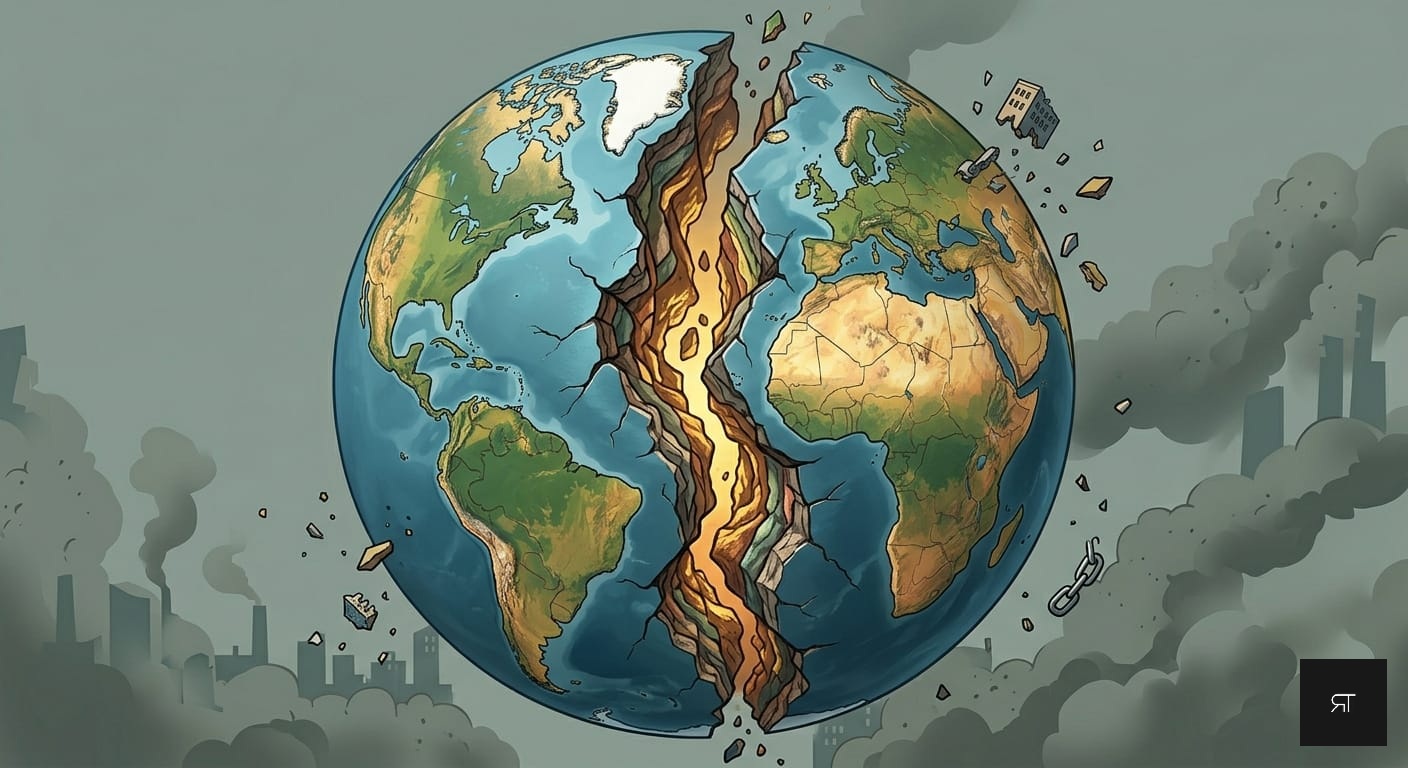
The Fragmentation of Global Order: Transatlantic Divergence and the Reconfiguration of Regional Alliances

Fragmentation Global Order

The contemporary international landscape is undergoing a profound structural transformation characterized by the erosion of traditional transatlantic cohesion and the emergence of new strategic alignments.

Recent shifts in United States foreign policy (specifically regarding the escalation of conflict with Iran and the subsequent closure of the Strait of Hormuz) have acted as a catalyst for global realignment. By analyzing the diplomatic outcomes of the European Political Community (EPC) summit in Yerevan, I am exploring the dual phenomena of non-Western tilt toward Russo Chinese influence and the simultaneous consolidation of Western middle powers around the European Union’s institutional framework.

Fragmentation Global Order

Introduction

The onset of military hostilities against Iran, initiated by the Trump administration with Israeli support, has triggered a series of systemic shocks that extend far beyond the Middle East. The resulting maritime blockade of the Strait of Hormuz has disrupted global energy and fertilizer supply chains, forcing a pragmatic reorientation of trade policies in the Indo Pacific. Concurrently, the decision to withdraw substantial military contingents from Germany and Romania has signaled a retreat from the post Cold War security architecture, prompting a re evaluation of the European Union’s role as a primary security guarantor for democratic states.

The Pragmatic Pivot: Energy Security and Russian Influence

Data from recent trade agreements suggests that Asian and Middle Eastern powers are increasingly prioritizing resource security over normative alignment with Western sanctions. The disruption of traditional supply routes has led nations such as India, Indonesia, and the Philippines to strengthen ties with Moscow.

  • Industrial Infrastructure: The joint development of urea production facilities between India and Russia indicates a long-term strategic commitment to agricultural stability.
  • Nuclear Energy Expansion: The ratification of contracts for nuclear power plant construction in Vietnam and Myanmar signifies a shift toward Russian technological dependence in the energy sector.
  • Resource Pragmatism: Negotiations involving Thailand and the UAE regarding Russian fertilizer imports demonstrate that the “aggressor” narrative prevalent in EU discourse fails to resonate in regions where domestic food and energy security are at stake.

Strategic Sentiment and Historical Path Dependency

The resilience of Russian and Chinese influence in the Global South can be attributed to deep seated anti Western and anti colonial sentiments. For many former colonies and erstwhile communist states, the perception of Russia as a counterweight to Western hegemony remains potent. China, under President Xi Jinping, leverages this sentiment to challenge the existing world order. The “century of humiliation” serves as a foundational narrative for Beijing’s current strategy: ensuring that Russia does not face a strategic defeat in Europe, which would otherwise bolster Western dominance and impede the transition to a multipolar system.

The Yerevan Summit: The EU as a Normative Anchor

In contrast to the shift toward Moscow in Asia, the European Political Community (EPG) summit in Yerevan (May 2026) demonstrated an unexpected level of European and “Western aligned” consolidation. The choice of venue (a former Soviet republic) served as a symbolic rejection of Russian regional hegemony.

A significant development was the participation of Canadian Prime Minister Carney, marking the first time a non-European leader joined the EPG. This move signals a search for strategic alternatives to the United States among traditional allies. Under the leadership of European Council President António Costa and figures such as Macron and Von der Leyen, the EU is increasingly viewed as a primary bastion of the international rule of law.

Conclusion: The Erosion of US Hegemony

The current trajectory of US foreign policy (defined by the instrumentalization of military withdrawals as political punishment, such as the drawdown of troops in response to Chancellor Merz’s criticism) is inadvertently accelerating American isolation. While the White House may perceive these actions as exercises of power, the systemic result is the fragmentation of the global order.

Trump’s policies have not only driven key regional players into the Russo Chinese orbit but have also forced a consolidation of Western powers around the European Union, potentially diminishing the long term geopolitical leverage of the United States.

As the NATO Summit Nears, It’s Not Just About Spending—It’s About Strategy

What defines a strong NATO ally? Since the alliance’s founding in 1949, debates over burden-sharing have been constant. Donald Trump, both in his first and current term, has sharply criticized European members for underfunding their defense while relying on U.S. protection—and not without reason.

His message is resonating. Belgium’s defense minister recently vowed to end the country’s “national shame” of being NATO’s most notorious free rider. Even Iceland, which lacks a standing army, is exploring how to contribute more meaningfully.

Image: Pixabay

To assess NATO members’ contributions, consider the “three Cs”: cash, capabilities, and commitment.

Cash: More Members Are Meeting Targets—But Is It Enough?

Today, 22 of NATO’s 32 members meet the 2% of GDP defense spending target, a big jump from just seven a decade ago. Italy and Spain are on track to join them this year. But the bar is rising: at the upcoming summit in The Hague, NATO is expected to adopt a new target of 3.5% of GDP, plus 1.5% for supporting infrastructure.

Still, raw spending figures can be misleading. Some countries inflate their numbers by including loosely related expenses under “defense.”

Capabilities: What the Money Buys Matters More

NATO recommends that at least 20% of defense budgets go toward equipment—most members comply, and that threshold may soon rise to 33%. But quantity doesn’t equal quality. Greece, for example, spends heavily on gear, but much of it is aimed at deterring Turkey, not Russia.

The NATO Defense Planning Process aims to align national purchases with alliance needs. After years of counterterrorism focus, the threat from Russia is refocusing priorities. Allies are now being asked to build forces primarily for deterrence in Europe.
New “capability targets” expected this month will guide what each country should provide—especially in areas where the U.S. may scale back, like intelligence, long-range strike, and logistics.

Commitment: Who Shows Up?

Operationally, even the most frugal allies are stepping up. Spain leads a multinational brigade in Slovakia; Italy commands one in Bulgaria. Portuguese jets patrol Baltic airspace. Smaller nations like Albania and Slovenia also contribute troops to NATO’s eastern flank.

But NATO wants more. In a major conflict, it aims to deploy 100,000 troops within 10 days and another 200,000 within 30. Without more European investment in recruitment and readiness, those goals may be out of reach—especially without U.S. troops.

A Smarter Division of Labor?

NATO is exploring a “multi-speed” model: larger militaries take on high-end combat roles, while smaller states focus on logistics, cyber, or niche capabilities. Luxembourg, for instance, supports satellite communications and surveillance; Iceland runs an air-defense system.

Getting underperformers like Spain and Italy to specialize more effectively may be key. Encouraging them to invest in maritime capabilities could be a strategic win.

What New Steps Will NATO Take for Ukraine?

The official agenda for the NATO foreign ministers’ meeting doesn’t mention it anywhere. However, as they convene in Brussels today and tomorrow, discussions behind the scenes are very much focused on the next steps NATO countries might take in the war in Ukraine. Among these considerations is the potential deployment of European troops to Ukraine—so-called “boots on the ground”—which is not being ruled out.

NATO logo

This has been confirmed by insiders within the military alliance involved in the meeting at NATO headquarters. This summit is the last before Donald Trump potentially resumes his position in the White House, making the discussions even more pressing.

Uncertain Times

Trump has previously claimed he could end the war between Russia and Ukraine “in a day” and has expressed intentions to drastically reduce U.S. aid to Ukraine. How he plans to achieve this remains unclear. Within NATO, there is considerable apprehension about these uncertain times.

President Zelensky seems unwilling to wait for Trump’s plans to unfold and has taken proactive steps. In recent weeks, he has openly discussed the possibility of a ceasefire with Russia. Just days ago, the Ukrainian president also expressed, for the first time, a willingness to temporarily relinquish territories annexed by Russia. However, he demands something in return: strong security guarantees for Ukraine if such an agreement is violated.

Membership Debate

For Zelensky, NATO membership remains the ultimate security guarantee. He believes such membership should apply to parts of Ukraine not under Russian control. However, despite Ukraine’s long-standing aspiration for membership, NATO is unlikely to extend an invitation anytime soon.

The alliance is divided on this issue, and since NATO decisions require consensus, Ukraine’s desire for membership will not be fulfilled in the near term. However, a potential ceasefire compels NATO countries to consider what security guarantees they could provide to Ukraine in the interim. Deploying troops to oversee such an agreement is one option being discussed.

The Estonian Foreign Minister recently advocated for sending troops, and French President Emmanuel Macron mentioned this idea back in February. Germany, among others, strongly opposed the proposal.

No Options Off the Table

According to the French newspaper Le Monde, discussions about “boots on the ground” have recently gained momentum. The French Foreign Minister previously urged that no red lines should be drawn in supporting Ukraine. When asked whether this included sending French troops to Ukraine, he replied that no option should be excluded.

This stance reflects a deliberate strategy of “strategic ambiguity,” leaving adversaries uncertain about future actions to avoid revealing NATO’s hand. Similarly, the EU’s new foreign policy chief has stated that no options are off the table when it comes to supporting Kyiv. Over the weekend, former Estonian Prime Minister Kaja Kallas visited Ukraine.

The deployment of NATO troops to Ukraine remains an extremely sensitive topic. Russian President Putin already claims that the West is waging war against Russia, a narrative frequently repeated on state television. In his view, “boots on the ground” would signify further escalation, as NATO forces would be physically present on Ukrainian soil.

This doesn’t necessarily mean NATO troops would engage in direct combat with Russia. Previous discussions have considered training Ukrainian soldiers within Ukraine itself rather than abroad.

As a potential ceasefire between Russia and Ukraine draws nearer, all options are once again being reviewed in NATO capitals and behind the scenes at NATO headquarters in Brussels. Only when a ceasefire appears genuinely imminent will it officially make the agenda.

The Russian economy is teetering on the brink of collapse

The Russian economy is teetering on the brink of collapse and disintegration, despite persistent claims of ‘resilience.’ While many economists prematurely predicted this outcome in 2022, their timing was off largely due to underestimating the Russian state’s wartime preparations and the Central Bank’s resourcefulness.

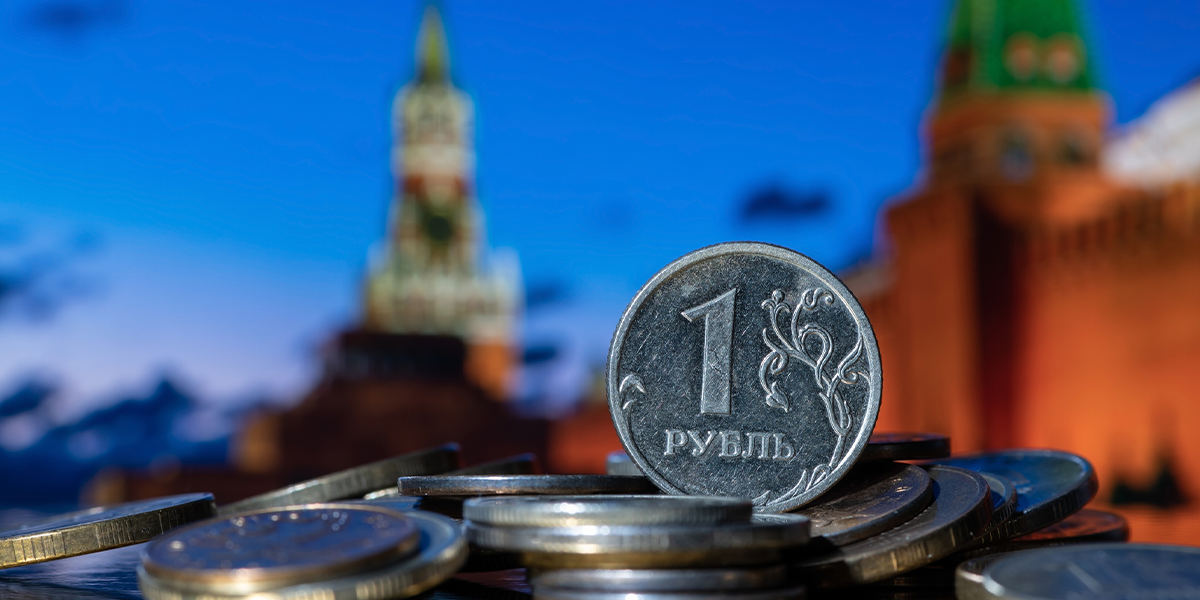
100 rubles obverse 2022

However, the cracks are now undeniable. Key economic indicators—GDP growth, inflation rates, and the dollar exchange rate—are being heavily manipulated by the government. Yet, these measures are becoming harder to sustain. The dollar exchange rate, a straightforward metric to monitor, tells a clear story. Last year, when it crossed the 100-ruble mark, even officials within Putin’s administration admitted the severity of the situation. Temporary measures brought it down to 88-92, but with the rate once again exceeding 100, it appears the government is running out of tools to stabilize it.

If the ruble continues to weaken and the dollar gains another 20%, inflation will undoubtedly surge. More critically, the risk of widespread panic looms large. Fear among the population, even sparked by rumors on social media, could ignite a chain reaction leading to an economic collapse worse than 1998.

The government is acutely aware of this danger, as reflected in their public reassurances downplaying the significance of the dollar exchange rate and interest rates. But such reassurances may not be enough. Should panic set in, the entire economic structure could crumble within days.”

Think tank: Putin still firmly believes in complete victory

Russian President Putin still firmly believes in a complete victory in Ukraine. That is what experts from the American think tank Institute for the Study of War (ISW) write in a latest update on the war.

According to them, neither the West nor Ukraine have yet succeeded in convincing Putin that a compromise is needed to end the war. Putin is prepared for a long, drawn-out war to eventually force Ukraine to surrender or to make the West war-weary, leaving Kyiv alone, the ISW writes.

Based on the recent rhetoric and actions of the Russian president, the experts believe that only several successful counter-offensives by Ukraine can force Putin to the negotiating table. But the question is whether Putin will accept the reality on the battlefield.

Russia is recruiting Afghan commandos for war in Ukraine

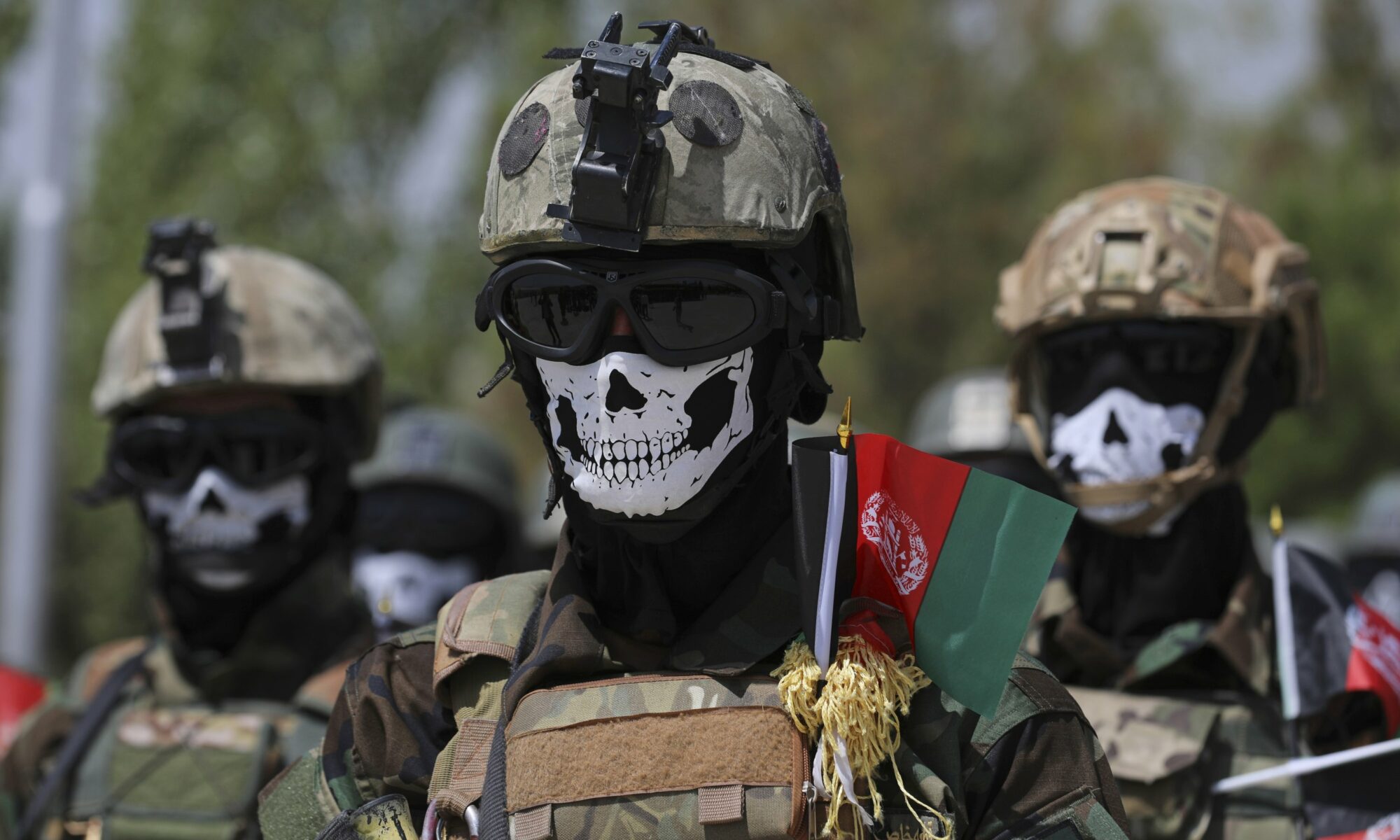
Russia is trying to recruit Afghan commandos to fight in Ukraine, Sky News reports. According to several Afghan military sources, these special forces could have a major impact on the outcome of the battle, should they decide to join the fight. They are trained by the British and US military.

Afghan commando forces

There is a chance that about 10,000 of these men will join Russia, according to an anonymous Afghan source. “They have no country, no jobs, no future. They have nothing to lose,” the source told Sky News. The soldiers are said to have been approached by Russia via WhatsApp and the encrypted messaging service Signal.

After the last US troops left Afghanistan in August last year, the Afghan commandos were left behind. Only some of them were evacuated when the Taliban took power. The men who remained in Afghanistan had to go into hiding to avoid prison or execution.

The Russian economy appears to be more robust than estimated at the start of the Ukraine war. But the outlook is far from rosy.

Russian gas exports have already fallen sharply, but the oil industry has yet to be affected. The Russian economy is contracting this year and the next, but less sharply than previously estimated. On balance, income from oil and gas exports has increased considerably, which is filling the state treasury. The European oil boycott will put pressure on revenues, while other sanctions will also hurt more.

Russian economy

Is Europe sinking as Russia climbs out of the trough? A Russian journalist recently asked this question during a press conference of the International Monetary Fund. Wishful thinking, the IMF economists clearly hinted in their response. They expect a contraction of -3.4% for this year, -2.3% for next year, while the eurozone is expected to grow slightly in 2023. However, last April, a contraction of more than 8% was expected for 2022.

Energy exports

Where does this relative windfall come from? Earlier analysis of the Russian economy still assumed a financial crisis. This scenario did not materialize because capital movements were restricted. Russian monetary authorities also prevented a bank run by raising interest rates. Friend and foe praise the attitude of the Bank of Russia, which operates independently and paints a fairly realistic picture of the economy. In a recent publication, the central bank stated that the economic recovery stalled in September, while inflation is rising again — partly due to ‘the exodus of suppliers and retail chains from unfriendly countries’.

Higher returns from energy exports keep Russia going. It is true that Moscow has largely turned off the gas tap to Europe of its own accord (exports are 80% lower than a year ago), but the sale of gas before the war ‘only’ accounted for a quarter of oil revenues. Oil is therefore much more important to the Russian economy. The price per barrel is higher this year than in 2021 (the recently announced production cut by the oil cartel Opec sets a new floor), while the export volume has remained stable. The state is likely to receive RR 11,700 billion (€194 billion) from oil and gas sales this year, an analyst estimates, compared to RR 9,100 billion last year (€151 billion).

The big blow

Western sanctions are potentially disastrous for Russian industry, which relies heavily on imports of machinery and technology. So far, Moscow has succeeded in limiting the effects with a bit of trickery and wizardry. As soon as the stocks run out, it is expected that major problems will arise. In the meantime, the combination of robust energy exports, falling imports and strict monetary policy is resulting in a strong ruble. This also dampens inflation, as imported consumer goods are relatively cheap as a result.

Normally, the strength of the currency says something about the strength of the underlying economy. But in the case of Russia, this is misleading. Analysts still expect the war to cost the country 10% to 15% of GDP, although this bill is spread over several years. The biggest blow will be the European boycott of Russian oil, which will take effect in December.

Emigration wave

This impending intervention has already led to shifts in trade flows: less to Europe, more to Asia. But can the entire decline of exports to Europe (accounting for about half of Russia’s oil exports before the war) be absorbed by, for example, China? It would then have to import more than twice as much Russian oil. Given the limited supply of tankers, this is only possible if new pipelines are built — and that costs time and money. Bofit, the think tank of the Finnish central bank, foresees an ‘exceptionally large drop’ in Russian exports before 2023. Finnish economists expect a 4% contraction for the Russian economy this year and next, making them more pessimistic than the IMF.

Oil and gas sales account for 40% of Russian government revenue. Lower exports will push up the budget deficit. In view of the low, largely domestically financed government debt, this is not an acute problem.

The decline of the Russian economy is happening in slow motion. This not only concerns the effects of the sanctions, but also of the wave of emigration as a result of the mobilization. Demographers expect a declining birth rate, accelerating the population decline that started in 2018. Bloomberg economists now estimate Russia’s potential economic growth at 0.5% annually — up from 2.5% before the war.

Russia is getting stronger, the West is weakening

While Russia is gaining ground in eastern Ukraine, there was also positive military news last week. With the weapons received by the West, Ukraine has launched a number of successful attacks against the Russian army and is preparing a counter-offensive against southern cities like Kherson. Ukraine also launched its first attack on a Russian naval base in Crimea.

In addition, a new study by scientists at Yale showed that the sanctions are effective and have now paralyzed the Russian economy.

With the beginning of the transit of food from the Black Sea, the image may arise that Russia would be ready for an agreement. However, this is implausible. The country is already preparing for a long-term conflict and unfortunately Russia’s position vis-à-vis the West could improve significantly in the near future.

First, we must realize that Russia is expanding the conflict to more and more stages. In space, for example: Russia has indicated that it would stop collaborating on the International Space Station, which may endanger the entire project. This also applies to the maritime level: Putin this week approved a new maritime doctrine against American dominance of the world’s seas.

Not to mention the diplomatic scene, where Russia is very active and is trying to influence its image worldwide. In the former Soviet sphere, Putin has visited Tajikistan and Turkmenistan and has held summits with leaders in Kazakhstan and Uzbekistan. Important consultations have been held with regional powers Iran, Turkey and Saudi Arabia. In Uzbekistan, Foreign Minister Sergei Lavrov met ministers from the Shanghai Cooperation Organisation, an Asian bloc led by China and Russia.

The same Lavrov also visited Africa, where he disseminated the Russian perspective on the war in Egypt, Uganda, Ethiopia and Congo. This ties in with anti-Western sentiment and with the economic concerns of many African leaders, as already demonstrated by Macky Sall, president of Senegal and currently chairman of the African Union.

In Africa, Russia has other instruments. In recent years, the Russian private army, the Wagner Group, has gained influence in countries such as Mali, the Central African Republic, Libya and more recently Burkina Faso. This could cause unrest on Europe’s borders.

Even more important than Russian diplomacy is that Western unity threatens to crumble. First, take the US. After the summer, the mid-term elections for the House of Representatives and the Senate will take place there and it is very likely that Biden’s position in Washington will weaken. Ukraine is currently not a major topic in the US. Foreign news in the US is about China and Saudi Arabia. However, the main topic on the news is inflation. Rising prices combined with a recession do not bode well for the incumbent government and its ability to conduct coherent foreign policy.

Consider Europe. Here we see a similar dynamic. The pain of higher prices is becoming more and more apparent and this is causing political tensions. Italian Prime Minister Mario Draghi was the first prominent victim of this when he resigned after clashing with the Five Star Movement over aid packages. After new elections, a right-wing coalition that favors a more positive relationship with Russia could come to power. Everywhere, including in rich countries such as the Netherlands, economic problems will put a lot of pressure on politicians in the coming months.

Tensions will also increase between European countries. The new Italian government will take office at a time of rising interest rates, which will bring renewed concerns about the debt burden of southern European countries. And also think of Eastern Europe. Viktor Orbán, prime minister of Hungary, stated last week that the European sanctions policy is failing and that the EU should not align itself with Ukraine, but between Russia and Ukraine. Impending energy shortages will sharpen the dividing line between countries that are more and less dependent on Russian gas.

So it is quite possible that Western unity and support for Ukraine will come under great pressure in the coming months, let alone possible disruptions such as a new corona wave.

This does not mean that Russia is going to win the war or that the West should push for an agreement with Russia now. This is not feasible. But it does mean that we have to think now about what we will do with a weaker position. And that it is time to look more outwardly and launch our own EU diplomatic offensive.

Read the original piece written in Dutch by Haroon Sheikh here