

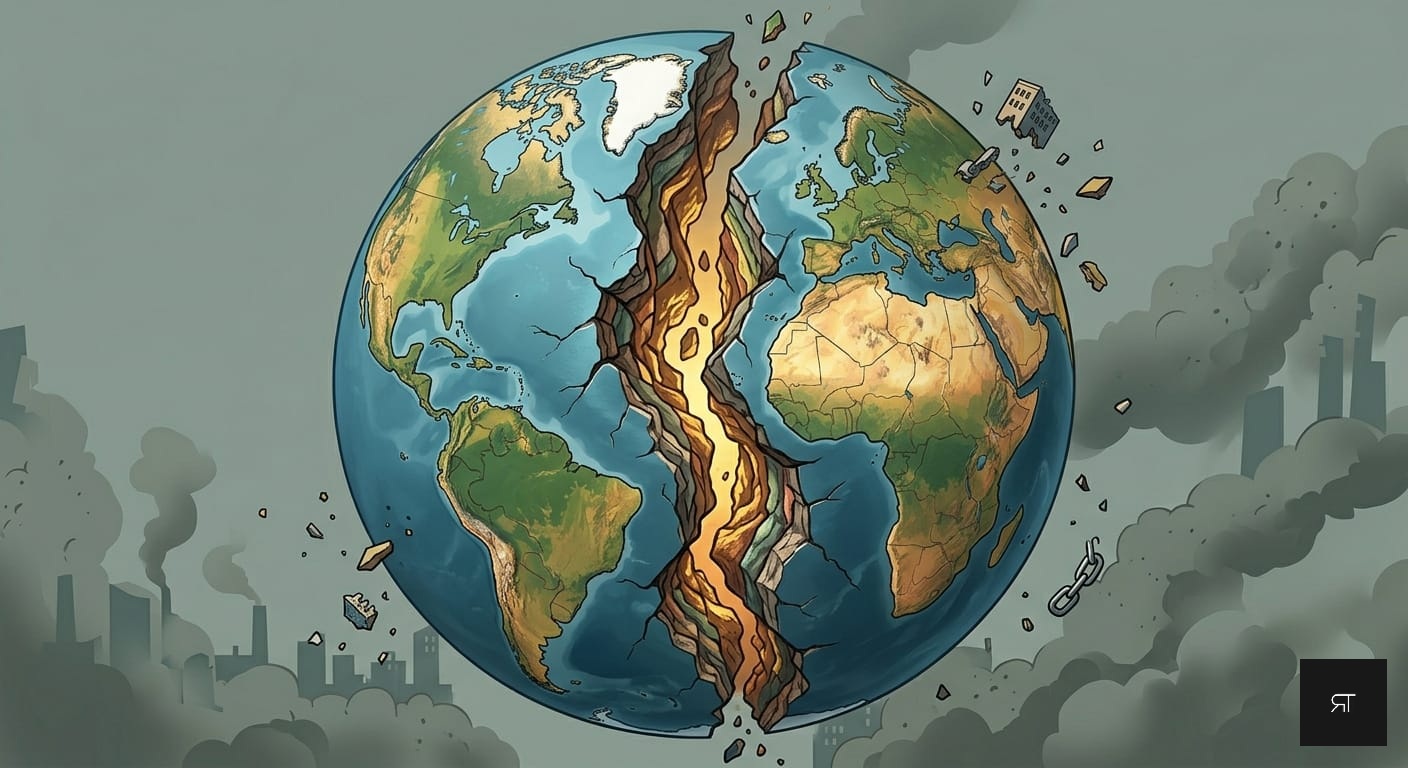
The contemporary international landscape is undergoing a profound structural transformation characterized by the erosion of traditional transatlantic cohesion and the emergence of new strategic alignments.
Recent shifts in United States foreign policy (specifically regarding the escalation of conflict with Iran and the subsequent closure of the Strait of Hormuz) have acted as a catalyst for global realignment. By analyzing the diplomatic outcomes of the European Political Community (EPC) summit in Yerevan, I am exploring the dual phenomena of non-Western tilt toward Russo Chinese influence and the simultaneous consolidation of Western middle powers around the European Union’s institutional framework.
Introduction
The onset of military hostilities against Iran, initiated by the Trump administration with Israeli support, has triggered a series of systemic shocks that extend far beyond the Middle East. The resulting maritime blockade of the Strait of Hormuz has disrupted global energy and fertilizer supply chains, forcing a pragmatic reorientation of trade policies in the Indo Pacific. Concurrently, the decision to withdraw substantial military contingents from Germany and Romania has signaled a retreat from the post Cold War security architecture, prompting a re evaluation of the European Union’s role as a primary security guarantor for democratic states.
The Pragmatic Pivot: Energy Security and Russian Influence
Data from recent trade agreements suggests that Asian and Middle Eastern powers are increasingly prioritizing resource security over normative alignment with Western sanctions. The disruption of traditional supply routes has led nations such as India, Indonesia, and the Philippines to strengthen ties with Moscow.
- Industrial Infrastructure: The joint development of urea production facilities between India and Russia indicates a long-term strategic commitment to agricultural stability.
- Nuclear Energy Expansion: The ratification of contracts for nuclear power plant construction in Vietnam and Myanmar signifies a shift toward Russian technological dependence in the energy sector.
- Resource Pragmatism: Negotiations involving Thailand and the UAE regarding Russian fertilizer imports demonstrate that the “aggressor” narrative prevalent in EU discourse fails to resonate in regions where domestic food and energy security are at stake.
Strategic Sentiment and Historical Path Dependency
The resilience of Russian and Chinese influence in the Global South can be attributed to deep seated anti Western and anti colonial sentiments. For many former colonies and erstwhile communist states, the perception of Russia as a counterweight to Western hegemony remains potent. China, under President Xi Jinping, leverages this sentiment to challenge the existing world order. The “century of humiliation” serves as a foundational narrative for Beijing’s current strategy: ensuring that Russia does not face a strategic defeat in Europe, which would otherwise bolster Western dominance and impede the transition to a multipolar system.
The Yerevan Summit: The EU as a Normative Anchor
In contrast to the shift toward Moscow in Asia, the European Political Community (EPG) summit in Yerevan (May 2026) demonstrated an unexpected level of European and “Western aligned” consolidation. The choice of venue (a former Soviet republic) served as a symbolic rejection of Russian regional hegemony.
A significant development was the participation of Canadian Prime Minister Carney, marking the first time a non-European leader joined the EPG. This move signals a search for strategic alternatives to the United States among traditional allies. Under the leadership of European Council President António Costa and figures such as Macron and Von der Leyen, the EU is increasingly viewed as a primary bastion of the international rule of law.
Conclusion: The Erosion of US Hegemony
The current trajectory of US foreign policy (defined by the instrumentalization of military withdrawals as political punishment, such as the drawdown of troops in response to Chancellor Merz’s criticism) is inadvertently accelerating American isolation. While the White House may perceive these actions as exercises of power, the systemic result is the fragmentation of the global order.
Trump’s policies have not only driven key regional players into the Russo Chinese orbit but have also forced a consolidation of Western powers around the European Union, potentially diminishing the long term geopolitical leverage of the United States.
Hi Roel,
I fully agree with the main argument of your piece, particularly the idea that current geopolitical developments are accelerating a fragmentation of the global order.
Your analysis convincingly highlights how recent US policy choices are creating unintended consequences. The link you draw between energy and fertilizer disruptions and the pragmatic shift of countries toward Russia is especially strong and reflects real-world economic priorities over ideological alignment.
I also find your contrast between the Global South’s strategic pragmatism and Europe’s consolidation around the EU very well articulated. The Yerevan summit example clearly supports your point that the EU is gradually positioning itself as a more central geopolitical actor.
Overall, your argument is coherent, timely, and grounded in observable trends, which makes it both credible and relevant.
Regards,
Anders
Trump is single handedly ending the American Century at a rapid pace. America last.