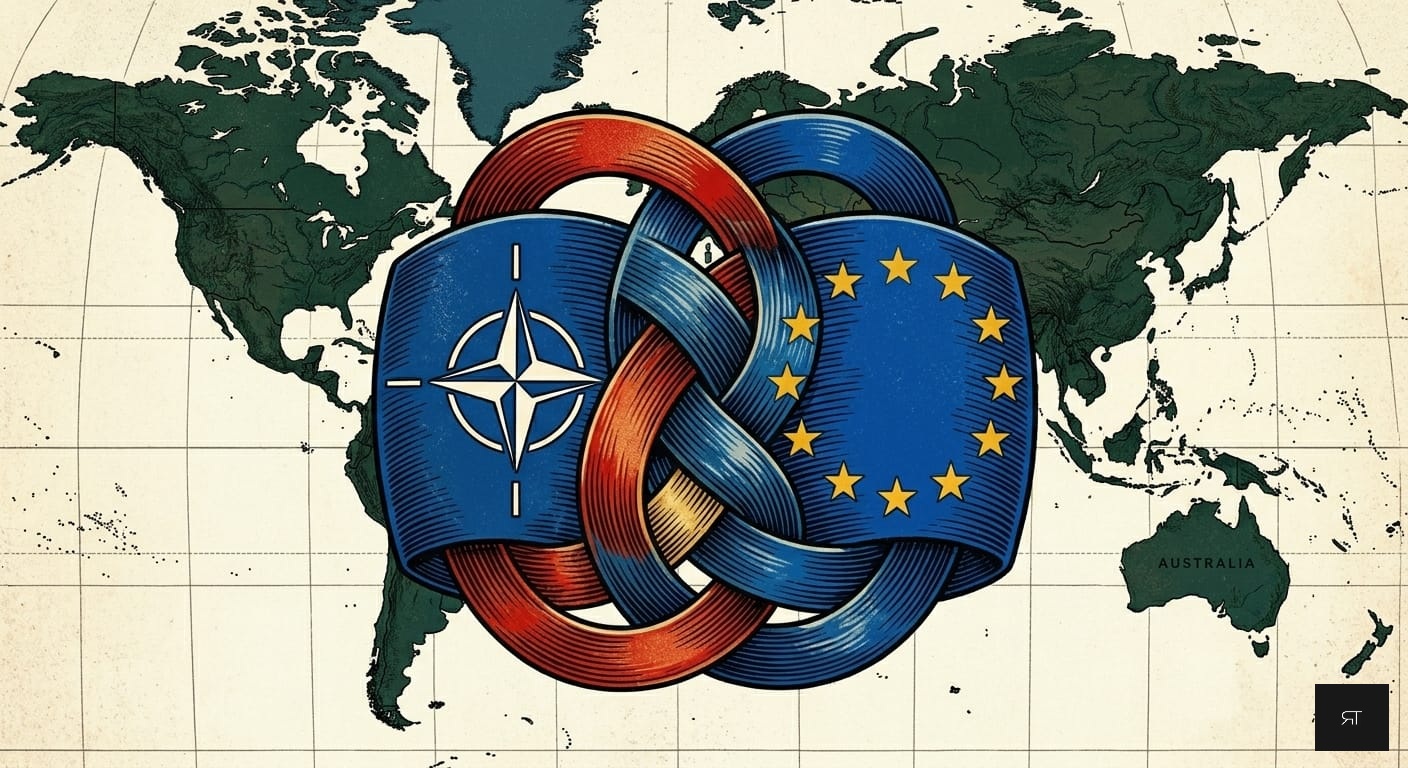
The geopolitical landscape of the 21st century is shifting rapidly, demanding a reassessment of established security structures. For decades, the European Union has relied on the North Atlantic Treaty Organization (NATO) as the bedrock of its security. This alliance provided stability during the Cold War, but in today’s multipolar world, this deep and limiting dependency on the United States is becoming increasingly untenable.
If the EU is to become a truly independent global actor, it must make the difficult but necessary decision to step out of NATO and build its own sovereign defense architecture. One of the clearest, most damaging proofs of this divergent reality can be found in the West’s fractured approach to Iran.
The Divergence of Strategic Interests and the Iran Lesson
The core of the problem lies in the fundamental strategic priorities of Washington and Brussels, which are no longer fully aligned. While the United States is increasingly focused on the Indo-Pacific region and its systemic rivalry with China, Europe’s primary security concerns remain centered on its immediate neighborhood: Eastern Europe, the Mediterranean, North Africa, and the Middle East.
This divergence is nowhere more apparent than in the catastrophic failure of unified transatlantic policy towards Iran. For decades, European powers, notably the E3 (Germany, France, and the UK), led meticulous diplomatic efforts to prevent an Iranian nuclear weapon, culminating in the Joint Comprehensive Plan of Action (JCPOA) in 2015. This agreement was hailed as a benchmark for European soft power and a critical security measure for the region.
However, the 2018 unilateral withdrawal from the deal by the Trump administration, followed by the re-imposition of crippling economic sanctions, fundamentally undermined European strategic interests. The EU was effectively held hostage by American policy. European businesses, which had started to invest in Iran, were forced to retreat, and European banks were threatened with exclusion from the US financial system.
The EU’s subsequent attempts to create alternative payment mechanisms, like INSTEX, proved ineffective, highlighting how American unilateralism can invalidate European sovereignty. The US’s “maximum pressure” campaign on Iran, far from stabilizing the region, heightened tensions, creating a direct security threat for Europe.
The lesson from Iran is clear: As long as the EU is bound within a security framework dominated by the United States, it will remain vulnerable to Washington’s policy swings. European security and economic interests are too often subordinated to American strategic goals, limiting Europe’s diplomatic flexibility and its ability to engage with critical regional actors on its own terms.
The Catalyst for Military and Technological Autonomy
True geopolitical power requires military and technological independence. Currently, European defense relies heavily on American hardware, intelligence, and command structures. This reliance creates a comfort zone that prevents the European defense industry from reaching its full potential.
Leaving NATO would serve as a forced catalyst for integration. It would compel the EU to consolidate its fragmented military capabilities, invest heavily in its own defense technology, and create a unified European command. Instead of buying off-the-shelf American systems, European capital would flow into European innovation, strengthening our technological independence and creating a robust, self-sufficient defense industrial base.
Confronting the Consequences
We must be realistic about the consequences of such a monumental shift. Transitioning away from NATO is not a step to be taken lightly. The immediate effects would be severe and demanding:
Financial Burden: The cost of replacing the American security umbrella will be immense. EU member states will need to drastically and permanently increase defense spending, diverting funds from other national budgets.
Short-Term Vulnerability: During the transition phase, the EU would experience a temporary gap in deterrence capabilities, particularly regarding nuclear deterrence and high-end military logistics.
Diplomatic Friction: A European exit from NATO would fundamentally alter transatlantic relations, likely leading to economic and political friction with the United States and non-EU NATO members like the United Kingdom.
Internal Political Division: Forging a unified European army and foreign policy will require overcoming deep-seated national interests and political resistance within the EU itself.
The Path Forward
Despite these daunting hurdles, the challenges are not insurmountable. Every complex systemic problem can be analyzed and solved with sufficient political will and strategic foresight.
For the European Union to secure its future, protect its economic interests, and stand as an equal among global superpowers, it must graduate from its historical reliance on Washington.
The path to a sovereign, secure, and technologically independent Europe will be expensive and politically fraught. However, the alternative is to remain a permanent junior partner in a changing world order.
True European autonomy is only possible outside the confines of NATO.
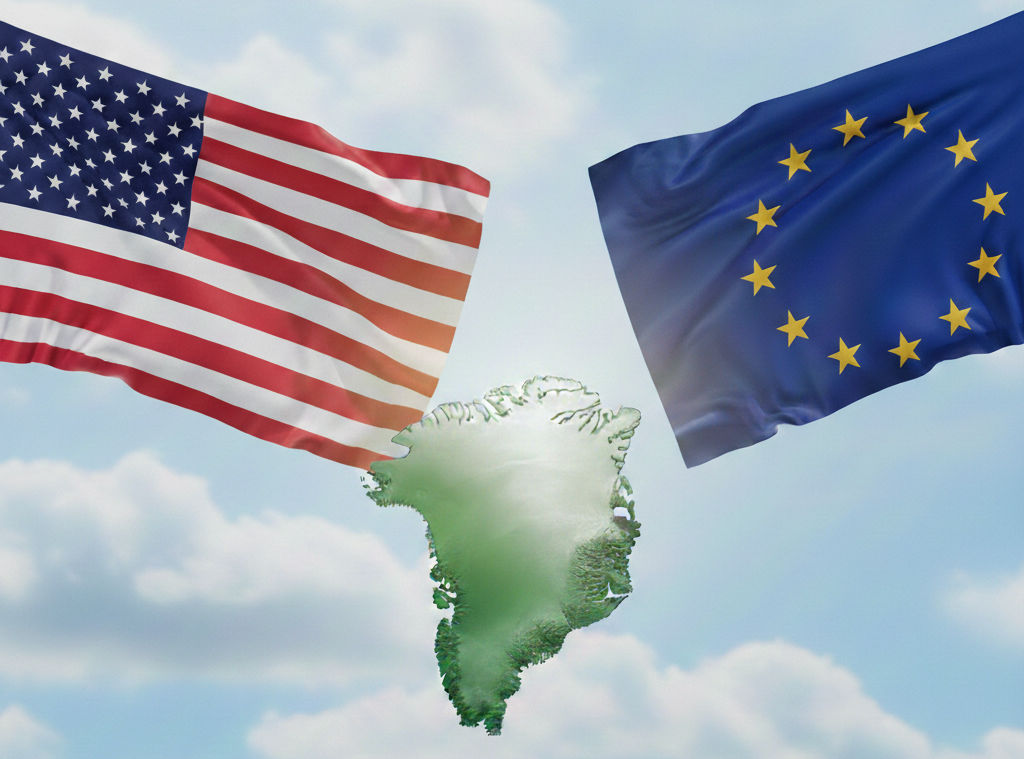
After weeks of threatening language from the American presidency, the European Union has reached its limit. Yesterday, the 27 member states proposed a 93 billion euro package of measures following the announcement of import tariffs on eight European countries participating in a Greenland mission.
US-EU Greenland Conflict
EU Strategy
Whether this will be enough to force a reversal of policy remains to be seen. However, observers suggest the EU has more than one strategic advantage.
There is a growing realization among member states that a firm stance is now required. When an ally threatens to seize territory from a European nation, the Union is left with no other choice.
The EU package is viewed as a significant opening signal. The measures involve import tariffs on American products such as jeans, motorcycles, and aircraft. These products are primarily manufactured in regions with high concentrations of government supporters. By targeting these areas, the EU believes it can cause significant economic and political pressure.
The announced 10 percent import tariff for the eight countries, including the Netherlands, is set to take effect on February 1. If this plan is not withdrawn, the European counter-tariffs will also commence.
EU member states hope to avoid this escalation through diplomacy. In the coming week, efforts will be centered on the annual meeting of the World Economic Forum in Davos, where many leaders will be present. However, the period of caution and accommodation appears to be over, replaced by a shift toward firmer action.
The EU had already drafted this list of import tariffs last year following the outbreak of a global trade war. While the measures were withdrawn after a temporary agreement in July, they were brought back into play during an emergency meeting yesterday.
‘Trade Bazooka’
The EU holds another major strategic asset: the Anti-Coercion Instrument (ACI). This tool, often referred to as the ‘trade bazooka’, allows the EU to deny companies from third countries access to the European internal market.
This instrument has been in development for several years, intended primarily as a deterrent. The expectation is that the threat of its use should be sufficient to prevent economic aggression from other nations.
While there have been repeated calls for its deployment over the past year, the likelihood of it being activated has now increased significantly.
Boundaries
The EU is currently navigating a difficult diplomatic path. While it is deemed necessary to use the language of power to influence decision-making, there are clear risks involved.
A major concern is the potential impact on other geopolitical conflicts, such as the situation in Ukraine. A severe escalation in trade tensions could lead to a scenario where security guarantees for Europe are weakened, a situation that must be avoided.
Despite these risks, there is a consensus that the EU must keep all options on the table. The European market remains the most powerful tool available, and there is a readiness to utilize the provisions within the anti-coercion instrument if necessary.
Playing on Prestige
Strategic efforts may also focus on the American desire for historical prestige regarding the acquisition of Greenland. This ambition has existed for over a century, though previous attempts were always rebuffed.
The EU can frame the consequences of this conflict by highlighting how such actions could be remembered as the catalyst for the fragmentation of Western alliances and NATO. This appeal to historical legacy is seen as a potential point of leverage.
What is the ‘trade bazooka’?
The term trade bazooka is the unofficial nickname for the European Union’s Anti-Coercion Instrument (ACI). This is a powerful trade policy weapon that was officially adopted in 2023.
This is what the instrument entails:
Purpose: It is designed to retaliate when non-EU countries apply economic pressure to force the EU or a member state into specific political concessions.
Extensive powers: Beyond standard tariffs, the EU can deny companies access to the internal market, restrict foreign investment, block access to public contracts, and limit intellectual property rights.
Speed: The European Commission has been granted the authority to act faster and more decisively, reducing the time previously required for consensus among all member states.
Deterrence: The impact of these measures is designed to be so significant that the mere threat should discourage other countries from attempting economic blackmail.
The global economy rests on a delicate balance of trust and investment. At the heart of this system lies the US Treasury market. However, a hypothetical scenario exists that economists often describe as a financial nuclear bomb.
This scenario is no longer just a mathematical exercise but a potential geopolitical tool. If the United States, under the Trump administration, were to take the unprecedented step of militarily attacking and conquering Greenland, Europe could be forced to respond with its most powerful economic weapon.
Imagine if every European entity (including governments, central banks, and private investors) decided to simultaneously dump their combined holdings of approximately $3.6 trillion in US Treasury bonds as a direct consequence of such an invasion.
The Chain Reaction
If this “horror scenario” were to unfold, here is the step by step breakdown of what would likely happen:
A Crash in Bond Prices: A sudden flood of $3.6 trillion worth of bonds onto the market would cause their value to plummet instantly due to the massive oversupply.
Skyrocketing Interest Rates: As bond prices crash, the yields (interest rates) would spike to extreme levels. This would make US government debt significantly more expensive to maintain.
The Dollar in Freefall: To exit these investments, European investors would need to sell their US dollars. This massive sell-off would likely cause the value of the US dollar to collapse against the Euro.
Global Market Chaos: Because the US Treasury bond is the benchmark for the global financial system, its collapse would trigger a domino effect. Stock markets would likely tank, and borrowing costs worldwide would become unaffordable overnight.
While the military conquest of Greenland remains a shocking concept, this financial “nuclear option” highlights that Europe’s choice to divest could be the ultimate check on such a massive shift in international relations.
Manage Cookie Consent
To provide the best experiences, roelthijssen.nl uses technologies like cookies to store and/or access device information. Consenting to these technologies will allow us to process data such as browsing behavior or unique IDs on this site. Not consenting or withdrawing consent, may adversely affect certain features and functions.
Functional
Always active
The technical storage or access is strictly necessary for the legitimate purpose of enabling the use of a specific service explicitly requested by the subscriber or user, or for the sole purpose of carrying out the transmission of a communication over an electronic communications network.
Preferences
The technical storage or access is necessary for the legitimate purpose of storing preferences that are not requested by the subscriber or user.
Statistics
The technical storage or access that is used exclusively for statistical purposes.The technical storage or access that is used exclusively for anonymous statistical purposes. Without a subpoena, voluntary compliance on the part of your Internet Service Provider, or additional records from a third party, information stored or retrieved for this purpose alone cannot usually be used to identify you.
Marketing
The technical storage or access is required to create user profiles to send advertising, or to track the user on a website or across several websites for similar marketing purposes.