

After weeks of threatening language from the American presidency, the European Union has reached its limit. Yesterday, the 27 member states proposed a 93 billion euro package of measures following the announcement of import tariffs on eight European countries participating in a Greenland mission.
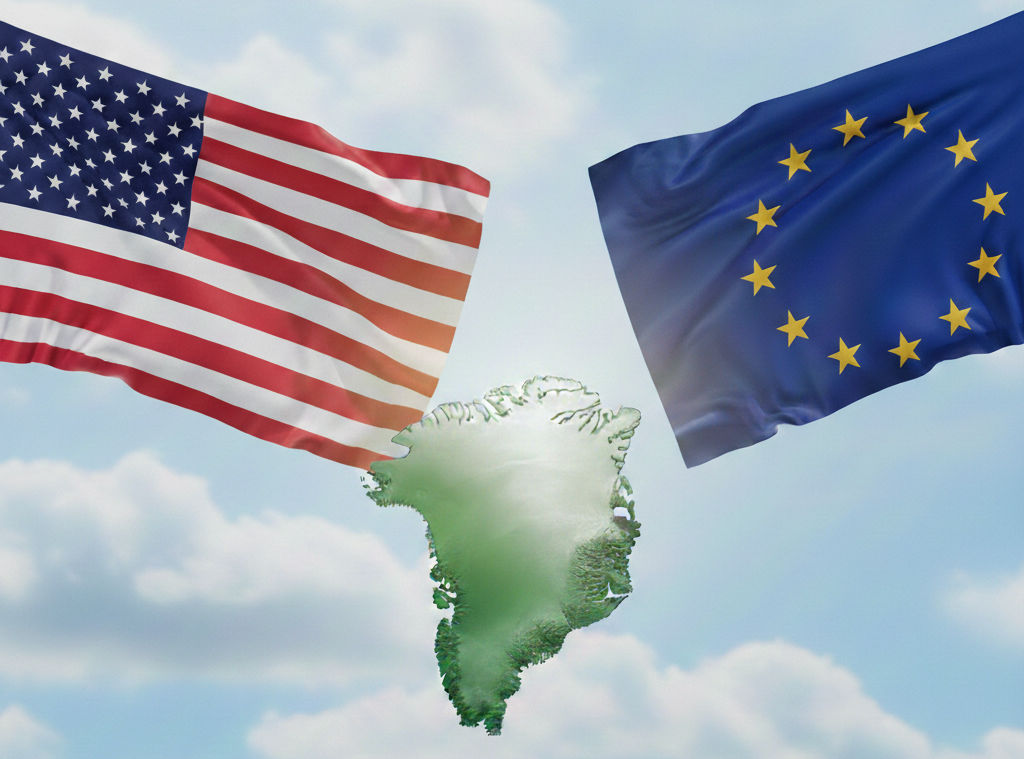
EU Strategy
Whether this will be enough to force a reversal of policy remains to be seen. However, observers suggest the EU has more than one strategic advantage.
There is a growing realization among member states that a firm stance is now required. When an ally threatens to seize territory from a European nation, the Union is left with no other choice.
The EU package is viewed as a significant opening signal. The measures involve import tariffs on American products such as jeans, motorcycles, and aircraft. These products are primarily manufactured in regions with high concentrations of government supporters. By targeting these areas, the EU believes it can cause significant economic and political pressure.
The announced 10 percent import tariff for the eight countries, including the Netherlands, is set to take effect on February 1. If this plan is not withdrawn, the European counter-tariffs will also commence.
EU member states hope to avoid this escalation through diplomacy. In the coming week, efforts will be centered on the annual meeting of the World Economic Forum in Davos, where many leaders will be present. However, the period of caution and accommodation appears to be over, replaced by a shift toward firmer action.
The EU had already drafted this list of import tariffs last year following the outbreak of a global trade war. While the measures were withdrawn after a temporary agreement in July, they were brought back into play during an emergency meeting yesterday.
‘Trade Bazooka’
The EU holds another major strategic asset: the Anti-Coercion Instrument (ACI). This tool, often referred to as the ‘trade bazooka’, allows the EU to deny companies from third countries access to the European internal market.
This instrument has been in development for several years, intended primarily as a deterrent. The expectation is that the threat of its use should be sufficient to prevent economic aggression from other nations.
While there have been repeated calls for its deployment over the past year, the likelihood of it being activated has now increased significantly.
Boundaries
The EU is currently navigating a difficult diplomatic path. While it is deemed necessary to use the language of power to influence decision-making, there are clear risks involved.
A major concern is the potential impact on other geopolitical conflicts, such as the situation in Ukraine. A severe escalation in trade tensions could lead to a scenario where security guarantees for Europe are weakened, a situation that must be avoided.
Despite these risks, there is a consensus that the EU must keep all options on the table. The European market remains the most powerful tool available, and there is a readiness to utilize the provisions within the anti-coercion instrument if necessary.
Playing on Prestige
Strategic efforts may also focus on the American desire for historical prestige regarding the acquisition of Greenland. This ambition has existed for over a century, though previous attempts were always rebuffed.
The EU can frame the consequences of this conflict by highlighting how such actions could be remembered as the catalyst for the fragmentation of Western alliances and NATO. This appeal to historical legacy is seen as a potential point of leverage.
What is the ‘trade bazooka’?
The term trade bazooka is the unofficial nickname for the European Union’s Anti-Coercion Instrument (ACI). This is a powerful trade policy weapon that was officially adopted in 2023.
This is what the instrument entails:
- Purpose: It is designed to retaliate when non-EU countries apply economic pressure to force the EU or a member state into specific political concessions.
- Extensive powers: Beyond standard tariffs, the EU can deny companies access to the internal market, restrict foreign investment, block access to public contracts, and limit intellectual property rights.
- Speed: The European Commission has been granted the authority to act faster and more decisively, reducing the time previously required for consensus among all member states.
- Deterrence: The impact of these measures is designed to be so significant that the mere threat should discourage other countries from attempting economic blackmail.
Hi,
I totally agree. The EU will prevent a Greenland sale.
Donald Trump’s ambition to acquire Greenland is set to fail, largely due to the economic and regulatory shield provided by the European Union. While Greenland is a self-governing territory, its deep economic ties to Europe through its status as an Overseas Country and Territory (OCT) make a sale practically impossible.
The EU’s commitment to “strategic autonomy” means that Brussels would view any forced American acquisition as a direct threat to European interests.
The EU can deploy powerful economic countermeasures, such as revising trade agreements or restricting American corporate access to Arctic resources, to support Denmark’s sovereignty. Additionally, Greenland benefits from significant EU funding and fisheries agreements that provide a level of economic stability the U.S. cannot easily match without a complex and uncertain congressional process.
Special thanks to you, Roel for your clear explanation of these dynamics; these insights highlight how the EU’s economic framework acts as a decisive barrier against such a geopolitical transaction. In the face of European economic solidarity, Trump’s pursuit remains an impossible deal.
Kind regards,
Peter Trubowitz
Thank you very much Peter!
Greenland left the EU in 1985, primarily due to wanting control over their lucrative fishing stocks and dissatisfaction with EC regulations..
Niels Pedersen
Denmark
Hi Roel,
Excellent post, thanks a lot!
I am glad things are moving in the right direction in Davos, thanks to Mark Rutte who is getting up the orange man’s ass again 😉
Carlos