Experts Issue Warning: Europe’s Defense Billions Are Being Misspent

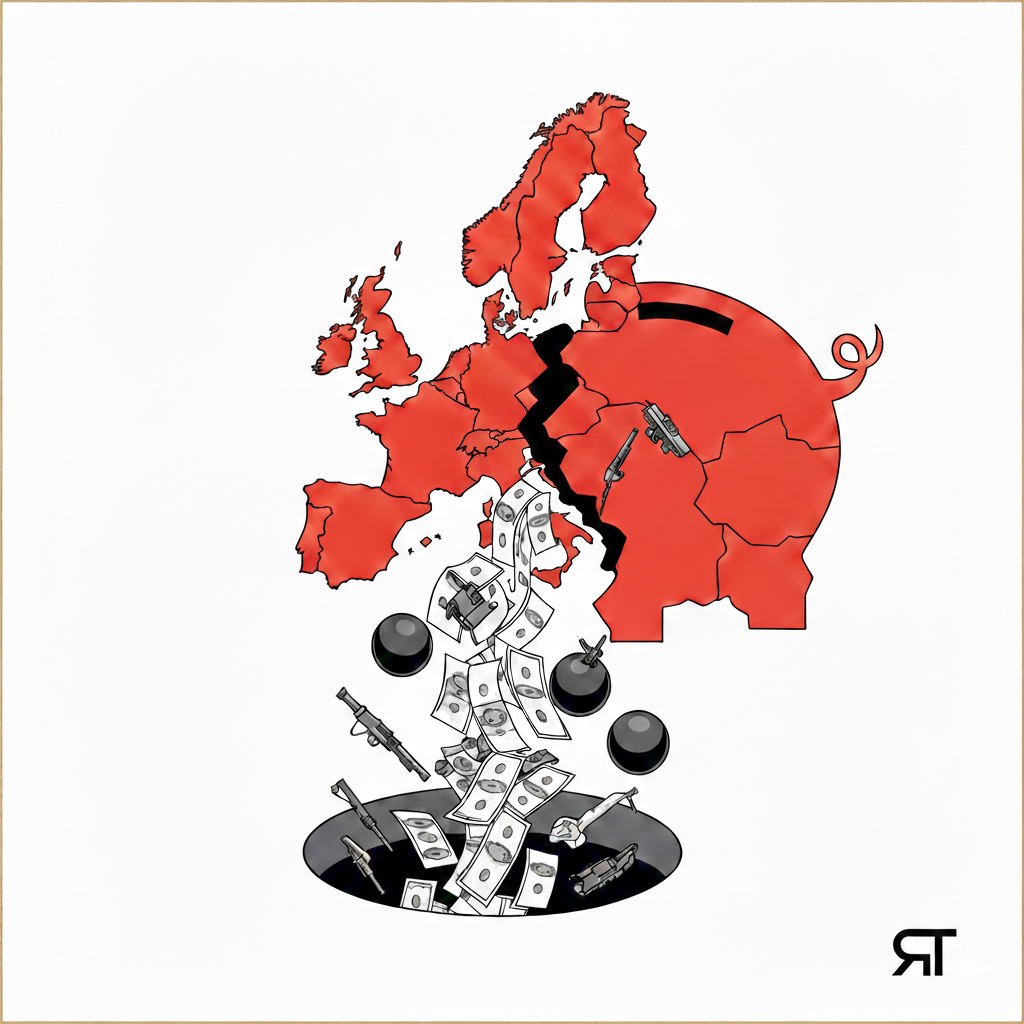
In the coming years, Europe will invest billions more in defense. Although spending is at an all-time high, experts warn of three critical mistakes that could cause these funds to evaporate without genuinely improving security.

Europe's Defense Spending

Inefficient Procurement and Dependency

Europe now spends nearly 400 billion dollars annually on defense. Notably, Europe’s spending within the Nato alliance has now surpassed that of the United States.

However, this does not translate into proportional military capability. Due to the lack of a unified approach, each country procures its own equipment, resulting in Europe having four times as many different weapon systems as the US. Moritz Schularick of the Kiel Institute emphasizes that despite outspending America, Europe remains entirely dependent on the US.

Buying Yesterday’s Weapons

​Recent exercises in Estonia revealed that European allies are unprepared for modern warfare involving drones. While significant funds are allocated to conventional weapons, venture capital investment in defense innovation like AI is eight times higher in the US. Schularick argues that Europe should stop ordering manned systems and instead invest in the autonomous military vehicles of the future.

Neglecting Diplomacy

Experts note that increased defense spending often comes at the expense of diplomacy. For every 42 euros spent on weapons, only 1 euro is allocated to diplomatic consultation. Neglecting conflict prevention and structural issues like climate change could lead to greater long-term instability and migration flows toward Europe.

​The European Onion: A Layered Strategy for a Continent in Search of its Path

The European Onion

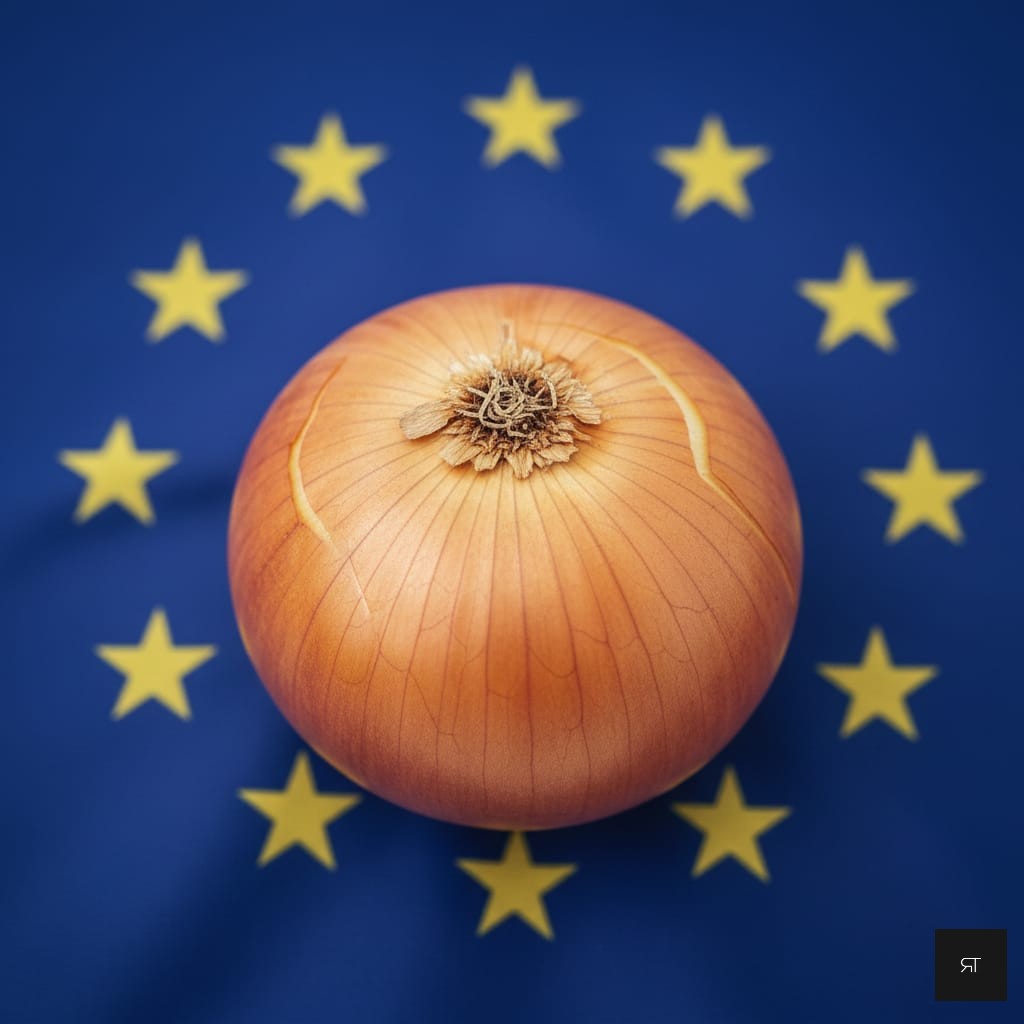
For decades, the dream of a “United States of Europe” has been the North Star for federalists in Brussels. They marched under various banners, Communities, Unions, and Councils, always pushing for a singular, synchronized leap toward integration. However, the reality of 2026 suggests a different path. We are witnessing the birth of what some playfully call the “European Onion”: a multi-layered, pragmatic model of continental cooperation.

The European Onion
The European Onion

Beyond the One-Size-Fits-Old Model

​The traditional EU approach, where every member must move at the same speed, is increasingly hitting a wall. In a geopolitical climate that demands rapid responses, the “slowest member” rule has become a liability. Whether it is military autonomy, trade policy, or technological independence, Europe can no longer afford to wait for total consensus.

​The “Onion” metaphor, popularized by Belgian Prime Minister Bart De Wever, envisions a Europe of concentric circles:

  • The Core (The Kernel): A pioneering group of “heavy hitters”, like the E6: France, Germany, Italy, the Netherlands, Poland, and Spain, pushing for deeper economic and military integration.
  • The Inner Layers: Countries participating in the Single Market and Schengen but perhaps opting out of certain federalist deeper dives.
  • The Outer Layers: Strategic partners like Ukraine or even the UK, who require a functional relationship with the bloc without immediately meeting every rigid bureaucratic standard.

​Pragmatic Federalism in Action

​We are already seeing this “variable geometry” take shape. When financial aid or security measures are blocked by a small minority, “coalitions of the willing” simply move forward. This is not about creating second-class citizens; it is about pragmatic federalism.

​History shows that where pioneers lead, others eventually follow. The Euro and the Schengen Area both started as smaller projects before becoming continental standards. By allowing a vanguard to forge ahead, we prevent the entire European project from ending in tears due to inertia.

If the current structure of the EU is too rigid for the modern world, we must be bold enough to peel back the layers and redesign it. A multi-speed Europe is not a sign of weakness; it is a strategy for survival.

Facing Persistent American Threats, Macron Advocates for “European Preference” in Strategic Sectors

Macron Calling for Joint European Investment in Strategic Sectors

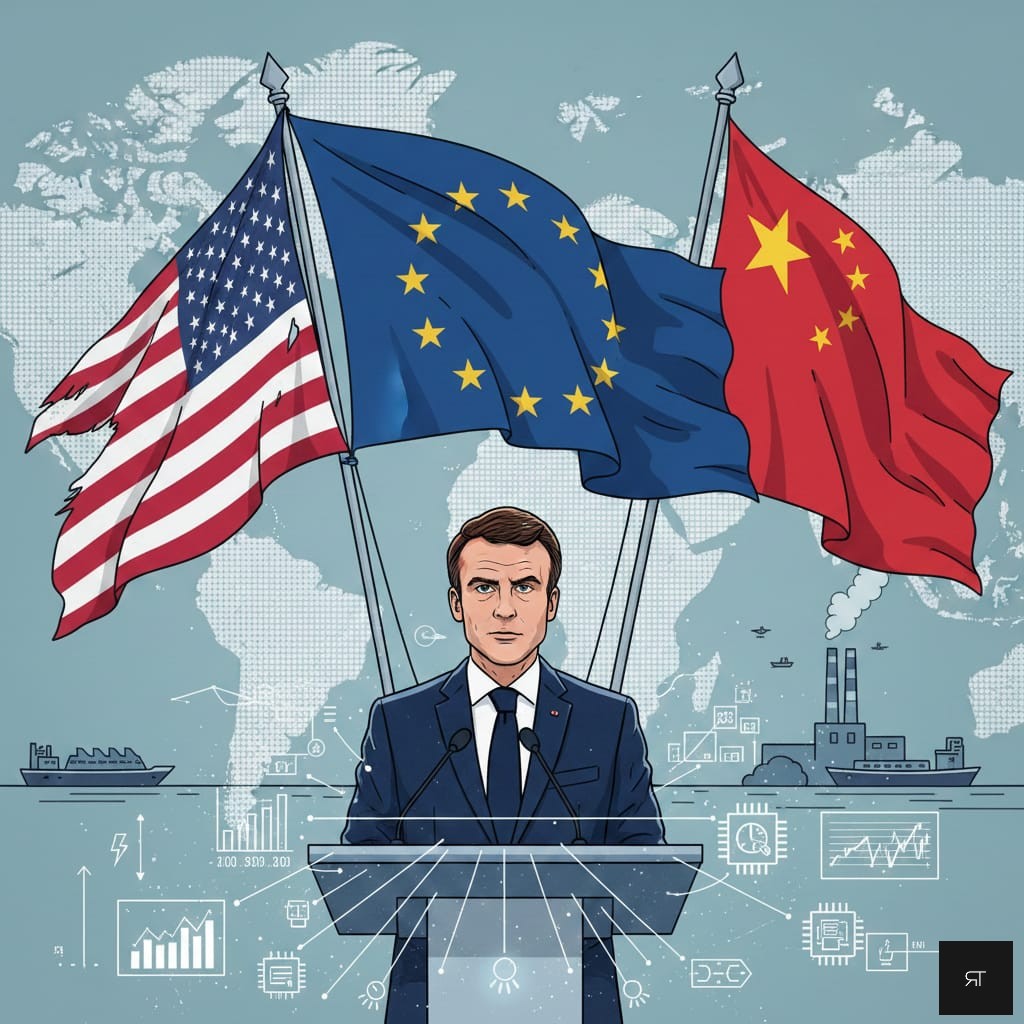
​In the face of competition from the United States and China, Emmanuel Macron is calling for “joint investment.” In an interview with several European newspapers, the French President invited his European counterparts to invest in the ecological transition, artificial intelligence, and quantum computing to avoid being left behind.

Macron Calling for Joint European Investment in Strategic Sectors

A Call for Sovereignty and Shared Debt

​”For nine years, I have advocated for a more sovereign Europe,” Macron stated this Tuesday, February 10, just two days before a meeting of EU heads of state and government in Brussels. The President believes that trade threats and “intimidation” from the United States are not over. He warned that the twenty-seven member states will be “swept away” if they do not establish a European preference in strategic sectors.

​To cement European power, Macron is pushing for a common debt capacity to fund future expenditures (Eurobonds). This joint borrowing would finance strategic investments and allow the European Union to “tackle the hegemony of the dollar.”

​Three Key Battles

​Macron identified three critical areas where Europe must act within the next three to five years to remain relevant:

Security and Defense

​Green Transition Technologies


​Artificial Intelligence and Quantum Computing

“In all these areas, we invest much less than China and the United States,” Macron explained. He estimates the required public and private investment at approximately €1.2 trillion per year. He emphasized that these efforts must be collective rather than national to avoid fragmenting the internal market.

​Consistent Protection, Not Isolationism

​Regarding protectionism, Macron clarified that the goal is consistency rather than isolation. “The Chinese do it, the Americans do it too. Europe is currently the most open market in the world.” He argued that it is illogical to impose strict rules on European producers that do not apply to non-European importers.

​He cited several examples of this new direction:

  • ​Opposing the EU-Mercosur trade agreement, which he labeled a “bad deal.”
  • ​Implementing taxes on over-subsidized Chinese electric vehicles.
  • ​Introducing safeguard clauses on steel.
  • ​The recently presented “Car Plan” by the Commission, which features a clear European preference.

The ‘Impoverishment’ of the French Economy: The ‘Argentina of Europe’

French Economy in Decline

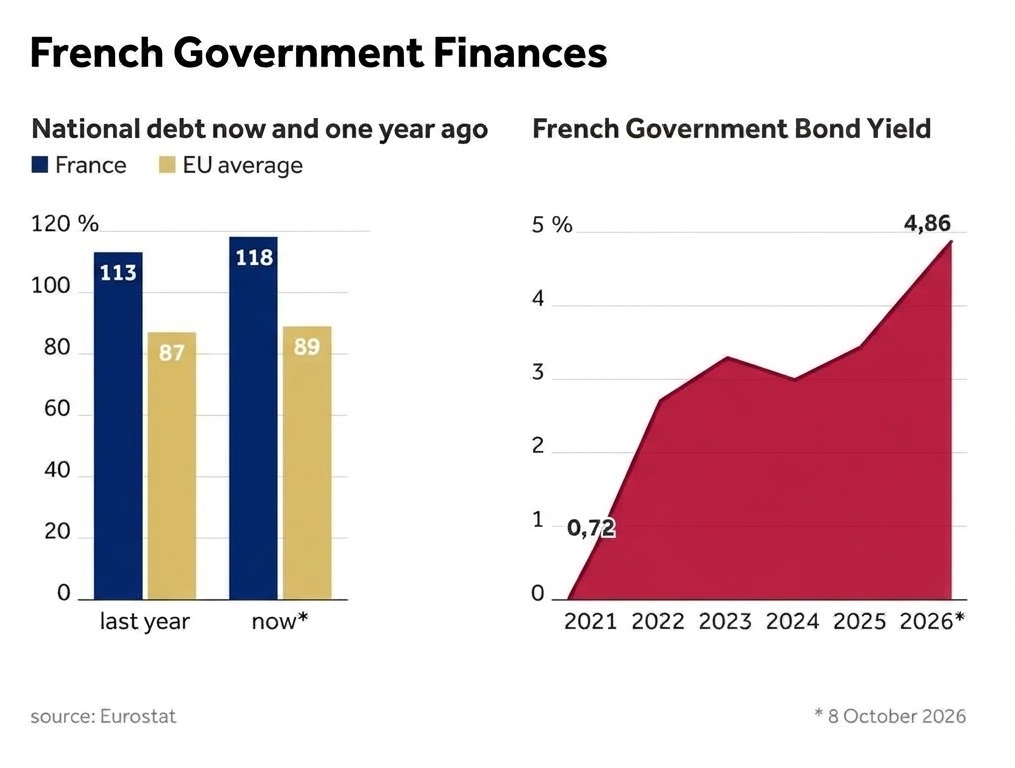
The French economy has long been the problem child of the European Union. With the recently passed budget by Prime Minister Lecornu, little seems set to change. Economists and professors are increasingly alarmed by the state of France’s finances. “Our country has become the Argentina of Europe. France is trapped in a hellish spiral leading it toward third world status,” warns Nicolas Baverez, a renowned French economist.

French Economy in Decline © Roel Thijssen 2026
French Economy in Decline

The current state of the French economy is clearly reflected in its inflation figures. While inflation in many European economies has stabilized around 2%, Paris reports an unexpectedly low figure of 0.4%. For years, France has struggled with sky high national debt, while the budget deficit continues to spiral out of control. Attempts to tackle these deficits repeatedly hit a political dead end. Furthermore, major reforms never see the light of day because the French parliament is extremely divided, a situation that recent parliamentary elections have failed to resolve.

​A Tax Trap

​The core of the problem is that potential tax hikes may not provide a way out. Although they increase revenue, the national debt will continue to grow as long as government spending remains unchecked.

​Frédéric Douet, a professor of private law, observes how France is “slowly impoverishing” due to “consistent policies that are both costly and inefficient.” Writing in an op ed for Le Figaro, he expressed his disdain: “The mantra of our technocrats and politicians is that higher taxes will solve our problems.”

​High Unemployment and Low Productivity

​These concerns are well founded. For the third consecutive year, France’s GDP per capita has fallen below the European average. Additionally, inflation sits far below the eurozone average, and the country faces significantly higher unemployment than the EU mean. Baverez warns that raising taxes will be counterproductive, pushing more people into poverty without necessarily generating immediate revenue.

​Baverez believes increased productivity is the only solution. He points out that the French enter the workforce relatively late and have short careers. On average, the French start working at age 22.5 and retire at 62.5. This stands in stark contrast to life expectancy, which is 80 for men and 85.6 for women. Furthermore, the French work an average of only 679 hours per year, while other major European economies see between 715 and 780 hours. In the Netherlands, that figure reaches 837 hours (link to Eurostat). See the chart for 2024 here.

​Billion Euro Tax Burden

​The economist is also critical of the tax measures in the new budget, which aims to raise an additional 44 billion euros, including 12 billion euros from the corporate sector. Baverez warns that these plans accelerate France’s “financial suffocation” and create “the conditions for a major financial shock.” If France continues on this path, he fears the country will “no longer be among the world’s ten largest economies” by the end of this decade.

Former ECB President Mario Draghi Calls for a Federal Europe: “We Must Decide if We Want to Become a True Global Power”

Mario Draghi

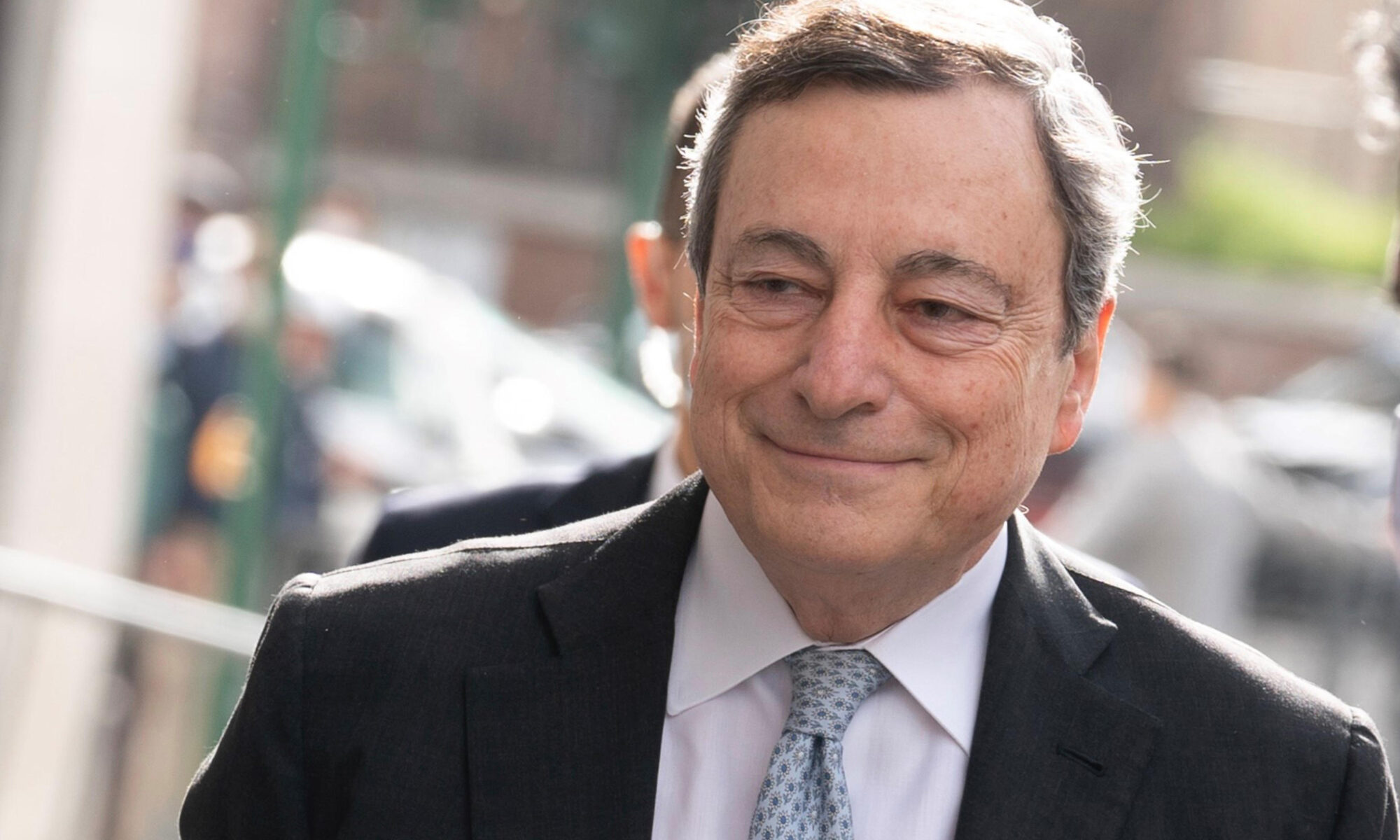
Europe must transform into a federation to survive in a world where the United States and China are rewriting the rules of the game. This was the core message from Mario Draghi, former President of the European Central Bank (ECB) and former Prime Minister of Italy. “We must decide whether we want to become a global power or remain subject to the priorities of others.”

Mario Draghi - May 2021

Mario Draghi

Mario Draghi advocates for a European federation to stand firm against superpowers like the US and China. Receiving an honorary doctorate at the University of Leuven (Belgium), Draghi argued that Europe must choose between being a market subservient to outside interests or becoming a sovereign global force. He proposes “pragmatic federalism,” where willing nations start building joint institutions with real decision-making power in specific sectors.

​The Collapse of the Old World Order

​During his acceptance speech at KU Leuven, the man credited with saving the euro did not mince words regarding Europe’s precarious global standing. Draghi noted that the global order, which underpinned European prosperity for decades, has permanently collapsed. This shift is driven by the changing stances of major powers.

​”Beijing controls critical points in global supply chains and does not hesitate to use that power as leverage,” Draghi remarked. “Meanwhile, our traditional ally, the US, is increasingly focused on its own costs and less on the mutual benefits derived from cooperation with Europe.”

​”We are facing a future where Europe risks becoming
simultaneously subordinate, divided, and deindustrialized.”

Mario Draghi

​From Confederation to Federation

​To counter these threats, Draghi insists Europe must move away from its current model as a confederation (a loose collection of states with veto powers) and evolve into a true federation, effectively a “United States of Europe.”

​”A group of states that merely coordinates remains just a group of states,” he argued. “We must decide: do we remain just a large market subject to the priorities of others? Or do we take the necessary steps to become a global power?”

​He pointed out that while Europe acts as a unified bloc in trade, competition, and monetary policy (earning respect as a global player) it remains a “loose collection of mid-sized states” in areas like defense and foreign policy. This fragmentation makes the continent vulnerable to being “picked off one by one” by superpowers.

​The Greenland Precedent

​Draghi cited Europe’s military deployment to Greenland as a prime example of successful unity. This move followed repeated suggestions by U.S. President Donald Trump regarding placing the island under American authority.

​”By acting together against a direct threat, Europeans discovered a level of solidarity that previously seemed unattainable,” Draghi noted. He believes this shared determination resonated far more with the public than the typical declarations following European summits.

​Pragmatic Federalism

​Draghi’s solution is “pragmatic federalism.” This approach does not require every nation to hand over power in every sector immediately. Instead, he suggests that countries willing to cooperate should lead the way in specific domains such as energy, technology, or defense.

​”As Robert Schuman said in 1950, Europe will not be built all at once,” Draghi reminded his audience. “Not all countries will participate in every initiative from the start. The door remains open to others, but not to those who would undermine the common goal.”

​His vision involves building common institutions with genuine authority to act decisively under any circumstances. He pointed to the success of the Euro as the ultimate blueprint: a group of countries took the lead, built institutions with real authority, and created a bond of solidarity that goes deeper than any treaty.

Watch Mario Draghi’s speech in Leuven (from the 4th minute onwards):

​EU and India Secure Landmark Free Trade Agreement After Decades of Talks

Trade Deal EU and India

The European Union and India have reached a historic free trade agreement following nearly twenty years of negotiations. Described as one of the largest trade deals ever brokered, the pact establishes a trade zone encompassing two billion people.

Trade Deal EU and India

​”We have created a free trade zone for two billion people that will benefit both sides,” says European Commission President Ursula von der Leyen.

​Indian Prime Minister Narendra Modi echoed this sentiment, stating: “This agreement will unlock immense opportunities for India’s 1.4 billion citizens and millions across Europe.” Together, the EU and India account for 25% of the world’s gross domestic product (GDP).

​According to the Commission, the deal is expected to double European exports to India. However, the agreement still requires formal approval from EU Member States and the European Parliament before the new regulations take effect.

​Cars and Wine: Slashing Tariffs


​Trade in goods between the two blocs has already doubled over the past decade. This new treaty aims to eliminate approximately 90% of existing tariffs between Europe and India.

​The deal offers a significant boost to the European automotive industry, with Indian import duties on European cars set to plummet from 110% to just 10%. European winemakers also stand to gain, as tariffs on their products will drop from 150% to approximately 25%.

​Shifting Geopolitics: Seeking New Allies


​The timing of the accord is inextricably linked to the economic trajectory of the United States. The Trump administration recently imposed a 50% import tariff on India due to its trade in Russian oil, while simultaneously threatening the EU with new levies.

​In response, the EU and India are seeking to reduce their dependence on the U.S. by strengthening bilateral ties. “This is only the beginning,” Von der Leyen emphasized. “We will continue to expand and reinforce our strategic partnership, demonstrating to the world that rules-based cooperation still delivers exceptional results.”

​A Broader Trade Offensive


​The India deal is part of a wider EU strategy to secure global economic partnerships. Von der Leyen is also pushing for the swift implementation of the Mercosur agreement—a trade pact recently finalized with Brazil, Argentina, Uruguay, and Paraguay.

​The Mercosur deal has faced delays, however, as the European Parliament awaits a ruling from the European Court of Justice. Lawmakers have expressed concerns regarding the agreement’s impact on the competitive position of European farmers.

​Beyond India and Mercosur, the EU is actively negotiating deals with Australia, Malaysia, the Philippines, Thailand, and the United Arab Emirates. Recent agreements have already been secured with Indonesia and Mexico.

​The trade treaty with India is not yet final; it must still be ratified by India, the EU Member States, and the European Parliament.

​EU Patience Runs Out: ‘Trade Bazooka’ Ready alongside Tariffs for US

After weeks of threatening language from the American presidency, the European Union has reached its limit. Yesterday, the 27 member states proposed a 93 billion euro package of measures following the announcement of import tariffs on eight European countries participating in a Greenland mission.

US-EU Greenland Conflict

EU Strategy

Whether this will be enough to force a reversal of policy remains to be seen. However, observers suggest the EU has more than one strategic advantage.

​There is a growing realization among member states that a firm stance is now required. When an ally threatens to seize territory from a European nation, the Union is left with no other choice.

​The EU package is viewed as a significant opening signal. The measures involve import tariffs on American products such as jeans, motorcycles, and aircraft. These products are primarily manufactured in regions with high concentrations of government supporters. By targeting these areas, the EU believes it can cause significant economic and political pressure.

​The announced 10 percent import tariff for the eight countries, including the Netherlands, is set to take effect on February 1. If this plan is not withdrawn, the European counter-tariffs will also commence.

​EU member states hope to avoid this escalation through diplomacy. In the coming week, efforts will be centered on the annual meeting of the World Economic Forum in Davos, where many leaders will be present. However, the period of caution and accommodation appears to be over, replaced by a shift toward firmer action.

​The EU had already drafted this list of import tariffs last year following the outbreak of a global trade war. While the measures were withdrawn after a temporary agreement in July, they were brought back into play during an emergency meeting yesterday.

‘Trade Bazooka’

The EU holds another major strategic asset: the Anti-Coercion Instrument (ACI). This tool, often referred to as the ‘trade bazooka’, allows the EU to deny companies from third countries access to the European internal market.

​This instrument has been in development for several years, intended primarily as a deterrent. The expectation is that the threat of its use should be sufficient to prevent economic aggression from other nations.

​While there have been repeated calls for its deployment over the past year, the likelihood of it being activated has now increased significantly.

Boundaries

The EU is currently navigating a difficult diplomatic path. While it is deemed necessary to use the language of power to influence decision-making, there are clear risks involved.

​A major concern is the potential impact on other geopolitical conflicts, such as the situation in Ukraine. A severe escalation in trade tensions could lead to a scenario where security guarantees for Europe are weakened, a situation that must be avoided.

​Despite these risks, there is a consensus that the EU must keep all options on the table. The European market remains the most powerful tool available, and there is a readiness to utilize the provisions within the anti-coercion instrument if necessary.

Playing on Prestige

Strategic efforts may also focus on the American desire for historical prestige regarding the acquisition of Greenland. This ambition has existed for over a century, though previous attempts were always rebuffed.

​The EU can frame the consequences of this conflict by highlighting how such actions could be remembered as the catalyst for the fragmentation of Western alliances and NATO. This appeal to historical legacy is seen as a potential point of leverage.

​What is the ‘trade bazooka’?

​The term trade bazooka is the unofficial nickname for the European Union’s Anti-Coercion Instrument (ACI). This is a powerful trade policy weapon that was officially adopted in 2023.

This is what the instrument entails:

  • Purpose: It is designed to retaliate when non-EU countries apply economic pressure to force the EU or a member state into specific political concessions.
  • Extensive powers: Beyond standard tariffs, the EU can deny companies access to the internal market, restrict foreign investment, block access to public contracts, and limit intellectual property rights.
  • Speed: The European Commission has been granted the authority to act faster and more decisively, reducing the time previously required for consensus among all member states.
  • Deterrence: The impact of these measures is designed to be so significant that the mere threat should discourage other countries from attempting economic blackmail.

Greenland, Trump, and the $3.6 Trillion Horror Scenario for the US Economy

What If Europe Dumped All Its US Debt?

​The global economy rests on a delicate balance of trust and investment. At the heart of this system lies the US Treasury market. However, a hypothetical scenario exists that economists often describe as a financial nuclear bomb.

This scenario is no longer just a mathematical exercise but a potential geopolitical tool. If the United States, under the Trump administration, were to take the unprecedented step of militarily attacking and conquering Greenland, Europe could be forced to respond with its most powerful economic weapon.

​Imagine if every European entity (including governments, central banks, and private investors) decided to simultaneously dump their combined holdings of approximately $3.6 trillion in US Treasury bonds as a direct consequence of such an invasion.

The Chain Reaction

​If this “horror scenario” were to unfold, here is the step by step breakdown of what would likely happen:

  • A Crash in Bond Prices: A sudden flood of $3.6 trillion worth of bonds onto the market would cause their value to plummet instantly due to the massive oversupply.
  • Skyrocketing Interest Rates: As bond prices crash, the yields (interest rates) would spike to extreme levels. This would make US government debt significantly more expensive to maintain.
  • The Dollar in Freefall: To exit these investments, European investors would need to sell their US dollars. This massive sell-off would likely cause the value of the US dollar to collapse against the Euro.
  • Global Market Chaos: Because the US Treasury bond is the benchmark for the global financial system, its collapse would trigger a domino effect. Stock markets would likely tank, and borrowing costs worldwide would become unaffordable overnight.

​While the military conquest of Greenland remains a shocking concept, this financial “nuclear option” highlights that Europe’s choice to divest could be the ultimate check on such a massive shift in international relations.

The EU views Trump’s trade deal quite differently. Here’s how.

Based on President Trump’s public statements about the EU-US trade deal announced on 27 July 2025, here’s how they align or potentially contradict the European Commission’s framing:

Points of Agreement

Both sides emphasize:

  • The 15% tariff ceiling: Trump confirmed that the U.S. will impose a flat 15% tariff on most EU goods, including cars, which is consistent with the EU’s statement.
  • Energy and investment commitments: Trump highlighted the EU’s agreement to purchase $750 billion in U.S. energy and invest $600 billion in the U.S., which matches the EU’s announcement.
  • Strategic product exemptions: Both sides noted that certain products like aircraft parts, chemicals, and pharmaceuticals will receive special treatment or exemptions.
  • Section 232 investigations: Trump acknowledged that pharmaceuticals and semiconductors will temporarily face 0% tariffs pending national security reviews, aligning with the EU’s description.

Here’s where Trump’s tone or framing may differ from the EU’s:

  1. Tariff Framing:
    • Trump described the deal as a “very powerful” and “biggest of all the deals”, emphasizing tough negotiations and portraying the 15% tariff as a win for the U.S.
    • EU framing presents the 15% as a ceiling that reduces existing tariffs (e.g., on cars from 25% + 2.5% MFN), suggesting relief rather than escalation.
  2. EU Expectations:
    • Reports indicate that Europe had hoped for lower tariffs, around 10%, and some EU officials expressed relief mixed with concern over the final deal.
    • Trump’s tone suggests the EU market was “essentially closed” and now “opened up,” which may not reflect the EU’s view of its own openness.
  3. Military Purchases:
    • Trump mentioned that the EU would be “purchasing hundreds of billions of dollars worth of military equipment”, a claim not mentioned in the EU’s official statement.
  4. Steel and Aluminum Tariffs:
    • Trump indicated that 50% tariffs remain for now, with a quota system to be negotiated. The EU emphasized cutting tariffs and protecting against global overcapacity, suggesting a more cooperative tone.

Moreover: the EU-US trade deal announced on 27 July 2025 is a political agreement and not legally binding until it is formally ratified through the EU’s internal procedures, which may require approval from all 27 member states.

Download the official EU Commission’s statement

As the NATO Summit Nears, It’s Not Just About Spending—It’s About Strategy

What defines a strong NATO ally? Since the alliance’s founding in 1949, debates over burden-sharing have been constant. Donald Trump, both in his first and current term, has sharply criticized European members for underfunding their defense while relying on U.S. protection—and not without reason.

His message is resonating. Belgium’s defense minister recently vowed to end the country’s “national shame” of being NATO’s most notorious free rider. Even Iceland, which lacks a standing army, is exploring how to contribute more meaningfully.

Image: Pixabay

To assess NATO members’ contributions, consider the “three Cs”: cash, capabilities, and commitment.

Cash: More Members Are Meeting Targets—But Is It Enough?

Today, 22 of NATO’s 32 members meet the 2% of GDP defense spending target, a big jump from just seven a decade ago. Italy and Spain are on track to join them this year. But the bar is rising: at the upcoming summit in The Hague, NATO is expected to adopt a new target of 3.5% of GDP, plus 1.5% for supporting infrastructure.

Still, raw spending figures can be misleading. Some countries inflate their numbers by including loosely related expenses under “defense.”

Capabilities: What the Money Buys Matters More

NATO recommends that at least 20% of defense budgets go toward equipment—most members comply, and that threshold may soon rise to 33%. But quantity doesn’t equal quality. Greece, for example, spends heavily on gear, but much of it is aimed at deterring Turkey, not Russia.

The NATO Defense Planning Process aims to align national purchases with alliance needs. After years of counterterrorism focus, the threat from Russia is refocusing priorities. Allies are now being asked to build forces primarily for deterrence in Europe.
New “capability targets” expected this month will guide what each country should provide—especially in areas where the U.S. may scale back, like intelligence, long-range strike, and logistics.

Commitment: Who Shows Up?

Operationally, even the most frugal allies are stepping up. Spain leads a multinational brigade in Slovakia; Italy commands one in Bulgaria. Portuguese jets patrol Baltic airspace. Smaller nations like Albania and Slovenia also contribute troops to NATO’s eastern flank.

But NATO wants more. In a major conflict, it aims to deploy 100,000 troops within 10 days and another 200,000 within 30. Without more European investment in recruitment and readiness, those goals may be out of reach—especially without U.S. troops.

A Smarter Division of Labor?

NATO is exploring a “multi-speed” model: larger militaries take on high-end combat roles, while smaller states focus on logistics, cyber, or niche capabilities. Luxembourg, for instance, supports satellite communications and surveillance; Iceland runs an air-defense system.

Getting underperformers like Spain and Italy to specialize more effectively may be key. Encouraging them to invest in maritime capabilities could be a strategic win.