​EU and India Secure Landmark Free Trade Agreement After Decades of Talks

Trade Deal EU and India

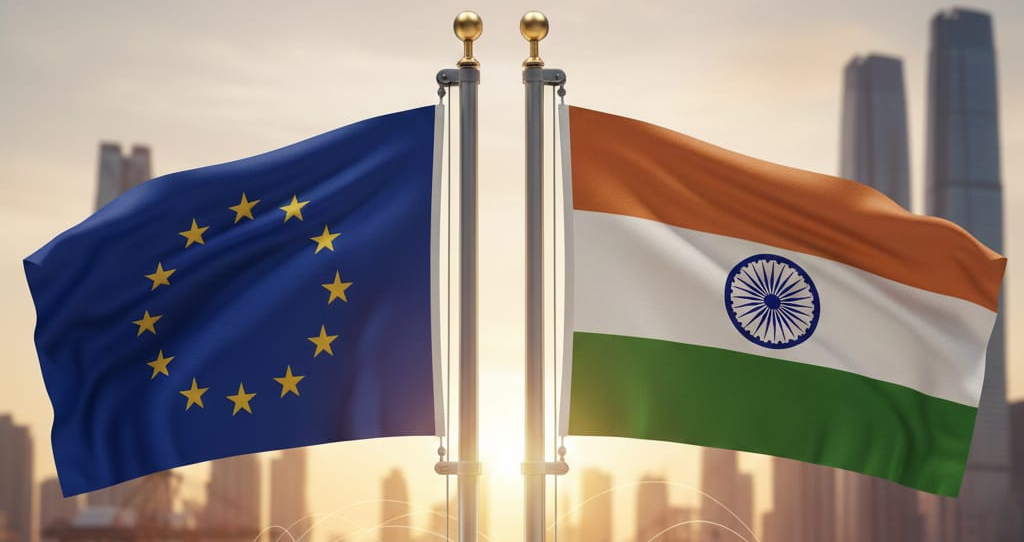
​The European Union and India have reached a historic free trade agreement following nearly twenty years of negotiations. Described as one of the largest trade deals ever brokered, the pact establishes a trade zone encompassing two billion people.
Trade Deal EU and India

​”We have created a free trade zone for two billion people that will benefit both sides,” says European Commission President Ursula von der Leyen.

​Indian Prime Minister Narendra Modi echoed this sentiment, stating: “This agreement will unlock immense opportunities for India’s 1.4 billion citizens and millions across Europe.” Together, the EU and India account for 25% of the world’s gross domestic product (GDP).

​According to the Commission, the deal is expected to double European exports to India. However, the agreement still requires formal approval from EU Member States and the European Parliament before the new regulations take effect.

​Cars and Wine: Slashing Tariffs


​Trade in goods between the two blocs has already doubled over the past decade. This new treaty aims to eliminate approximately 90% of existing tariffs between Europe and India.

​The deal offers a significant boost to the European automotive industry, with Indian import duties on European cars set to plummet from 110% to just 10%. European winemakers also stand to gain, as tariffs on their products will drop from 150% to approximately 25%.

​Shifting Geopolitics: Seeking New Allies


​The timing of the accord is inextricably linked to the economic trajectory of the United States. The Trump administration recently imposed a 50% import tariff on India due to its trade in Russian oil, while simultaneously threatening the EU with new levies.

​In response, the EU and India are seeking to reduce their dependence on the U.S. by strengthening bilateral ties. “This is only the beginning,” Von der Leyen emphasized. “We will continue to expand and reinforce our strategic partnership, demonstrating to the world that rules-based cooperation still delivers exceptional results.”

​A Broader Trade Offensive


​The India deal is part of a wider EU strategy to secure global economic partnerships. Von der Leyen is also pushing for the swift implementation of the Mercosur agreement—a trade pact recently finalized with Brazil, Argentina, Uruguay, and Paraguay.

​The Mercosur deal has faced delays, however, as the European Parliament awaits a ruling from the European Court of Justice. Lawmakers have expressed concerns regarding the agreement’s impact on the competitive position of European farmers.

​Beyond India and Mercosur, the EU is actively negotiating deals with Australia, Malaysia, the Philippines, Thailand, and the United Arab Emirates. Recent agreements have already been secured with Indonesia and Mexico.

​The trade treaty with India is not yet final; it must still be ratified by India, the EU Member States, and the European Parliament.
​EU Patience Runs Out: ‘Trade Bazooka’ Ready alongside Tariffs for US

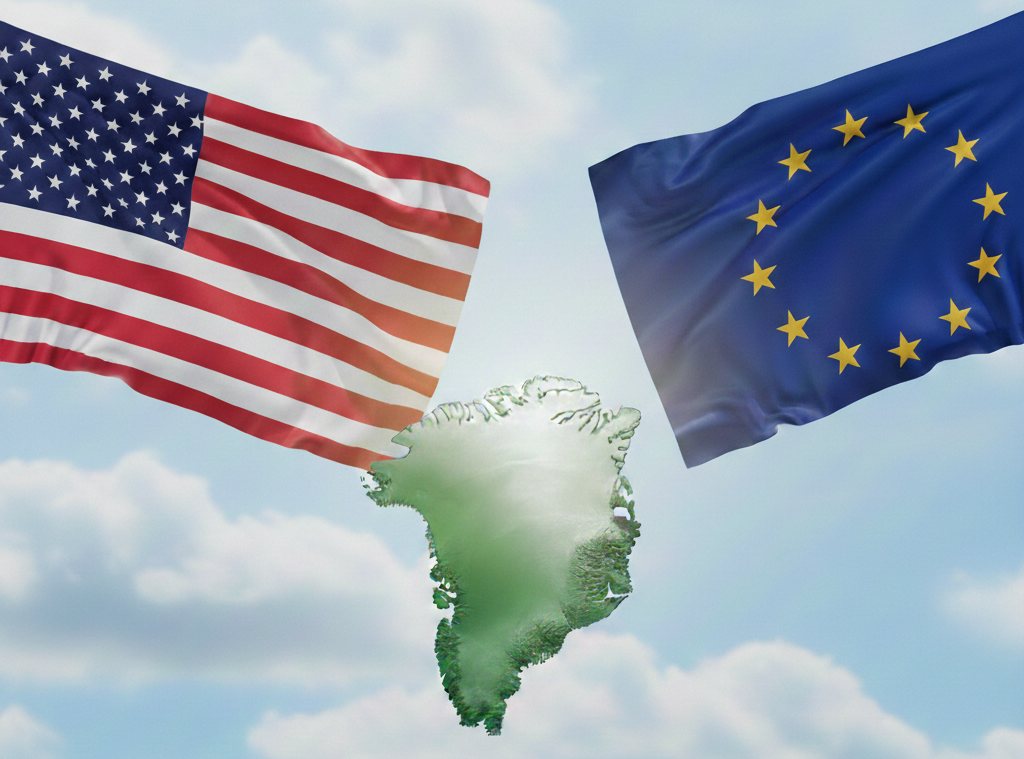
​After weeks of threatening language from the American presidency, the European Union has reached its limit. Yesterday, the 27 member states proposed a 93 billion euro package of measures following the announcement of import tariffs on eight European countries participating in a Greenland mission.

US-EU Greenland Conflict

EU Strategy

Whether this will be enough to force a reversal of policy remains to be seen. However, observers suggest the EU has more than one strategic advantage.

​There is a growing realization among member states that a firm stance is now required. When an ally threatens to seize territory from a European nation, the Union is left with no other choice.

​The EU package is viewed as a significant opening signal. The measures involve import tariffs on American products such as jeans, motorcycles, and aircraft. These products are primarily manufactured in regions with high concentrations of government supporters. By targeting these areas, the EU believes it can cause significant economic and political pressure.

​The announced 10 percent import tariff for the eight countries, including the Netherlands, is set to take effect on February 1. If this plan is not withdrawn, the European counter-tariffs will also commence.

​EU member states hope to avoid this escalation through diplomacy. In the coming week, efforts will be centered on the annual meeting of the World Economic Forum in Davos, where many leaders will be present. However, the period of caution and accommodation appears to be over, replaced by a shift toward firmer action.

​The EU had already drafted this list of import tariffs last year following the outbreak of a global trade war. While the measures were withdrawn after a temporary agreement in July, they were brought back into play during an emergency meeting yesterday.

​‘Trade Bazooka’

The EU holds another major strategic asset: the Anti-Coercion Instrument (ACI). This tool, often referred to as the ‘trade bazooka’, allows the EU to deny companies from third countries access to the European internal market.

​This instrument has been in development for several years, intended primarily as a deterrent. The expectation is that the threat of its use should be sufficient to prevent economic aggression from other nations.

​While there have been repeated calls for its deployment over the past year, the likelihood of it being activated has now increased significantly.

​Boundaries

The EU is currently navigating a difficult diplomatic path. While it is deemed necessary to use the language of power to influence decision-making, there are clear risks involved.

​A major concern is the potential impact on other geopolitical conflicts, such as the situation in Ukraine. A severe escalation in trade tensions could lead to a scenario where security guarantees for Europe are weakened, a situation that must be avoided.

​Despite these risks, there is a consensus that the EU must keep all options on the table. The European market remains the most powerful tool available, and there is a readiness to utilize the provisions within the anti-coercion instrument if necessary.

​Playing on Prestige

Strategic efforts may also focus on the American desire for historical prestige regarding the acquisition of Greenland. This ambition has existed for over a century, though previous attempts were always rebuffed.

​The EU can frame the consequences of this conflict by highlighting how such actions could be remembered as the catalyst for the fragmentation of Western alliances and NATO. This appeal to historical legacy is seen as a potential point of leverage.

​What is the ‘trade bazooka’?

​The term trade bazooka is the unofficial nickname for the European Union’s Anti-Coercion Instrument (ACI). This is a powerful trade policy weapon that was officially adopted in 2023.

​This is what the instrument entails:

  • ​Purpose: It is designed to retaliate when non-EU countries apply economic pressure to force the EU or a member state into specific political concessions.
  • ​Extensive powers: Beyond standard tariffs, the EU can deny companies access to the internal market, restrict foreign investment, block access to public contracts, and limit intellectual property rights.
  • ​Speed: The European Commission has been granted the authority to act faster and more decisively, reducing the time previously required for consensus among all member states.
  • ​Deterrence: The impact of these measures is designed to be so significant that the mere threat should discourage other countries from attempting economic blackmail.

Greenland, Trump, and the $3.6 Trillion Horror Scenario for the US Economy

What If Europe Dumped All Its US Debt?

​The global economy rests on a delicate balance of trust and investment. At the heart of this system lies the US Treasury market. However, a hypothetical scenario exists that economists often describe as a financial nuclear bomb.

This scenario is no longer just a mathematical exercise but a potential geopolitical tool. If the United States, under the Trump administration, were to take the unprecedented step of militarily attacking and conquering Greenland, Europe could be forced to respond with its most powerful economic weapon.

​Imagine if every European entity (including governments, central banks, and private investors) decided to simultaneously dump their combined holdings of approximately $3.6 trillion in US Treasury bonds as a direct consequence of such an invasion.

The Chain Reaction

​If this “horror scenario” were to unfold, here is the step by step breakdown of what would likely happen:

  • ​A Crash in Bond Prices: A sudden flood of $3.6 trillion worth of bonds onto the market would cause their value to plummet instantly due to the massive oversupply.
  • ​Skyrocketing Interest Rates: As bond prices crash, the yields (interest rates) would spike to extreme levels. This would make US government debt significantly more expensive to maintain.
  • ​The Dollar in Freefall: To exit these investments, European investors would need to sell their US dollars. This massive sell-off would likely cause the value of the US dollar to collapse against the Euro.
  • ​Global Market Chaos: Because the US Treasury bond is the benchmark for the global financial system, its collapse would trigger a domino effect. Stock markets would likely tank, and borrowing costs worldwide would become unaffordable overnight.

​While the military conquest of Greenland remains a shocking concept, this financial “nuclear option” highlights that Europe’s choice to divest could be the ultimate check on such a massive shift in international relations.

The EU views Trump’s trade deal quite differently. Here’s how.

Based on President Trump’s public statements about the EU-US trade deal announced on 27 July 2025, here’s how they align or potentially contradict the European Commission’s framing:

Points of Agreement

Both sides emphasize:

  • The 15% tariff ceiling: Trump confirmed that the U.S. will impose a flat 15% tariff on most EU goods, including cars, which is consistent with the EU’s statement.
  • Energy and investment commitments: Trump highlighted the EU’s agreement to purchase $750 billion in U.S. energy and invest $600 billion in the U.S., which matches the EU’s announcement.
  • Strategic product exemptions: Both sides noted that certain products like aircraft parts, chemicals, and pharmaceuticals will receive special treatment or exemptions.
  • Section 232 investigations: Trump acknowledged that pharmaceuticals and semiconductors will temporarily face 0% tariffs pending national security reviews, aligning with the EU’s description.

Here’s where Trump’s tone or framing may differ from the EU’s:

  1. Tariff Framing:
    • Trump described the deal as a “very powerful” and “biggest of all the deals”, emphasizing tough negotiations and portraying the 15% tariff as a win for the U.S.
    • EU framing presents the 15% as a ceiling that reduces existing tariffs (e.g., on cars from 25% + 2.5% MFN), suggesting relief rather than escalation.
  2. EU Expectations:
    • Reports indicate that Europe had hoped for lower tariffs, around 10%, and some EU officials expressed relief mixed with concern over the final deal.
    • Trump’s tone suggests the EU market was “essentially closed” and now “opened up,” which may not reflect the EU’s view of its own openness.
  3. Military Purchases:
    • Trump mentioned that the EU would be “purchasing hundreds of billions of dollars worth of military equipment”, a claim not mentioned in the EU’s official statement.
  4. Steel and Aluminum Tariffs:
    • Trump indicated that 50% tariffs remain for now, with a quota system to be negotiated. The EU emphasized cutting tariffs and protecting against global overcapacity, suggesting a more cooperative tone.

Moreover: the EU-US trade deal announced on 27 July 2025 is a political agreement and not legally binding until it is formally ratified through the EU’s internal procedures, which may require approval from all 27 member states.

Download the official EU Commission’s statement

As the NATO Summit Nears, It’s Not Just About Spending—It’s About Strategy

What defines a strong NATO ally? Since the alliance’s founding in 1949, debates over burden-sharing have been constant. Donald Trump, both in his first and current term, has sharply criticized European members for underfunding their defense while relying on U.S. protection—and not without reason.

His message is resonating. Belgium’s defense minister recently vowed to end the country’s “national shame” of being NATO’s most notorious free rider. Even Iceland, which lacks a standing army, is exploring how to contribute more meaningfully.

Image: Pixabay

To assess NATO members’ contributions, consider the “three Cs”: cash, capabilities, and commitment.

Cash: More Members Are Meeting Targets—But Is It Enough?

Today, 22 of NATO’s 32 members meet the 2% of GDP defense spending target, a big jump from just seven a decade ago. Italy and Spain are on track to join them this year. But the bar is rising: at the upcoming summit in The Hague, NATO is expected to adopt a new target of 3.5% of GDP, plus 1.5% for supporting infrastructure.

Still, raw spending figures can be misleading. Some countries inflate their numbers by including loosely related expenses under “defense.”

Capabilities: What the Money Buys Matters More

NATO recommends that at least 20% of defense budgets go toward equipment—most members comply, and that threshold may soon rise to 33%. But quantity doesn’t equal quality. Greece, for example, spends heavily on gear, but much of it is aimed at deterring Turkey, not Russia.

The NATO Defense Planning Process aims to align national purchases with alliance needs. After years of counterterrorism focus, the threat from Russia is refocusing priorities. Allies are now being asked to build forces primarily for deterrence in Europe.
New “capability targets” expected this month will guide what each country should provide—especially in areas where the U.S. may scale back, like intelligence, long-range strike, and logistics.

Commitment: Who Shows Up?

Operationally, even the most frugal allies are stepping up. Spain leads a multinational brigade in Slovakia; Italy commands one in Bulgaria. Portuguese jets patrol Baltic airspace. Smaller nations like Albania and Slovenia also contribute troops to NATO’s eastern flank.

But NATO wants more. In a major conflict, it aims to deploy 100,000 troops within 10 days and another 200,000 within 30. Without more European investment in recruitment and readiness, those goals may be out of reach—especially without U.S. troops.

A Smarter Division of Labor?

NATO is exploring a “multi-speed” model: larger militaries take on high-end combat roles, while smaller states focus on logistics, cyber, or niche capabilities. Luxembourg, for instance, supports satellite communications and surveillance; Iceland runs an air-defense system.

Getting underperformers like Spain and Italy to specialize more effectively may be key. Encouraging them to invest in maritime capabilities could be a strategic win.

Economists Warn: The European Union Must Act

Dark clouds are looming over European industry. More experts are sounding alarms about the EU’s economic transition. A worrying signal came this week with the quarterly figures of Germany’s biggest carmaker, Volkswagen.

@roelthijssen

“If we do nothing, in fifty years, Europe will be just an open-air museum for American tourists,” warned former European Central Bank president Mario Draghi in a recent report on the EU’s economic future.

Most countries agree that action is needed. But what should Europe do to remain a global financial power alongside China and the United States? Economists say clear goals must be set and significant investment made over the coming years.

In Europe, much thought is being given to this. The EU remains a global player but risks being overtaken by emerging economies in the coming years. China has invested heavily in the green industry for years. Over the past ten to fifteen years, the country has become a major producer of solar panels, everyday semiconductors, and batteries.

Now, China is also making significant strides in the production of electric cars, putting pressure on European automakers from their East Asian competitors.

Europe is also increasingly struggling to keep pace with the United States. Of the fifty largest tech companies, only four are from the EU. Over the past decades, numerous startups in the U.S. have grown into major companies with trillion-dollar valuations.

Everyone in Europe agrees that something must be done, but what? “If we Europeans think we can build major companies from the ground up in just a few years, we are mistaken,” says Samuele Murtinu, professor of economics at Utrecht University. Competing with other global economies will require a lot of time and money.

Should European industrial companies collaborate more closely?

This happened with General Motors in the United States, now one of the world’s largest car companies. A successful European example is Airbus, which began in the 1960s as a collaboration between British, French, and German aircraft manufacturers.

However, economists see little support for this idea. Market competition leads to lower prices. “There was an idea to merge large European companies, but this was ultimately prohibited due to monopoly concerns,” says Niclas Poitiers, an economist at the EU think tank Breugel. “It would be a death knell for other existing European companies.”

Alarm

What everyone does agree on is that significantly more money needs to be invested in the European economy soon. The United States is investing $700 billion in the green transition. Estimates suggest China is doing the same, but Europe does not yet have a unified plan.

Former ECB chief Draghi also proposed such an amount for the EU. Some may be alarmed by this, but economists warn that if Europe is not willing to invest in the new economy, the price could become even higher. Without a long-term view, it may soon be too late to catch up.

Five Tips for the EU from Economists

Be bold in investing heavily in sustainability over the coming years.

Collaborate, even with companies outside the EU.

Gain control over the supply of essential raw materials.

Set clear political objectives.

Countries must come together for more unified policies.

Besides funding, having a clear plan is crucial for Europe. Although the 27 EU member states form a union, they often do not align their national policies. The member states also seem divided on their priorities.

What is more important: accelerating sustainability or maintaining major European companies and thus preserving jobs? Opinions on this choice currently differ significantly.

Nevertheless, it is not an impossible task. Europe has faced bigger challenges in the past. “The closure of coal mines was actually the last major transition,” says Poitiers. “A huge number of jobs were lost back then. I estimate this green transition to be smaller. I don’t expect as many jobs to be at risk.”

European tech sector lags behind the U.S. Market value of companies in billions of euros:

European Union:

NXP Semiconductors: 59, Spotify: 72, ASML: 255.

US:

Amazon: 1,870, Alphabet (Google): 2,040, Microsoft: 2,980, Apple: 3,250.

Draghi: Hundreds of billions extra needed to save the European economy

It is high time for a drastic overhaul of European economic policy. The survival of the European Union is at stake, facing an “existential challenge.” These strong words come from a report on the future of European competitiveness presented this morning by former European Central Bank head Mario Draghi. According to him, hundreds of billions of euros are needed annually.

@roelthijssen

Last year, Draghi was asked for advice by Ursula von der Leyen, President of the European Commission. The European economy lags behind the US and China. Disposable income growth in the US has been nearly double that of Europe since the early 2000s, Draghi writes.

The struggles of European industry were highlighted again last week when Volkswagen considered closing factories in Germany due to increasing pressure from Chinese competitors.

At a press conference this morning, Von der Leyen stressed that improving the economic position is “top of the agenda,” with Draghi’s report serving as guidance for the new European Commission.

Investing in innovation
Draghi points out that all three factors driving European economic growth—thriving international trade, cheap Russian energy, and America’s defense of Europe—have become uncertain or have disappeared. Significant changes are needed in the EU, according to Draghi.

Investing more in knowledge and innovation is crucial for the EU to compete with economic giants like China and the US. Currently, the EU is “punching below its weight,” writes Draghi. He calls for removing strict regulations and barriers hindering innovative entrepreneurs in Europe.

Expensive energy
Energy policy is another challenge. Since Russia stopped supplying cheap energy following the invasion of Ukraine, gas prices for European industry have risen to over three times those in the US. The EU needs to accelerate its clean energy plans, Draghi urges.

The report includes over 170 concrete proposals to bring about the “radical change” needed, according to Draghi.

The EU must also become more self-reliant in security matters, investing and collaborating more in defense. Additionally, the EU should ensure the supply of crucial raw materials, forming partnerships with resource-rich countries and increasing domestic production, such as opening new lithium mines.

Various EU processes must also change. For example, the report suggests better coordination of competitiveness and quicker decision-making in the European Council by reducing veto powers.

Download the report here -> https://www.roelthijssen.nl/wp-content/uploads/2024/09/The-Future-of-European-Competitiveness-2024.pdf

Macron: Europe Could Perish, It Depends on Our Choices

Future of the EU: Fewer regulations, more investments, and improved cooperation are needed to keep Europe viable, according to French President Macron. “The awakening is too slow.”

Macron @ Sorbonne 25-04-2024

Macron delivered his speech at the Sorbonne University in Paris in front of students, French politicians, and European diplomats.

Europe could die, and decisions must be made now to prevent this. This grave message was at the heart of the speech delivered by French President Emmanuel Macron on Thursday morning in the lavish amphitheater of Sorbonne University in Paris. The successive shocks that Europe has faced in recent years with the coronavirus pandemic, global trade conflicts, the war in Ukraine, and the rise of populism have exposed the weaknesses of the European Union, and according to Macron, immediate intervention is needed for the EU to withstand the test of time.

The weaknesses of the European Union are numerous and significant – the president named them one by one in front of students, French politicians, and European diplomats in a nearly two-hour-long speech. Macron is particularly concerned about the poor state of European militaries, which also lack cooperation, and dependence on other world powers in areas including defense, technology, food safety, and medicines. Also, the climate and biodiversity crises pose challenges to Europe, as do immigration at European external borders, foreign interference, and the lack of oversight on social media. “We do not set the rules in this digital space, where our democracy is shaped.”

The president came up with numerous proposals to make Europe a significant geopolitical player again, with the same core message: EU member states should cooperate more and invest more and smarter so the EU can become autonomous and compete with China and the United States. This is necessary, according to Macron, because these power blocs “no longer adhere to trade rules” with the massive support packages they are pumping into their economies.

To prevent Europe from being crushed, member states should invest heavily in existing sectors and several “sectors of the future” such as artificial intelligence, quantum mechanics, aerospace, biotechnology, and green energy forms. He also wants European countries to form more “real partnerships” with third countries to counteract the “bipolar confrontation” of China and the US. “We must show that we are a balancing power.”

Europe is also “too complicated,” Macron believes: there are too many and too complicated regulations, particularly in the area of climate. “It is not sustainable to have the strictest environmental rules, invest less, and be more naive [than other power blocs].” Trade rules within the EU would also weaken the international competitive position of the Union. “We need to dismantle the rules among the 27 countries so we can have a real shared market. Only then can you compete.”

Campaign Kickoff

In France, the speech is seen as an attempt by Macron to revive the campaign for the European elections of his Renaissance party. It could use it: the lead candidate Valérie Hayer struggles to gain momentum, in the polls the radical-right Rassemblement National leads by a large margin, and the third party, the Socialists, are dangerously close to Renaissance. As the socialist lead candidate Raphaël Glucksmann held a large gathering on Wednesday evening, it almost seemed like a duel between the two.

But within the Élysée, it is denied on all fronts that the speech is part of the European campaign. “It is a speech of a head of state speaking on behalf of France. (…) That is something entirely different,” says a source.

For the Élysée, ‘Sorbonne’ was mainly a continuation of the speech Macron gave in the same amphitheater in 2017. At that time – newly elected and very young – he was the one who put the theme of European autonomy on the European agenda with an inflated speech that is still often quoted. Then, it led to other EU member states tempering Macron’s words. But after the unrest and conflicts filled recent years, Macron sees that he has been proven right by his European partners. “The very French concept of sovereignty is increasingly spreading across Europe,” he said with satisfaction.

‘The EU is Awakening’

The French president was also cautiously positive about other developments. Where he portrayed a dozing European Union in 2017, he now described how member states have realized the dangers of being dependent on Russian gas and Chinese medicines. He celebrated the steps announced in recent years to reduce this dependence. He also repeatedly emphasized that the importance of the existence of the European Union is hardly disputed anymore. Where in 2017 radical-right parties like the Dutch PVV and the French Rassemblement National still advocated for Frexit and Nexit, “no one dares to talk about leaving the EU or the euro now.”

We are awakening, Macron concludes. “But the awakening is too slow.”

De brexiteers kunnen het Brexit-trilemma nog steeds niet onder ogen zien

Maker: PA

Op 8 september sprak Brandon Lewis de inmiddels beroemde woorden: dat de wet op de interne markt van de Britse regering “het internationaal recht slechts op een zeer specifieke en beperkte manier zou schenden”. Dat zette een reeks gebeurtenissen in gang die zelfs nu, twee maanden later, de discussie over dat wetsvoorstel hebben gevormd en zou betekenen dat Groot-Brittannië niet bereid is om het Withdrawal Agreement (dat de regering van Boris Johnson slechts 8 maanden geleden heeft ondertekend) en het Goede Vrijdagakkoord te respecteren, en op deze manier dus bereid is om internationaal recht te overtreden.

Eurocommissaris Maroš Šefčovič legde op 10 september een krachtig geformuleerde verklaring af. De vicevoorzitter verklaarde in niet mis te verstane bewoordingen dat de tijdige en volledige uitvoering van het terugtrekkingsakkoord, inclusief het protocol over Ierland/ Noord-Ierland – waarmee premier Boris Johnson en zijn regering hebben ingestemd, en dat zowel het Britse Lager- als Hogerhuis minder dan een jaar geleden hebben geratificeerd, een wettelijke verplichting is. De Europese Commissie volgde op 1 oktober met een kennisgeving aan het VK, waarop het VK overigens niet heeft gereageerd.

Ondertussen heeft de overwinning van Biden bij de Amerikaanse presidentsverkiezingen de aandacht gevestigd op wat de verkozen president eind september zei over de Brexit:

Maar zelfs nu – nadat de wet op de interne markt deze week een grote nederlaag leed in het Britse Hogerhuis (van de Lords stemden 433 tegen en 165 voor), blijft de Britse regering bij haar standpunt.

De Ierse minister van Buitenlandse Zaken Coveney vatte het als volgt samen:

Wat is hier aan de hand?

De EU, Ierland, de nieuwe Amerikaanse regering en een grote meerderheid in het Hogerhuis zijn het hier allemaal over eens: er kan geen doorbraak in de richting van een Brexit-deal komen tenzij de clausules die in strijd zijn met het terugtrekkingsakkoord en het NI-protocol worden verwijderd. Je kunt al deze mensen bijna horen roepen: “Hoe kan Boris Johnson c.s. zo dom zijn?”

Ik vraag me echter af of we allemaal het punt missen. Dat het politieke establishment – mensen zoals ik en al die instellingen – verkeerd hebben geïnterpreteerd hoe Johnson dit spel speelt.

Toen ik John Redwood’s belachelijke brief aan Joe Biden las, realiseerde ik me onze denkfout. “Het is de EU die nieuwe grenscontroles aan hun kant van de grens lijkt te willen instellen, die u misschien graag met hen zou willen bespreken”, schreef Redwood. Hoe – zelfs nu – kan hij ooit zoiets schrijven, zei ik hoofdschuddend tegen mezelf.

De reden is dat hij nog steeds weigert het trilemma van afwegingen te erkennen dat J. Daniel Kelemen het meest beknopt samenvat en in de afbeelding hieronder wordt weergegeven. Johnson’s gewijzigde terugtrekkingsakkoord en het NI-protocol is optie A – een grens- of douane-infrastructuur tussen Noord-Ierland en de rest van het VK, en het VK verlaat de interne markt en de douane-unie. D is de onmogelijke optie, maar daar hoopt Redwood nog steeds op.

En dit is eigenlijk niet zo gek veel anders dan wat Johnson in september zei – dat het terugtrekkingsakkoord “nooit logisch was” met betrekking tot Noord-Ierland. Nou, in die zin had hij gelijk – want ook de DUP had daar in december 2019 op gehamerd! En dat leidt je naar zoiets als C op Kelemen’s diagram … en terug naar de deal die May sloot met de EU, en de deal die Johnson afdeed als te soft.

Met andere woorden: terwijl het grootste deel van het debat over de Internal Market Bill gaat over het al dan niet overtreden van het internationaal recht, zijn Johnson en de Brexiteers nog een stap verder terug – ze weigeren zelfs nu in het reine te komen met de realiteit dat het terugtrekkingsakkoord en het NI-protocol het onvermijdelijke resultaat oplevert dat er grensinfrastructuur nodig is tussen Noord-Ierland en de rest van het VK (zie bijvoorbeeld de kopzorgen over parkeerplaatsen voor trucks). Als er een Brexit-deal komt tussen het VK en de EU, plaatst het wetsvoorstel voor de interne markt het VK in kwadrant A in het diagram – en dat verklaart waarom de bepalingen die in strijd zijn met het terugtrekkingsakkoord en het NI-protocol zo belangrijk zijn voor Brexiteers. 

Je zal het een Breexiter niet als zodanig horen zeggen, maar in wezen is de reactie van Redwood, Johnson, Hannan en gelijkgezinden op de beschuldiging dat het wetsvoorstel voor de interne markt in strijd is met het internationaal recht: “So what? Als we dat debat zelfs maar aangaan, betekent dat dat we de impliciete gevolgen van de Brexit moeten erkennen.” Wie ook maar probeert de boodschap over te brengen dat het tijd is voor verantwoorde beslissingen – of het nu het Hogerhuis of Biden of Coveney of Von der Leyen is – Brexiteers willen deze zeker niet horen.

Dit alles – met het verstrijken van de tijd tot het einde van 2020 en dus het einde van de transitieperiode – kan slechts tot één resultaat leiden: No Deal.

Phil Syrpis is tot een vergelijkbare conclusie gekomen – en gebruikt ook Kelemen’s Brexit Trilemma – in dit stuk. Phil’s stuk concentreert zich meer op de juridische implicaties, het mijne meer op de politiek en communicatie, maar de essentiële conclusie in beide gevallen is in wezen dezelfde.

Dit stuk is in het Engels geschreven (link naar originele artikel) door Jon Worth en met zijn toestemming naar het Nederlands vertaald en gepubliceerd. Volg Jon’s blog hier.

How a “no deal” Brexit can be avoided

 It starts with acknowledging the consequences of one.

Brexit, deal or no deal

Britain’s conservatives are fond of Australia, an Anglosphere place with a flourishing economy, fine weather and fabulous beaches. So when trade talks with the European Union were briefly suspended before resuming this week, and Boris Johnson told Britons they might end up not with the Canada-style free-trade agreement he wanted, but instead leave on “Australian terms”, he made the prospect sound beguilingly sunny.

This is typical Johnsonian spin. If the latest face-to-face talks should collapse and Britain end up with no deal, the terms on which it leaves would not be those that apply to Australia, which has many side-deals and is seeking its own free-trade agreement with the eu. They would be closer to those of Afghanistan, Bhutan or Congo: Britain would have no trade deal at all with its largest trading partner, and little prospect of getting one.

Read more in The Economist