

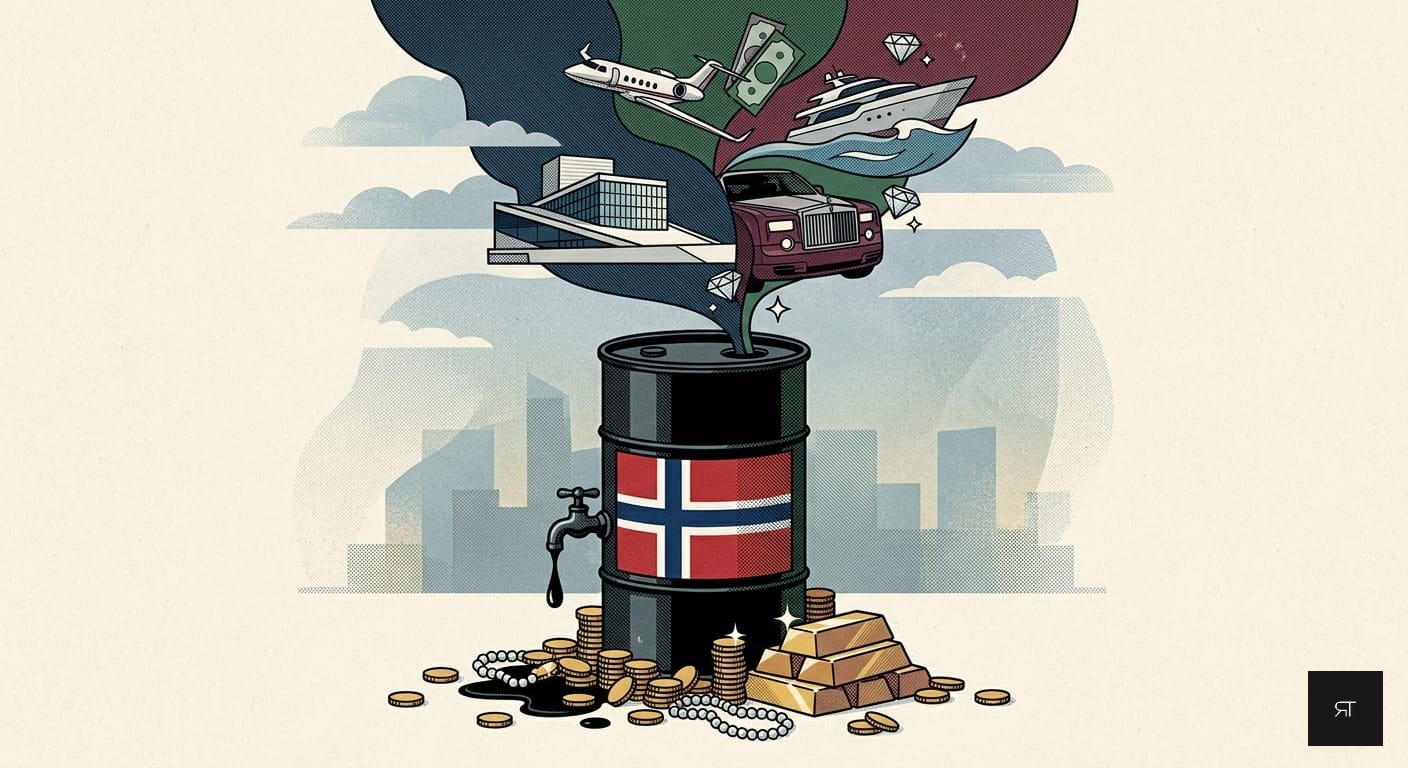
While most nations strive for economic growth, Norway presents a unique paradox: a country so affluent that its success may be eroding its future resilience. The nation’s immense oil wealth has created a society where financial constraints feel like a relic of the past, but this “unlimited” budget is starting to show significant side effects.
A Monument to Excess
Oslo’s skyline is dominated by the Munch Museum, a 13-story architectural marvel of glass and aluminum. While it stands as a tribute to Scandinavia’s artistic heritage, it also serves as a symbol of Norwegian fiscal extravagance. The project was completed a decade late and ran €184 million over its initial budget. In Norway, such astronomical costs are often met with a shrug; when you are this rich, efficiency often takes a backseat to ambition.
The Sovereign Safety Net
Norway’s economic engine is its €2.02 trillion sovereign-wealth fund. To put that in perspective, roughly 368,000 stashed away for every one of its 5.6 million citizens. This fund bankrolls one of the most comprehensive welfare systems on the planet and maintains a GDP per capita of approximately €82,800, surpassed only by a few tax havens and city-states.
However, a new sentiment is emerging. Critics, including economist Martin Bech Holte, author of The Country that Became Too Rich, argue that this safety net has become a “gilded cage.” The concern is that the constant flow of oil money is distorting the behavior of politicians and citizens alike, leading to a culture of complacency.
Political Profligacy and Reform Inertia
The wealth fund was designed to invest abroad to prevent domestic inflation, with only small portions funneled back into the national budget. Yet the scale of this “payout” has exploded. In 2008, the government drew about €5.9 billion from the fund; by 2025, that figure reached €36.8 billion, covering a fifth of all public spending.
This reliance on “easy money” has led to several systemic issues:
- Delayed Reforms: Despite healthcare costs being 30% higher than the EU average, there is little pressure to modernize or streamline hospitals.
- Lack of Accountability: Lawmakers often skip rigorous cost-benefit analyses for new projects.
- High External Spending: In 2023, Norway allocated €230 billion (half of its total tax revenue from labor and capital) to foreign aid and climate initiatives, a ratio far higher than that of other developed nations.
The Social Cost of Security
The abundance of wealth has also impacted the private lives of Norwegians. Household debt is the highest in Europe at 250% of annual income, largely because citizens feel the state will always be there to catch them.
In the labor market, the effects are even more pronounced:
- Education Inflation: With free higher education and generous stipends, many Norwegians stay in school well into their adulthood. This has led to a “hyper-educated” workforce where 70% of unskilled service workers hold master’s degrees.
- Youth Unemployment: Joblessness among Norwegians in their 20s is double that of neighboring Denmark.
- Stagnating Productivity: As the drive to innovate weakens, worker productivity has plateaued and real wages have begun to dip.
The 6% Gamble
The prevailing theory in Oslo is that if the fund’s returns exceed 6% annually, the country can maintain this lifestyle indefinitely, even after the oil runs out. But this is a dangerous gamble. If global markets underperform or AI fails to deliver a massive productivity boost, those returns may vanish.
More importantly, wealth cannot replace the social value of a functional economy. When a government no longer needs to justify its spending to taxpayers, accountability fades. When citizens no longer feel the necessity of work or saving, the spirit of innovation withers. Norway’s greatest challenge in the coming decades may not be managing its poverty but surviving its prosperity.
As a Norwegian, I can only agree with this. We are becoming lazy and complacent.
Regards,
Magnus