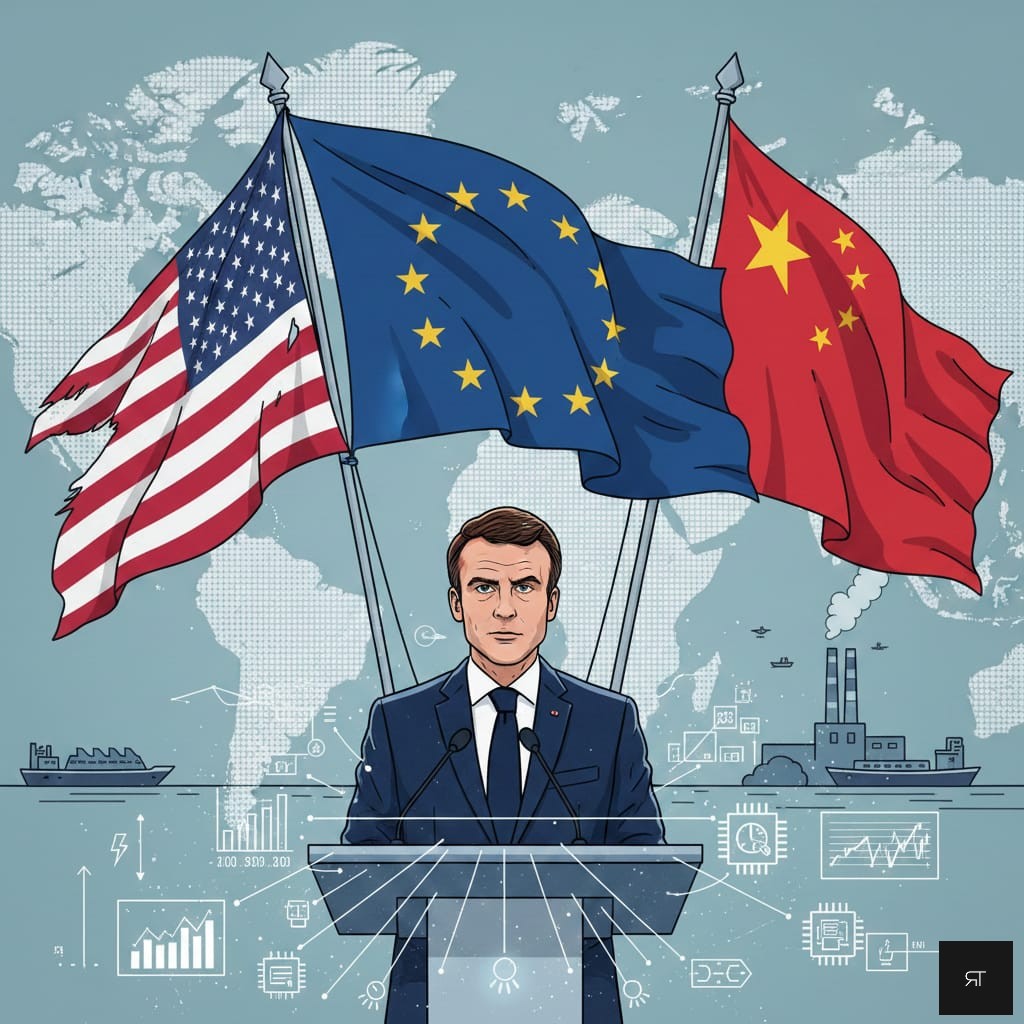
In the face of competition from the United States and China, Emmanuel Macron is calling for “joint investment.” In an interview with several European newspapers, the French President invited his European counterparts to invest in the ecological transition, artificial intelligence, and quantum computing to avoid being left behind.
Macron Calling for Joint European Investment in Strategic Sectors
A Call for Sovereignty and Shared Debt
”For nine years, I have advocated for a more sovereign Europe,” Macron stated this Tuesday, February 10, just two days before a meeting of EU heads of state and government in Brussels. The President believes that trade threats and “intimidation” from the United States are not over. He warned that the twenty-seven member states will be “swept away” if they do not establish a European preference in strategic sectors.
To cement European power, Macron is pushing for a common debt capacity to fund future expenditures (Eurobonds). This joint borrowing would finance strategic investments and allow the European Union to “tackle the hegemony of the dollar.”
Three Key Battles
Macron identified three critical areas where Europe must act within the next three to five years to remain relevant:
Security and Defense Green Transition Technologies Artificial Intelligence and Quantum Computing
“In all these areas, we invest much less than China and the United States,” Macron explained. He estimates the required public and private investment at approximately €1.2 trillion per year. He emphasized that these efforts must be collective rather than national to avoid fragmenting the internal market.
Consistent Protection, Not Isolationism
Regarding protectionism, Macron clarified that the goal is consistency rather than isolation. “The Chinese do it, the Americans do it too. Europe is currently the most open market in the world.” He argued that it is illogical to impose strict rules on European producers that do not apply to non-European importers.
He cited several examples of this new direction:
Opposing the EU-Mercosur trade agreement, which he labeled a “bad deal.”
Implementing taxes on over-subsidized Chinese electric vehicles.
Introducing safeguard clauses on steel.
The recently presented “Car Plan” by the Commission, which features a clear European preference.
The French economy has long been the problem child of the European Union. With the recently passed budget by Prime Minister Lecornu, little seems set to change. Economists and professors are increasingly alarmed by the state of France’s finances. “Our country has become the Argentina of Europe. France is trapped in a hellish spiral leading it toward third world status,” warns Nicolas Baverez, a renowned French economist.
French Economy in Decline
The current state of the French economy is clearly reflected in its inflation figures. While inflation in many European economies has stabilized around 2%, Paris reports an unexpectedly low figure of 0.4%. For years, France has struggled with sky high national debt, while the budget deficit continues to spiral out of control. Attempts to tackle these deficits repeatedly hit a political dead end. Furthermore, major reforms never see the light of day because the French parliament is extremely divided, a situation that recent parliamentary elections have failed to resolve.
A Tax Trap
The core of the problem is that potential tax hikes may not provide a way out. Although they increase revenue, the national debt will continue to grow as long as government spending remains unchecked.
Frédéric Douet, a professor of private law, observes how France is “slowly impoverishing” due to “consistent policies that are both costly and inefficient.” Writing in an op ed for Le Figaro, he expressed his disdain: “The mantra of our technocrats and politicians is that higher taxes will solve our problems.”
High Unemployment and Low Productivity
These concerns are well founded. For the third consecutive year, France’s GDP per capita has fallen below the European average. Additionally, inflation sits far below the eurozone average, and the country faces significantly higher unemployment than the EU mean. Baverez warns that raising taxes will be counterproductive, pushing more people into poverty without necessarily generating immediate revenue.
The economist is also critical of the tax measures in the new budget, which aims to raise an additional 44 billion euros, including 12 billion euros from the corporate sector. Baverez warns that these plans accelerate France’s “financial suffocation” and create “the conditions for a major financial shock.” If France continues on this path, he fears the country will “no longer be among the world’s ten largest economies” by the end of this decade.
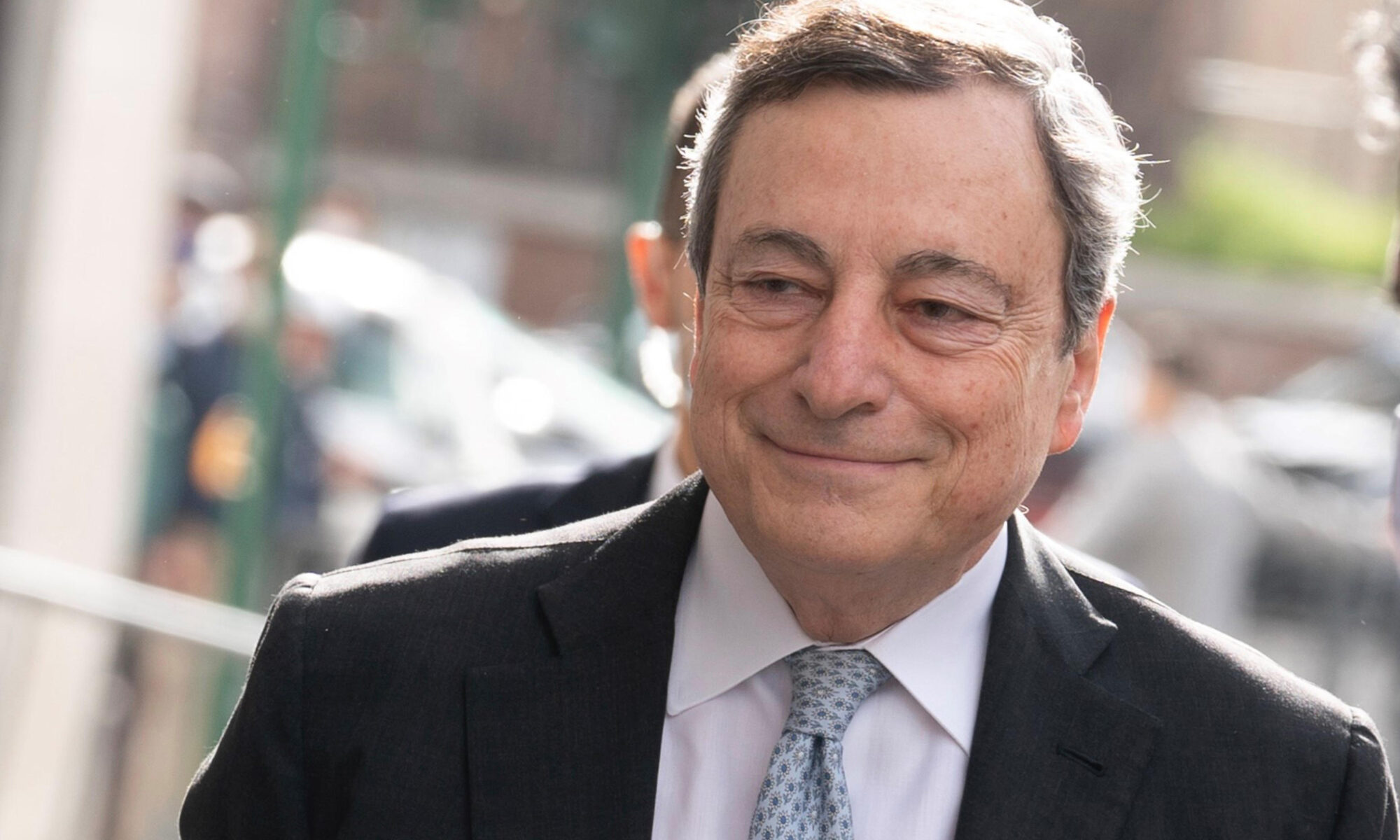
Europe must transform into a federation to survive in a world where the United States and China are rewriting the rules of the game. This was the core message from Mario Draghi, former President of the European Central Bank (ECB) and former Prime Minister of Italy. “We must decide whether we want to become a global power or remain subject to the priorities of others.”
Mario Draghi
Mario Draghi advocates for a European federation to stand firm against superpowers like the US and China. Receiving an honorary doctorate at the University of Leuven (Belgium), Draghi argued that Europe must choose between being a market subservient to outside interests or becoming a sovereign global force. He proposes “pragmatic federalism,” where willing nations start building joint institutions with real decision-making power in specific sectors.
The Collapse of the Old World Order
During his acceptance speech at KU Leuven, the man credited with saving the euro did not mince words regarding Europe’s precarious global standing. Draghi noted that the global order, which underpinned European prosperity for decades, has permanently collapsed. This shift is driven by the changing stances of major powers.
”Beijing controls critical points in global supply chains and does not hesitate to use that power as leverage,” Draghi remarked. “Meanwhile, our traditional ally, the US, is increasingly focused on its own costs and less on the mutual benefits derived from cooperation with Europe.”
”We are facing a future where Europe risks becoming simultaneously subordinate, divided, and deindustrialized.”
Mario Draghi
From Confederation to Federation
To counter these threats, Draghi insists Europe must move away from its current model as a confederation (a loose collection of states with veto powers) and evolve into a true federation, effectively a “United States of Europe.”
”A group of states that merely coordinates remains just a group of states,” he argued. “We must decide: do we remain just a large market subject to the priorities of others? Or do we take the necessary steps to become a global power?”
He pointed out that while Europe acts as a unified bloc in trade, competition, and monetary policy (earning respect as a global player) it remains a “loose collection of mid-sized states” in areas like defense and foreign policy. This fragmentation makes the continent vulnerable to being “picked off one by one” by superpowers.
The Greenland Precedent
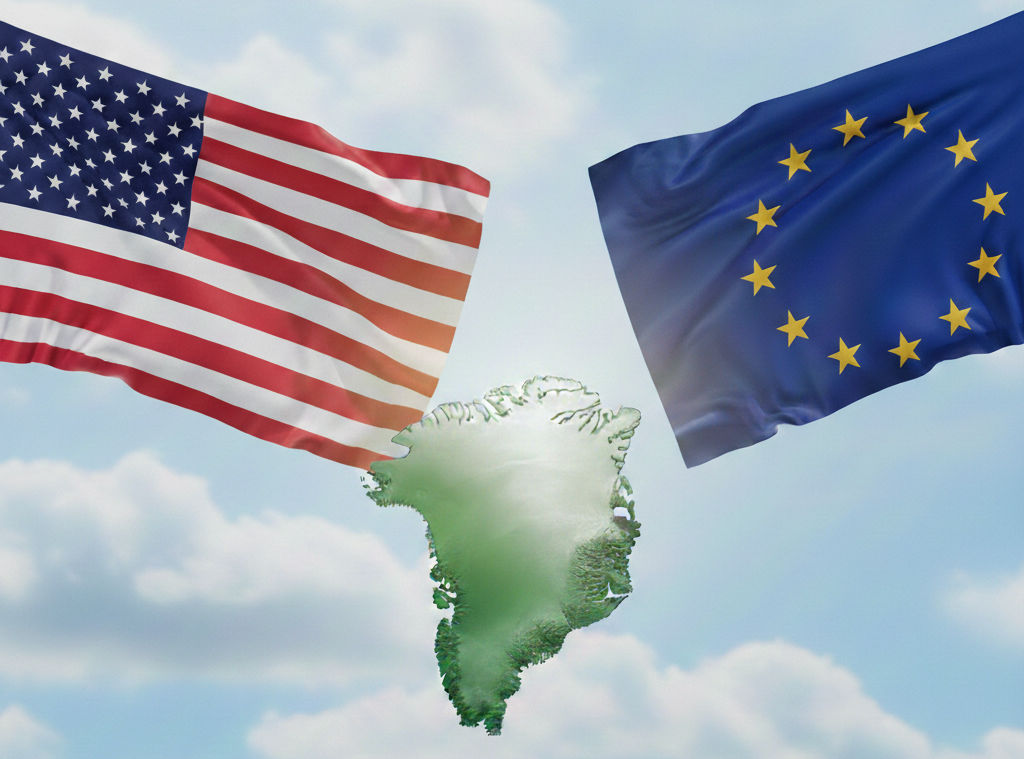
Draghi cited Europe’s military deployment to Greenland as a prime example of successful unity. This move followed repeated suggestions by U.S. President Donald Trump regarding placing the island under American authority.
”By acting together against a direct threat, Europeans discovered a level of solidarity that previously seemed unattainable,” Draghi noted. He believes this shared determination resonated far more with the public than the typical declarations following European summits.
Pragmatic Federalism
Draghi’s solution is “pragmatic federalism.” This approach does not require every nation to hand over power in every sector immediately. Instead, he suggests that countries willing to cooperate should lead the way in specific domains such as energy, technology, or defense.
”As Robert Schuman said in 1950, Europe will not be built all at once,” Draghi reminded his audience. “Not all countries will participate in every initiative from the start. The door remains open to others, but not to those who would undermine the common goal.”
His vision involves building common institutions with genuine authority to act decisively under any circumstances. He pointed to the success of the Euro as the ultimate blueprint: a group of countries took the lead, built institutions with real authority, and created a bond of solidarity that goes deeper than any treaty.
Watch Mario Draghi’s speech in Leuven (from the 4th minute onwards):
The European Union and India have reached a historic free trade agreement following nearly twenty years of negotiations. Described as one of the largest trade deals ever brokered, the pact establishes a trade zone encompassing two billion people.
”We have created a free trade zone for two billion people that will benefit both sides,” says European Commission President Ursula von der Leyen.
Indian Prime Minister Narendra Modi echoed this sentiment, stating: “This agreement will unlock immense opportunities for India’s 1.4 billion citizens and millions across Europe.” Together, the EU and India account for 25% of the world’s gross domestic product (GDP).
According to the Commission, the deal is expected to double European exports to India. However, the agreement still requires formal approval from EU Member States and the European Parliament before the new regulations take effect.
Cars and Wine: Slashing Tariffs
Trade in goods between the two blocs has already doubled over the past decade. This new treaty aims to eliminate approximately 90% of existing tariffs between Europe and India.
The deal offers a significant boost to the European automotive industry, with Indian import duties on European cars set to plummet from 110% to just 10%. European winemakers also stand to gain, as tariffs on their products will drop from 150% to approximately 25%.
Shifting Geopolitics: Seeking New Allies
The timing of the accord is inextricably linked to the economic trajectory of the United States. The Trump administration recently imposed a 50% import tariff on India due to its trade in Russian oil, while simultaneously threatening the EU with new levies.
In response, the EU and India are seeking to reduce their dependence on the U.S. by strengthening bilateral ties. “This is only the beginning,” Von der Leyen emphasized. “We will continue to expand and reinforce our strategic partnership, demonstrating to the world that rules-based cooperation still delivers exceptional results.”
A Broader Trade Offensive
The India deal is part of a wider EU strategy to secure global economic partnerships. Von der Leyen is also pushing for the swift implementation of the Mercosur agreement—a trade pact recently finalized with Brazil, Argentina, Uruguay, and Paraguay.
The Mercosur deal has faced delays, however, as the European Parliament awaits a ruling from the European Court of Justice. Lawmakers have expressed concerns regarding the agreement’s impact on the competitive position of European farmers.
Beyond India and Mercosur, the EU is actively negotiating deals with Australia, Malaysia, the Philippines, Thailand, and the United Arab Emirates. Recent agreements have already been secured with Indonesia and Mexico.
The trade treaty with India is not yet final; it must still be ratified by India, the EU Member States, and the European Parliament.
After weeks of threatening language from the American presidency, the European Union has reached its limit. Yesterday, the 27 member states proposed a 93 billion euro package of measures following the announcement of import tariffs on eight European countries participating in a Greenland mission.
US-EU Greenland Conflict
EU Strategy
Whether this will be enough to force a reversal of policy remains to be seen. However, observers suggest the EU has more than one strategic advantage.
There is a growing realization among member states that a firm stance is now required. When an ally threatens to seize territory from a European nation, the Union is left with no other choice.
The EU package is viewed as a significant opening signal. The measures involve import tariffs on American products such as jeans, motorcycles, and aircraft. These products are primarily manufactured in regions with high concentrations of government supporters. By targeting these areas, the EU believes it can cause significant economic and political pressure.
The announced 10 percent import tariff for the eight countries, including the Netherlands, is set to take effect on February 1. If this plan is not withdrawn, the European counter-tariffs will also commence.
EU member states hope to avoid this escalation through diplomacy. In the coming week, efforts will be centered on the annual meeting of the World Economic Forum in Davos, where many leaders will be present. However, the period of caution and accommodation appears to be over, replaced by a shift toward firmer action.
The EU had already drafted this list of import tariffs last year following the outbreak of a global trade war. While the measures were withdrawn after a temporary agreement in July, they were brought back into play during an emergency meeting yesterday.
‘Trade Bazooka’
The EU holds another major strategic asset: the Anti-Coercion Instrument (ACI). This tool, often referred to as the ‘trade bazooka’, allows the EU to deny companies from third countries access to the European internal market.
This instrument has been in development for several years, intended primarily as a deterrent. The expectation is that the threat of its use should be sufficient to prevent economic aggression from other nations.
While there have been repeated calls for its deployment over the past year, the likelihood of it being activated has now increased significantly.
Boundaries
The EU is currently navigating a difficult diplomatic path. While it is deemed necessary to use the language of power to influence decision-making, there are clear risks involved.
A major concern is the potential impact on other geopolitical conflicts, such as the situation in Ukraine. A severe escalation in trade tensions could lead to a scenario where security guarantees for Europe are weakened, a situation that must be avoided.
Despite these risks, there is a consensus that the EU must keep all options on the table. The European market remains the most powerful tool available, and there is a readiness to utilize the provisions within the anti-coercion instrument if necessary.
Playing on Prestige
Strategic efforts may also focus on the American desire for historical prestige regarding the acquisition of Greenland. This ambition has existed for over a century, though previous attempts were always rebuffed.
The EU can frame the consequences of this conflict by highlighting how such actions could be remembered as the catalyst for the fragmentation of Western alliances and NATO. This appeal to historical legacy is seen as a potential point of leverage.
What is the ‘trade bazooka’?
The term trade bazooka is the unofficial nickname for the European Union’s Anti-Coercion Instrument (ACI). This is a powerful trade policy weapon that was officially adopted in 2023.
This is what the instrument entails:
Purpose: It is designed to retaliate when non-EU countries apply economic pressure to force the EU or a member state into specific political concessions.
Extensive powers: Beyond standard tariffs, the EU can deny companies access to the internal market, restrict foreign investment, block access to public contracts, and limit intellectual property rights.
Speed: The European Commission has been granted the authority to act faster and more decisively, reducing the time previously required for consensus among all member states.
Deterrence: The impact of these measures is designed to be so significant that the mere threat should discourage other countries from attempting economic blackmail.
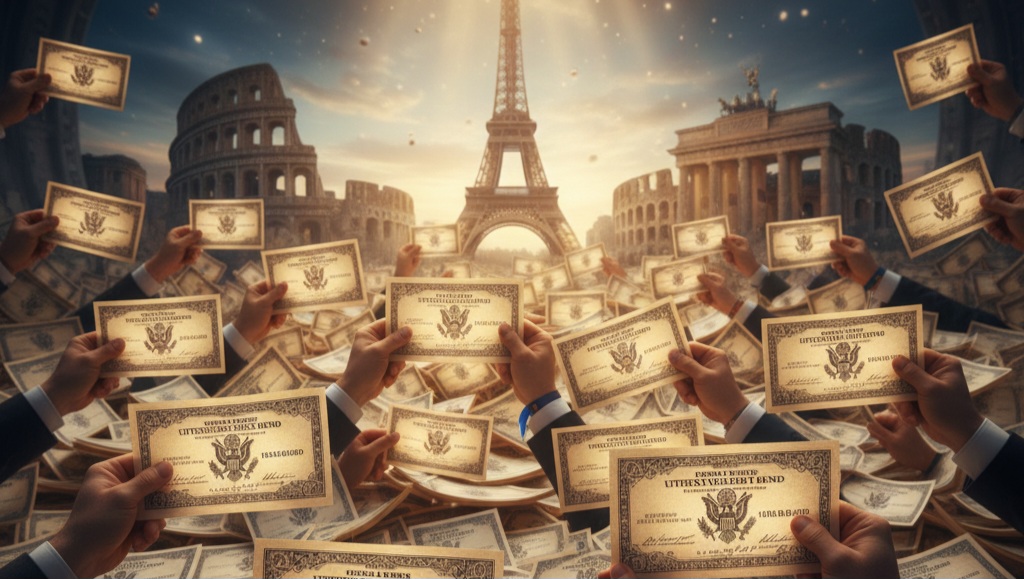
The global economy rests on a delicate balance of trust and investment. At the heart of this system lies the US Treasury market. However, a hypothetical scenario exists that economists often describe as a financial nuclear bomb.
This scenario is no longer just a mathematical exercise but a potential geopolitical tool. If the United States, under the Trump administration, were to take the unprecedented step of militarily attacking and conquering Greenland, Europe could be forced to respond with its most powerful economic weapon.
Imagine if every European entity (including governments, central banks, and private investors) decided to simultaneously dump their combined holdings of approximately $3.6 trillion in US Treasury bonds as a direct consequence of such an invasion.
The Chain Reaction
If this “horror scenario” were to unfold, here is the step by step breakdown of what would likely happen:
A Crash in Bond Prices: A sudden flood of $3.6 trillion worth of bonds onto the market would cause their value to plummet instantly due to the massive oversupply.
Skyrocketing Interest Rates: As bond prices crash, the yields (interest rates) would spike to extreme levels. This would make US government debt significantly more expensive to maintain.
The Dollar in Freefall: To exit these investments, European investors would need to sell their US dollars. This massive sell-off would likely cause the value of the US dollar to collapse against the Euro.
Global Market Chaos: Because the US Treasury bond is the benchmark for the global financial system, its collapse would trigger a domino effect. Stock markets would likely tank, and borrowing costs worldwide would become unaffordable overnight.
While the military conquest of Greenland remains a shocking concept, this financial “nuclear option” highlights that Europe’s choice to divest could be the ultimate check on such a massive shift in international relations.
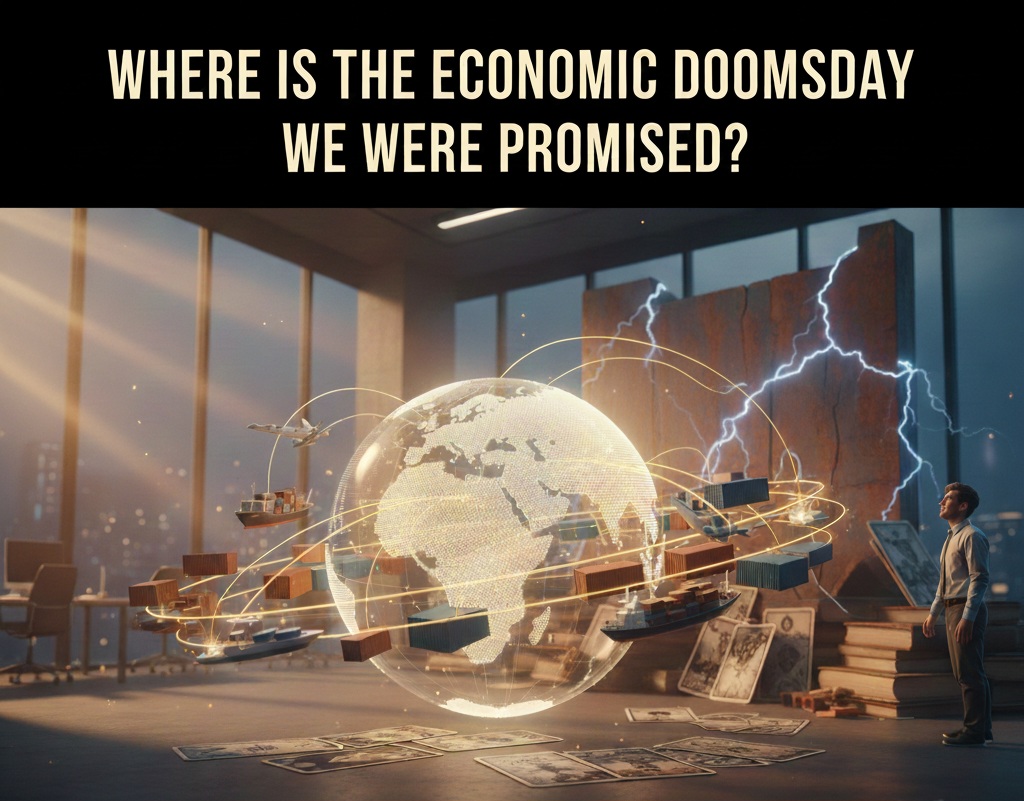
If you had followed the economic forecasts at the start of 2025, you’d have been tempted to hide under the stairs with a blanket and a survival kit. The narrative was clear: the return of Donald Trump and his aggressive tariff regime would signal the end of the global economy as we knew it.
Experts predicted the largest trade shock in history, with some warning that a global recession was almost a mathematical certainty.
Yet, as we reach the end of the year, the wreckage is surprisingly hard to find. The world is still turning. While growth has slowed, the much feared recession hasn’t materialized. Global trade has undergone massive shifts behind the scenes, but it has neither halted nor collapsed. This raises a fundamental question: are our economic models broken, or has the global trading system proven far more resilient than anyone dared to hope?
Uncertainty as a Tool
One reason the dire predictions missed the mark is that they took initial announcements at face value. It has since become clear that the “April shock” of sky-high tariff announcements was a deliberate strategy of injecting uncertainty into the market to gain leverage. The goal was always to start high and negotiate down. While journalists and analysts were asking what the direct impact of a 27% tariff would be, the reality on the ground was a moving target. By November, after rounds of intense negotiations, the effective average tariff had dropped to 17%. While this is still significantly higher than the pre-2025 average of 2.5%, it is a far cry from the “total trade war” originally envisioned. Most major economic blocs managed to negotiate their way down, leaving China as the only player facing extreme rates above 40%.
Restraint and Resilience
The second reason we avoided a total meltdown was a surprising display of global self-discipline. The catastrophic scenarios relied on a domino effect of retaliatory tariffs. However, most of the world chose not to strike back in kind. Because the primary burden of a tariff falls on the country imposing it (as a tax on its own importers), the rest of the world avoided much of the pain by simply refusing to escalate. It was a calculated choice of restraint over ego.
Furthermore, global trade proved to be remarkably agile. We often think of international commerce as a slow-moving tanker, but this year showed it can pivot like a speedboat. When routes to the U.S. became too expensive, fleets redirected, and trade intensified within other regions. While exports from Europe to the U.S. have dipped, they haven’t cratered. Meanwhile, global trade in goods actually rose by over 6% this year. The old adage that “when America sneezes, the world catches a cold” no longer seems to hold true; we are moving toward a more balanced, less U.S. centric global economy.
The Hidden Toll
Does this mean the tariffs were a victimless policy? Far from it. While the “doomsday” didn’t happen, a slow erosion is visible beneath the surface.
The pain is currently being masked by corporate buffers. To avoid losing market share, exporters are slightly lowering their prices, while U.S. importers are eating into their own profit margins or cutting costs elsewhere rather than passing the full cost to the consumer immediately. Additionally, many companies stockpiled goods before the tariffs took effect, allowing them to sell older, cheaper inventory throughout the year.
However, these buffers are not infinite. Inflation in the U.S., which had been trending downward before the inauguration, has begun to creep back up. The promised manufacturing boom has yet to materialize, and job growth has stalled. Perhaps most tellingly, the tariff revenue is nowhere near enough to replace income tax, as was once claimed.
The real test will come in the next six months. As stockpiles empty and profit margins hit rock bottom, businesses will be forced to pass costs onto the public. This won’t just affect imported goods, but will trickle down into services like healthcare and hospitality. The economic “hell and damnation” didn’t arrive with a bang in early 2025, but for the American consumer, it may yet arrive with a whimper just in time for the midterm elections.
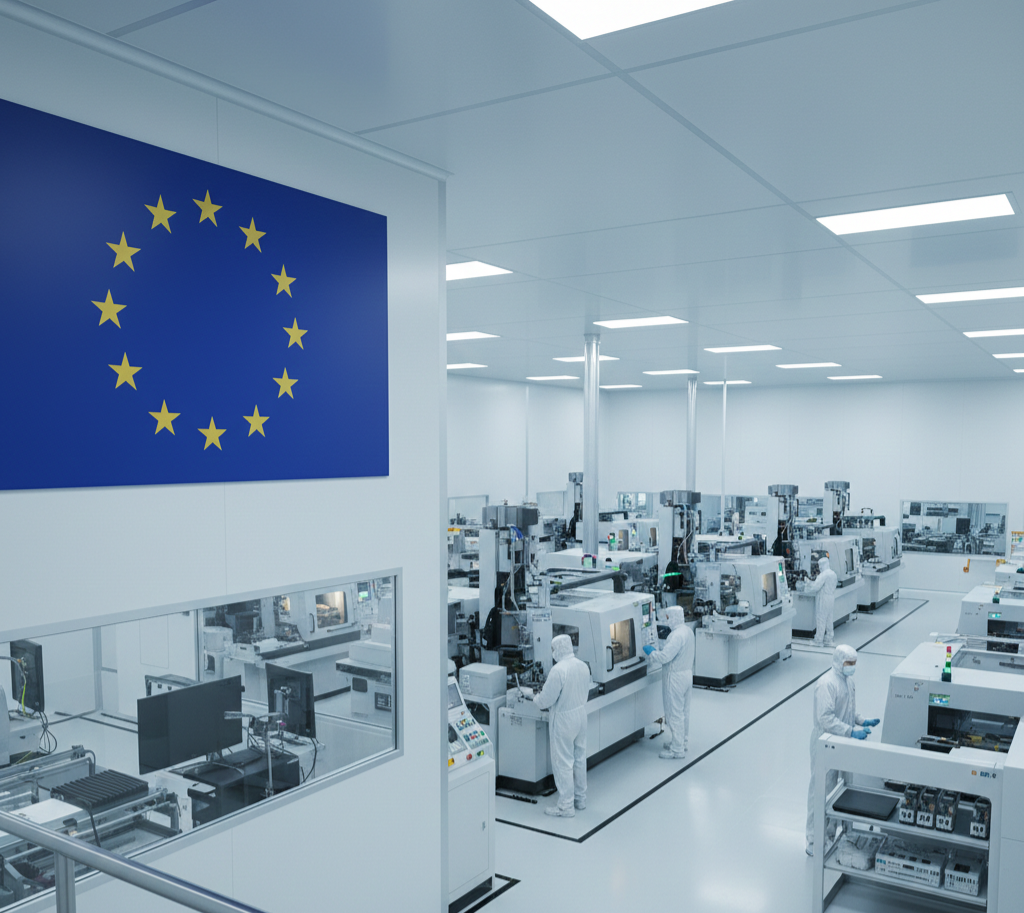
The European Union is working on a second “Chips Act” to strengthen its own, independent semiconductor industry. Not only for cutting-edge AI chips, but also for basic, low-cost chips used in everyday products like cars.
The message from Brussels is clear: Europe must become less dependent on foreign technology and more resilient in times of geopolitical crisis. But how realistic is that ambition?
At a semiconductor conference in Munich, European Commission official Pierre Chastanet admitted that Europe was caught off guard by the recent Nexperia crisis. The company, now owned by Chinese investors, became the center of a diplomatic conflict after Dutch government intervention. The result was risks to Europe’s automotive supply chain and the threat of yet another chip shortage. For Chastanet, it was a painful reminder that Europe’s chip supply is far less secure than it would like it to be.
From the First Chips Act to a Second Wave
The first European Chips Act, launched in 2022, marked a turning point in EU industrial policy. A total of 43 billion euros was mobilized, mainly through national governments and the EU budget, to stimulate semiconductor production in Europe. This helped attract major investments, including the ESMC chip plant in Dresden, a joint venture between TSMC, NXP, Infineon and Bosch, which is expected to start production in 2027. GlobalFoundries is also expanding its presence in Germany and France.
But not everything has gone according to plan. The major Intel investment in Magdeburg has been postponed, and a new plant in Crolles, France, is facing delays. Critics argue that smaller European technology firms still struggle to access high-end production facilities and infrastructure, limiting the emergence of true European chip champions.
Chips Are Geopolitical Power
Semiconductors are more than just technology. They have become a key geopolitical asset. Today, Europe remains heavily dependent on the United States and Taiwan for advanced AI chips. Taiwan, however, sits at the center of growing tensions with China, making Europe’s reliance on Taiwanese production a strategic vulnerability.
Although a planned American law to restrict AI chip exports, known as the AI Diffusion Act, was eventually scrapped by Donald Trump, the dependency remains. Europe cannot afford to entrust its digital future entirely to foreign powers.
Experts argue that chips will be one of the most important geopolitical instruments of the coming decades. The automotive industry, for example, will need increasingly advanced semiconductors for electric vehicles and self-driving technology. Ideally, those chips should come from European factories. Yet production in Europe is expensive, and manufacturers will only invest if there is sufficient demand.
The Missing Link: European System Champions
Europe is not starting from zero. Companies like ASML, for chip equipment, ARM, for chip architecture, and research institutes such as Imec in Belgium and Leti in France form a world-class ecosystem. The EU also holds strong positions in photonic chips and quantum technology.
What Europe lacks, however, are so called system champions, such as Nvidia, Apple or Huawei. These are companies that not only design chips but also shape entire technology ecosystems around them.
Taiwan’s success, experts note, is not based on one-off subsidies, but on long-term government support, tax incentives and continuous investment in the wider technology ecosystem. That is a key lesson the EU would need to embrace.
Practical Obstacles
Beyond strategy and money, practical problems remain. Building a chip factory in Europe takes about twice as long as in Taiwan. Bureaucracy, complex regulation and a shortage of skilled workers are slowing projects down. A single new fabrication plant can require up to a thousand specialized welders, professionals who are currently in short supply across Europe.
Reality Check
The original goal of producing 20 percent of the world’s chips in Europe now looks unrealistic. Out of around 5,000 standard ASML lithography machines worldwide, only 400 are located in Europe. According to ASML representatives, Europe’s chip industry is growing only half as fast as in other parts of the world.
Still, the EU sees no alternative. If it wants to remain economically, technologically and militarily relevant, it must close the massive gaps in its semiconductor industry. The second Chips Act is not just an industrial program. It is a geopolitical necessity.
September 2025 inflation in the Netherlands came in at 3.3%, significantly higher than the eurozone average of 2.2%. While many households experience this simply as “prices rising again,” the underlying dynamics are more structural than temporary — and that matters for wages, pensions, and policy.
Why Dutch Inflation Is Consistently Higher
Economists have long noted that Dutch prices rise faster than those of their neighbors. Since the introduction of the euro in 2002, inflation in the Netherlands has run systematically above the eurozone average. Several factors explain this:
Tight labor market – The Netherlands has one of the lowest unemployment rates in Europe. With labor scarce, wages rise faster, and businesses pass on those costs.
Service-heavy economy – A large share of the Dutch economy is service-based, where labor costs are the dominant factor. Wage increases feed more directly into consumer prices than in Germany’s industry-heavy economy.
Tax and regulatory effects – Changes in VAT, energy taxes, and housing policies have historically added volatility and upward pressure compared to countries with more stable regimes.
The result: a structural inflation premium compared to their European peers.
September 2025: A Perfect Storm
The September figures highlight three simultaneous drivers:
Fuel & energy – About half of the increase stems from higher oil and energy prices. This is highly volatile but immediately visible to consumers at the pump and on utility bills.
Wages – Dutch wages have risen sharply in 2024–2025 as unions fought to protect purchasing power. This creates a feedback loop: higher prices → higher wage demands → higher prices.
Eurozone effect – While inflation rose in Europe overall (from 2.0% to 2.2%), the Dutch figure of 3.3% underscores the widening gap: 0.8 percentage points above the average, double the divergence of a month earlier.
Implications for Policy and Consumers
European Central Bank (ECB) – With inflation ticking up across the eurozone, rate cuts are off the table. For the Netherlands, this means tighter credit conditions even though our inflation problem is wage- and structure-driven, not monetary.
Purchasing power – For households, the outlook is grim. Real wage gains are limited because wage hikes feed inflation themselves. Pensioners, tied to indexation rules, also risk losing ground if inflation stays above assumptions.
Competitiveness – Dutch goods and services risk becoming more expensive relative to neighboring markets. This could push consumers to shop across borders (as seen in supermarket price comparisons) and pressure export margins.
Outlook: Here to Stay
Projections from Rabobank and the CPB (Dutch Central Planning Bureau) suggest inflation will average 3.2–3.3% in 2025 and only decline to around 2.4% in 2026. That remains well above the ECB’s 2% target.
The concern is not just the short-term squeeze at the gas pump, but a long-term erosion of purchasing power. Over 25 years, consistently higher inflation means Dutch consumers lose significantly more ground than their German, Belgian, or French counterparts — with ripple effects on pensions, savings, and confidence in economic policy.
Key Takeaway
Dutch inflation is not just about temporary oil shocks. It is structural, linked to the Dutch labor market and service-based economy. As long as wage growth translates directly into price growth, the Netherlands will continue to outpace the eurozone in inflation — and consumers will feel it in their wallets.
Parliamentary elections will be held in the Netherlands on October 29. A key question is how much influence the inflation figures will have on the outcome.
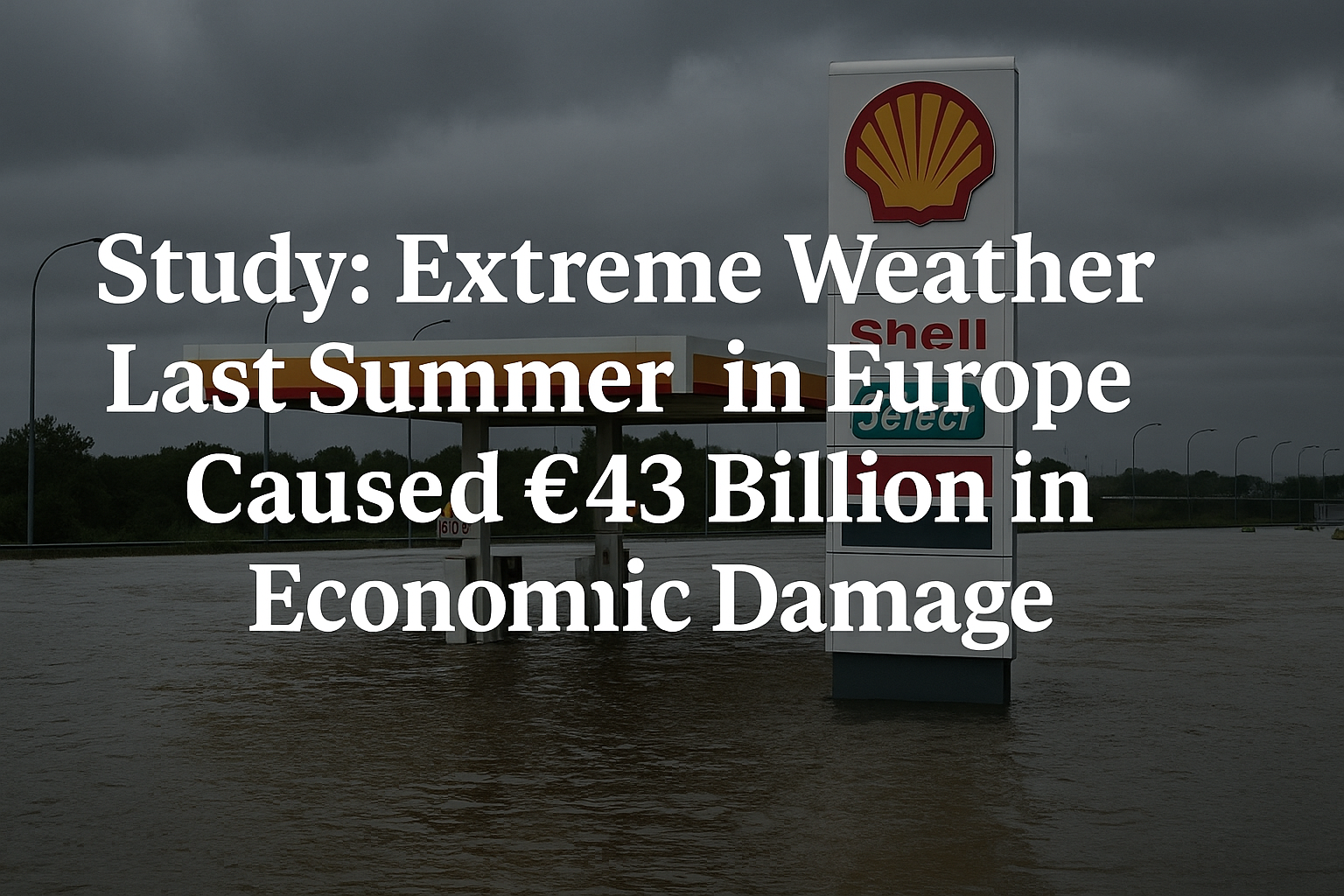
Heatwaves, droughts, and floods that struck Europe over the past summer caused an estimated €43 billion in immediate economic losses, according to a new study by the University of Mannheim in collaboration with economists from the European Central Bank.
The researchers looked at the true cost of climate change in a broad sense: not only the direct and tangible destruction of homes and crops, but also indirect effects such as disruptions to rail transport and reduced labor productivity during extreme heat. Using meteorological data and economic modeling, they calculated that the macro-economic costs could rise to €126 billion by 2029.
The authors stress that their estimates are “conservative,” since several major events—such as the record-breaking wildfires in Southern Europe last month—were not included in the analysis.
Unequal Impact Across Europe
The damage is not evenly distributed. Low-income regions and those with higher temperatures are hit the hardest. Spain, France, and Italy, which faced prolonged heatwaves and drought, each recorded losses exceeding €10 billion this year alone. In the medium term, these costs could rise beyond €30 billion per country.
Central and Northern Europe saw less immediate damage, but floods are becoming increasingly common there as well, suggesting that the costs of climate change will continue to mount across the continent.
Long-Term Consequences
The study also highlights the long-term drag on productivity. Four years after a drought, a region’s GDP is on average 3 percentage points lower than before. In the case of flooding, GDP remains 2.8 percentage points lower.
These findings underscore how climate extremes are not only an environmental challenge but also a profound economic threat—one that will shape Europe’s future growth and resilience in the years to come.
Manage Cookie Consent
To provide the best experiences, roelthijssen.nl uses technologies like cookies to store and/or access device information. Consenting to these technologies will allow us to process data such as browsing behavior or unique IDs on this site. Not consenting or withdrawing consent, may adversely affect certain features and functions.
Functional
Always active
The technical storage or access is strictly necessary for the legitimate purpose of enabling the use of a specific service explicitly requested by the subscriber or user, or for the sole purpose of carrying out the transmission of a communication over an electronic communications network.
Preferences
The technical storage or access is necessary for the legitimate purpose of storing preferences that are not requested by the subscriber or user.
Statistics
The technical storage or access that is used exclusively for statistical purposes.The technical storage or access that is used exclusively for anonymous statistical purposes. Without a subpoena, voluntary compliance on the part of your Internet Service Provider, or additional records from a third party, information stored or retrieved for this purpose alone cannot usually be used to identify you.
Marketing
The technical storage or access is required to create user profiles to send advertising, or to track the user on a website or across several websites for similar marketing purposes.