

The US dollar suffered a historic blow on Tuesday January 27th, sending ripples through global financial markets. In a final hour of frantic trading, the currency breached the crucial support level of 96.00, entering a freefall that bottomed out at 95.38.
For the world’s primary reserve currency, a single-day loss of over 1.1% is not just a dip; it is a systemic shock.
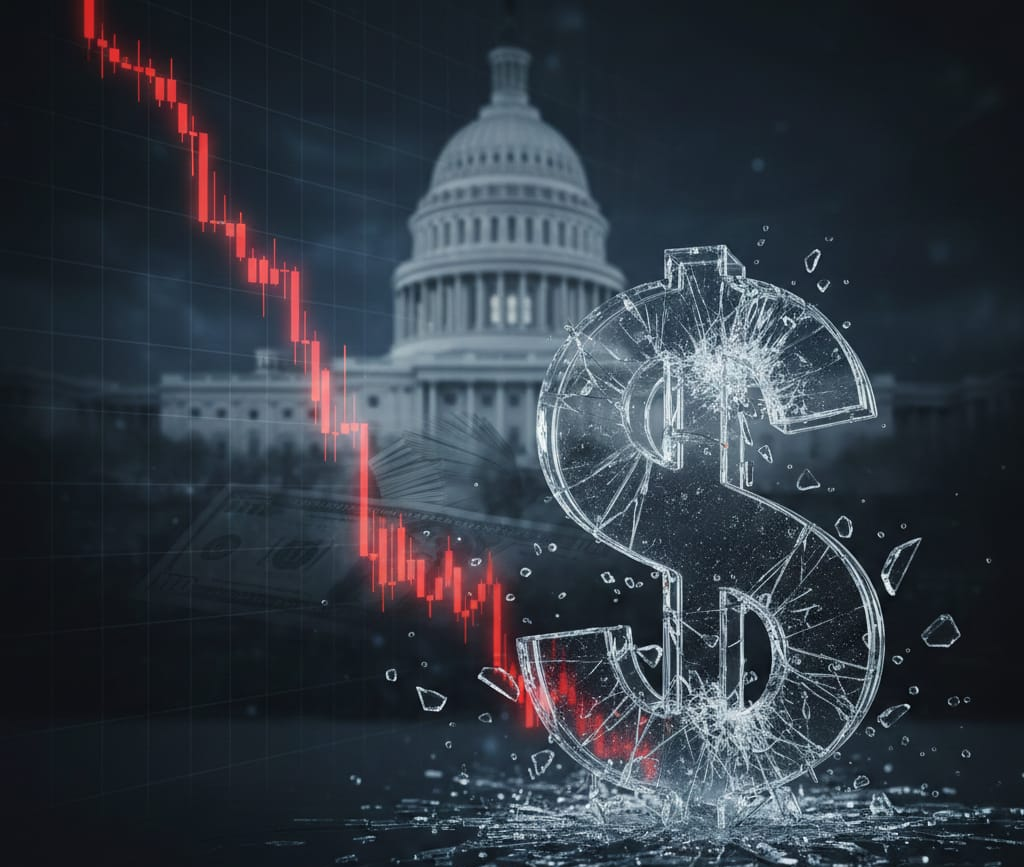
What makes this decline exceptional is the context. Historically, geopolitical tension or the threat of conflict triggers a “flight to safety,” where investors flock to the dollar. Currently, international instability and rising tensions surrounding Iran would typically strengthen the Greenback.
This time, the opposite occurred: the world fled from the dollar. For many market observers, this serves as definitive proof that confidence in the US currency has been fundamentally compromised.
A Convergence of Geopolitical Crises
The causes of this sell-off extend beyond domestic economic figures, pointing toward a massive shift in the global order. The dollar is no longer seen as the inevitable safe harbor in times of war:
- Erosion of the “Safe Haven” Status: The traditional logic that investors buy dollars during Middle Eastern unrest has failed. As tensions around Iran escalate, the market is actively decoupling from US assets, signaling a profound lack of trust in American diplomatic and military stability.
- Fiscal and Political Vulnerability: A rapidly mounting national debt, paired with chronic budget deficits, has left the US vulnerable. International partners are increasingly wary of a government facing persistent political paralysis, questioning its ability to lead on the world stage.
- Structural Weakening: With US consumer confidence at its lowest since 2014, the “economic engine” that once backed the dollar’s global dominance appears to be sputtering, making the currency a risky bet for foreign capital.
A Historic Turning Point
Analysts are beginning to view this sell-off as a historic inflection point. The long-held status of the dollar as the “ultimate safe haven” is being severely, and perhaps permanently, undermined. As investors conclude they can no longer trust the US government with their capital, we are witnessing a shift in the global financial hierarchy.
While some contrarians argue that this is merely a temporary dip, given the lack of a viable alternative, the market’s reaction to geopolitical unrest suggests a deeper shift. If the dollar no longer serves as the world’s refuge during a crisis, its reign as the de facto global currency may be entering its twilight.
You might also like: How Americans Have Been ‘Borrowing’ Money from the Rest of the World for Decades Without Consequences